





7-10 Day ShippingSold out


7-10 Day ShippingSold out


Shipping 7-10 DaysSold out


7-10 Day ShippingSold out


Shipping 7-10 DaysSold out


Shipping 7-10 Days


7-10 Day ShippingSold out


7-10 Day Shipping

7-10 Day Shipping


7-10 Day Shipping


Shipping 7-10 DaysSold out


7-10 Day ShippingSold out


7-10 Day ShippingSold out


7-10 Day ShippingSold out


7-10 Day Shipping


7-10 Day Shipping


7-10 Day ShippingSold out


7-10 Day ShippingSold out


7-10 Day ShippingSold out


Shipping 7-10 DaysSold out


7-10 Day ShippingSold out


Shipping 7-10 DaysSold out


7-10 Day Shipping


7-10 Day Shipping


Shipping 7-10 DaysSold out


7-10 Day Shipping


7-10 Day Shipping


7-10 Day Shipping


7-10 Day Shipping


7-10 Day ShippingSold out


7-10 Day Shipping


7-10 Day Shipping

Shipping 7-10 DaysSold out


Shipping 7-10 Days


7-10 Day ShippingSold out


7-10 Day ShippingSold out
7-10 Day ShippingSold out
Shipping 7-10 DaysSold out
7-10 Day ShippingSold out
Shipping 7-10 DaysSold out
Shipping 7-10 Days
7-10 Day ShippingSold out
7-10 Day Shipping
7-10 Day Shipping
7-10 Day Shipping
Shipping 7-10 DaysSold out
7-10 Day ShippingSold out
7-10 Day ShippingSold out
7-10 Day ShippingSold out
7-10 Day Shipping
7-10 Day Shipping
7-10 Day ShippingSold out
7-10 Day ShippingSold out
7-10 Day ShippingSold out
Shipping 7-10 DaysSold out
7-10 Day ShippingSold out
Shipping 7-10 DaysSold out
7-10 Day Shipping
7-10 Day Shipping
Shipping 7-10 DaysSold out
7-10 Day Shipping
7-10 Day Shipping
7-10 Day Shipping
7-10 Day Shipping
7-10 Day ShippingSold out
7-10 Day Shipping
7-10 Day Shipping
Shipping 7-10 DaysSold out
Shipping 7-10 Days
7-10 Day ShippingSold out
High Middle Ages Armor: protection and evolution in medieval combat
The High Middle Ages armor was key to the defense of warriors and knights in an era of constant conflict. As battles evolved, armor adapted, offering greater protection and mobility. From chainmail to the first closed helmets, these pieces were essential both for warfare and for the prestige of the wearer.
Main types of armor from the High Middle Ages
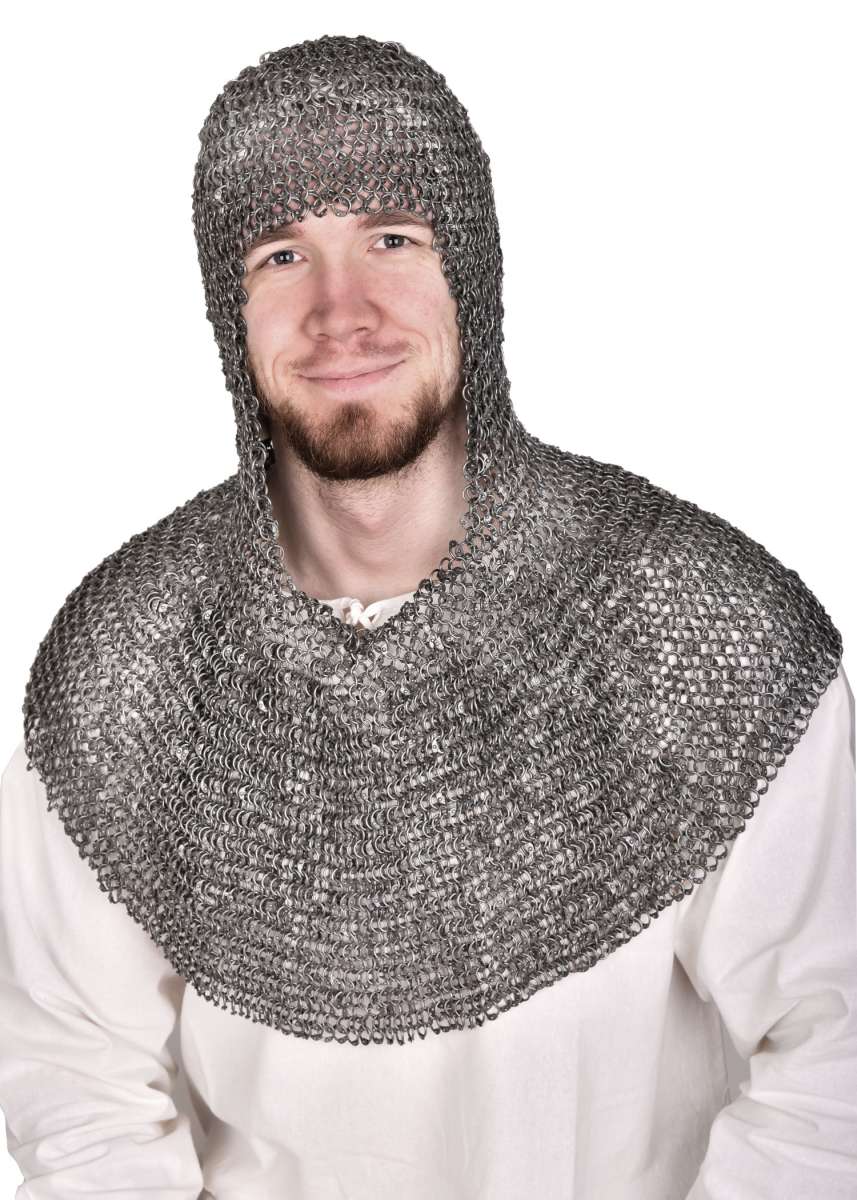
- Chainmail (Lorica Hamata): Made of interlocking metal rings, it offers an ideal combination of flexibility and resistance.
- Gambeson: A thick padding worn alone or under chainmail to cushion blows.
- Mail pauldrons and vambraces: They protected the arms without limiting mobility in combat.
Key pieces in High Middle Ages armor
- Spangenhelm helmet: Common among knights and Norman warriors, with metal reinforcements and a nasal bar to protect the face.
- Viking nasal helmet: A variant used in Northern Europe, with a protective bar over the nose.
- Greaves and gauntlets: Additional protection for the legs and hands, used by higher-ranking warriors.
Characteristics of High Middle Ages armor
- Wrought iron and steel: Main materials for helmets and reinforcements.
- Interlocking iron rings: Key in chainmail, providing resistance and flexibility.
- Padded lining: Improved comfort and absorbed impacts.
- Modular design: Allowed for combining different pieces based on the desired level of protection.
The High Middle Ages armor marked the transition between the flexible protection of the Viking Age and the imposing full suits of armor of the Late Middle Ages. If you are looking for medieval armor replicas for historical reenactment, collecting, or medieval combat, at Todo Medieval you will find authentic, high-quality models.
