




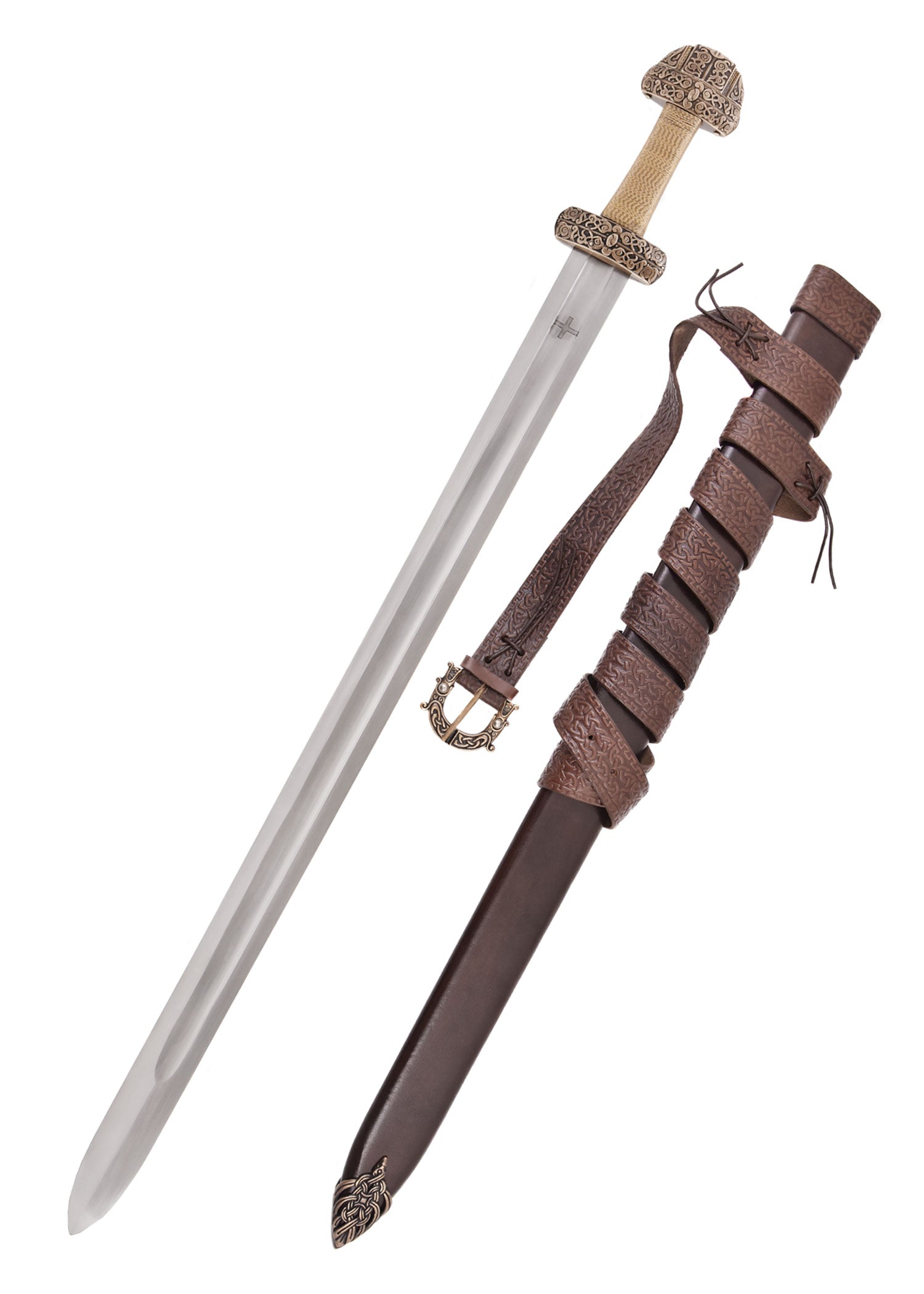

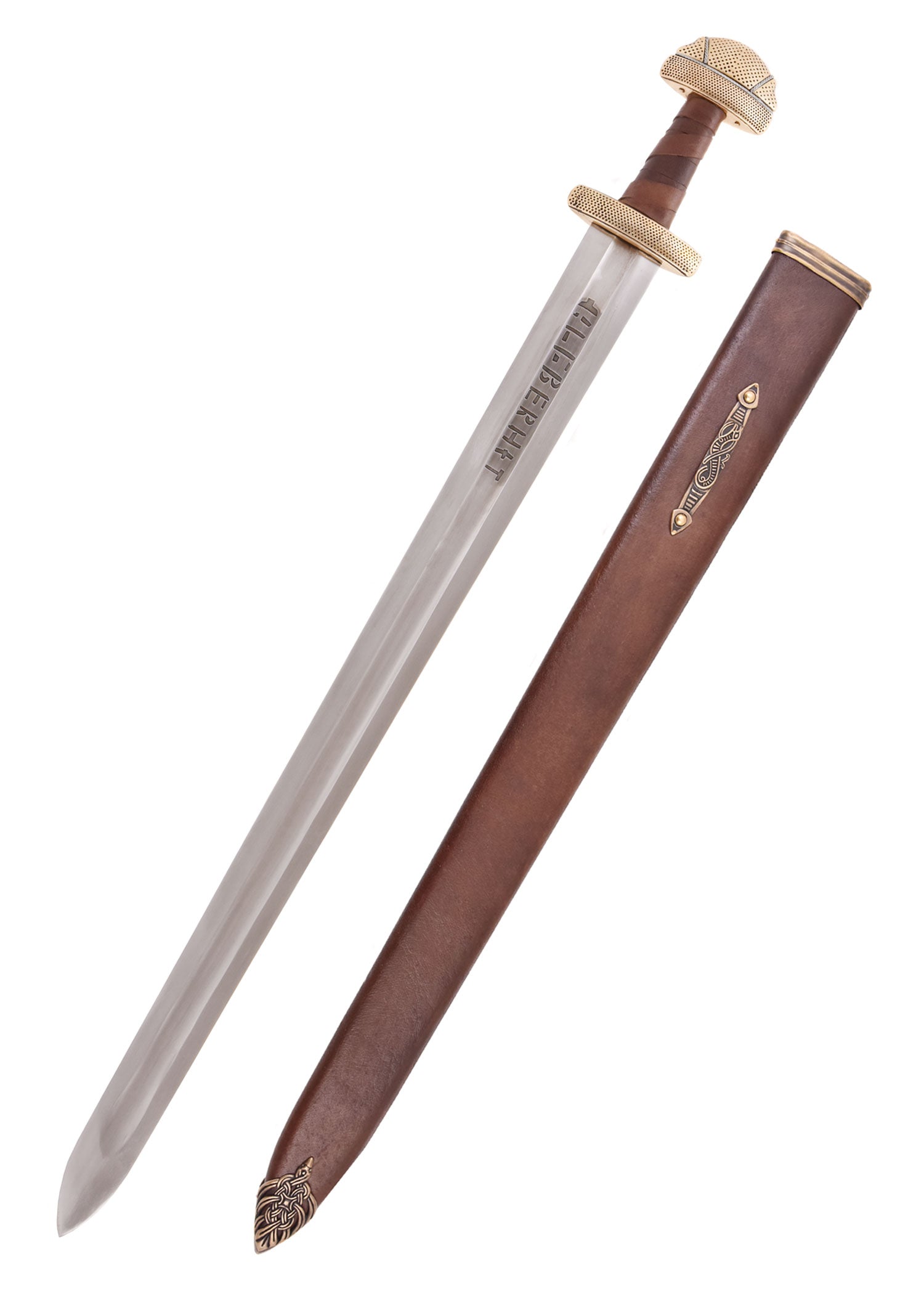

Historical context of the Feltwell Sword
The Feltwell Sword belongs to the transition period between Late Antiquity and the Early Middle Ages, specifically between the 4th and 5th centuries AD.
This period was marked by the collapse of Roman administration in Britain and the progressive arrival of Germanic peoples, mainly Angles, Saxons, and Jutes.
The discovery made in Feltwell, in the county of Norfolk, England, is set within this context of political, military, and cultural change. Its name comes precisely from this place of discovery.

Cultural and chronological origin
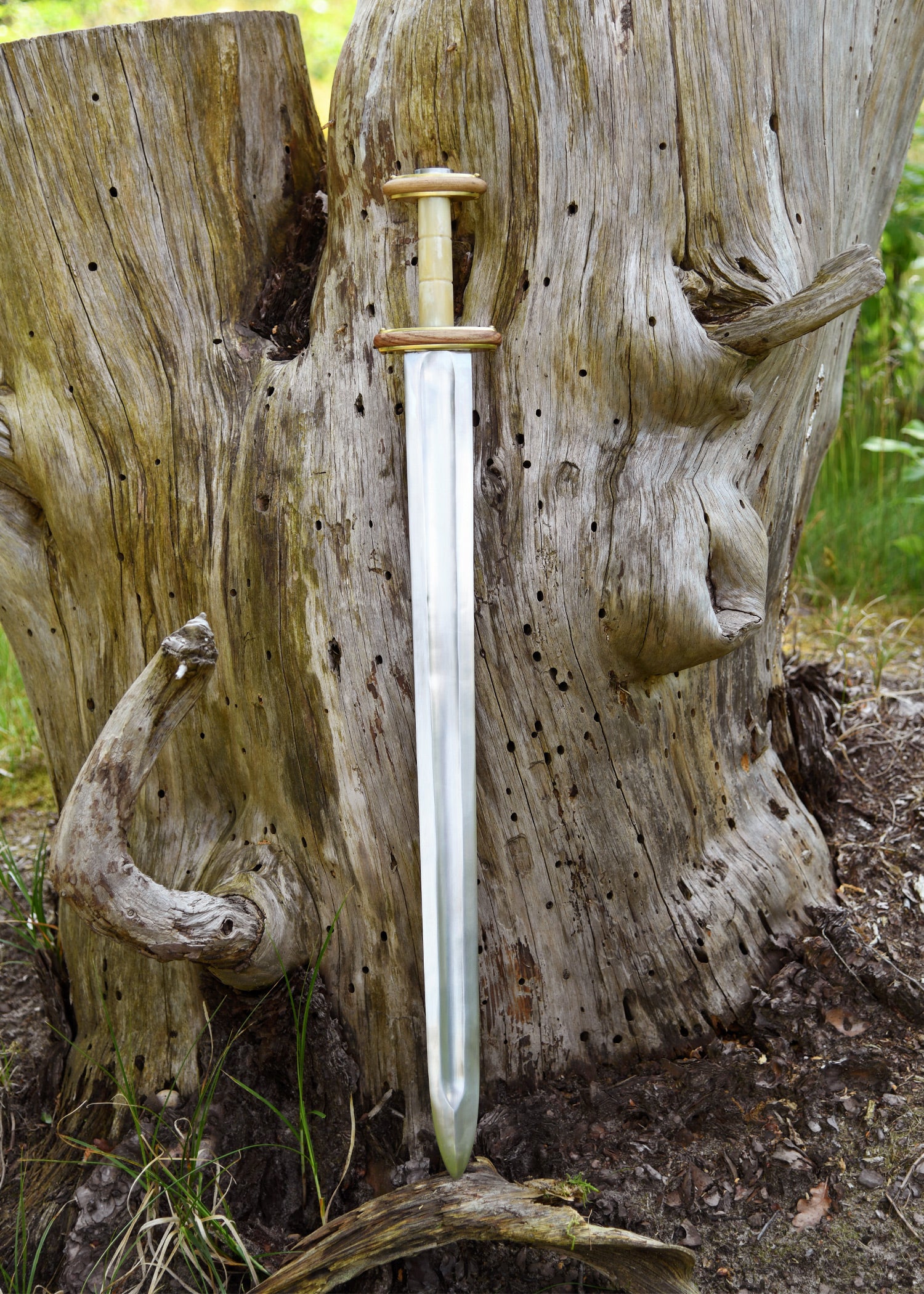
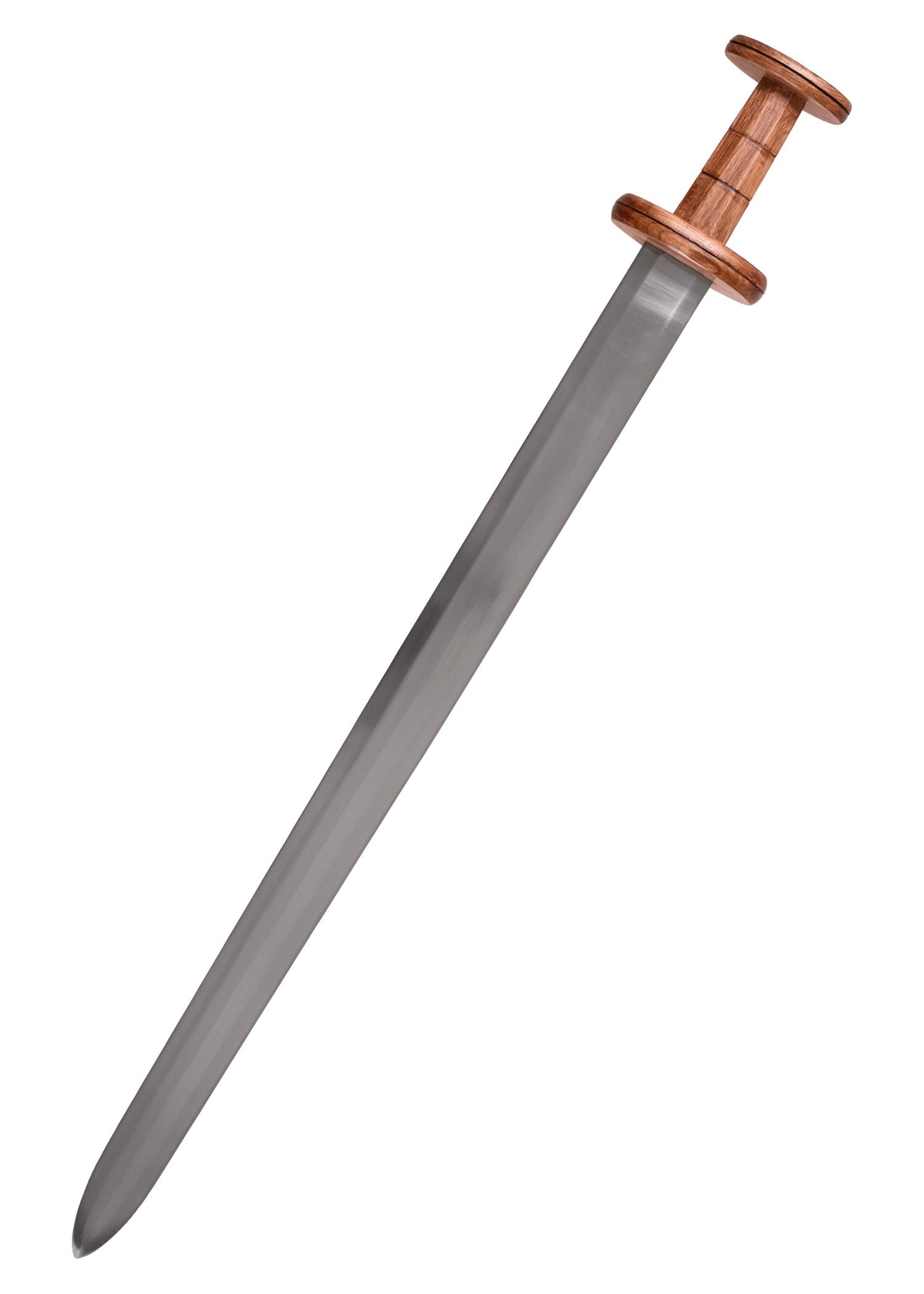
The Feltwell sword is an early example of a Migration Period Germanic sword.
Although Britain had been a Roman province, the technical and formal characteristics of this sword show a clear Germanic continental influence.
It is dated between the late 4th century and the early 5th century, a time when Anglo-Saxon groups began to settle in British territory following the withdrawal of the Roman legions.
Characteristics of the Feltwell sword
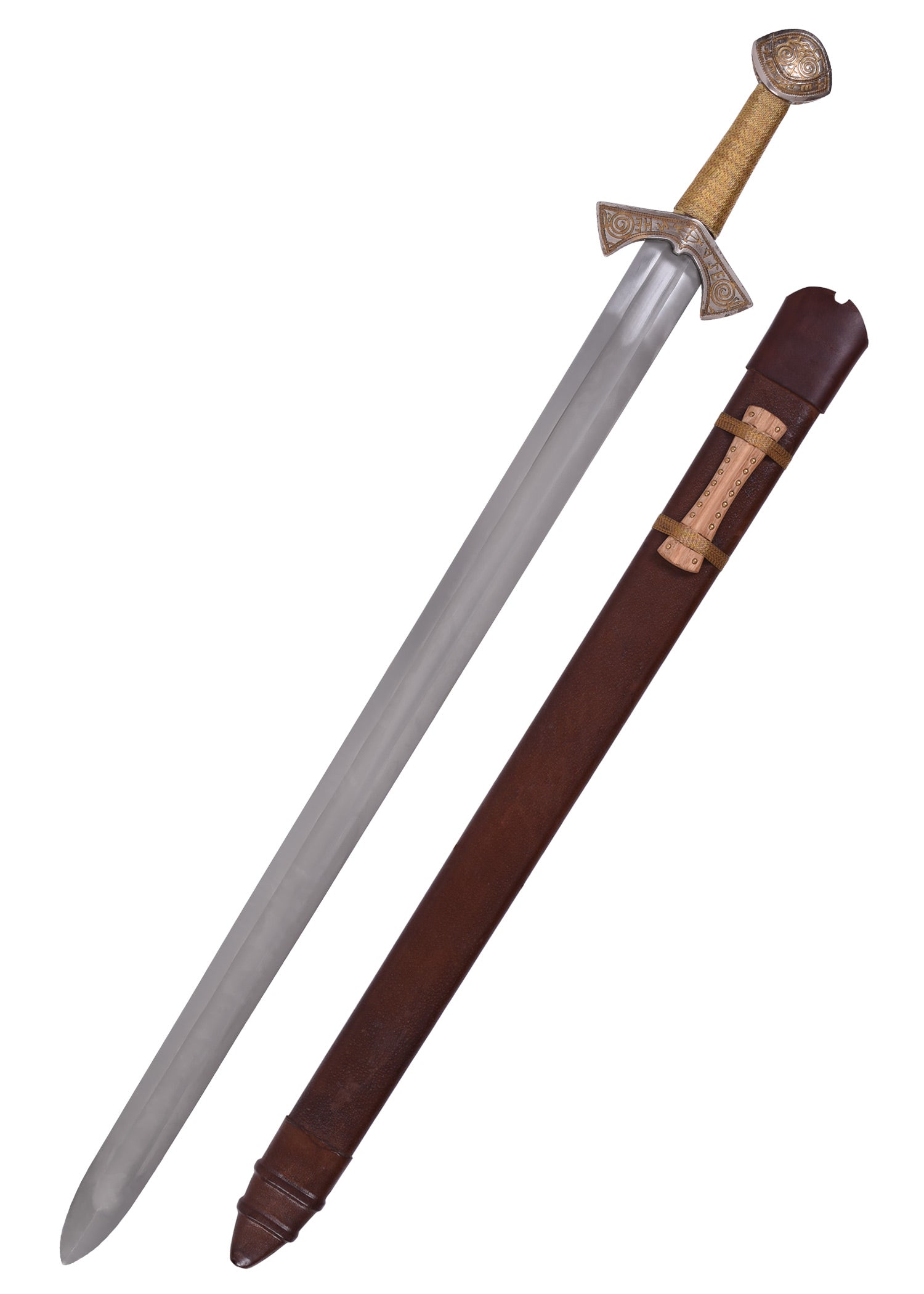
The blade of this sword is straight, double-edged, and designed for close-quarters combat. Its length is approximately 75–80 centimeters, a common measurement for early Germanic swords.
It is manufactured using the forging technique known as pattern welding, a method that combined different twisted iron and steel bars to increase strength and flexibility. This technique also provided a distinctive visual pattern on the blade.
Differences from late Roman swords
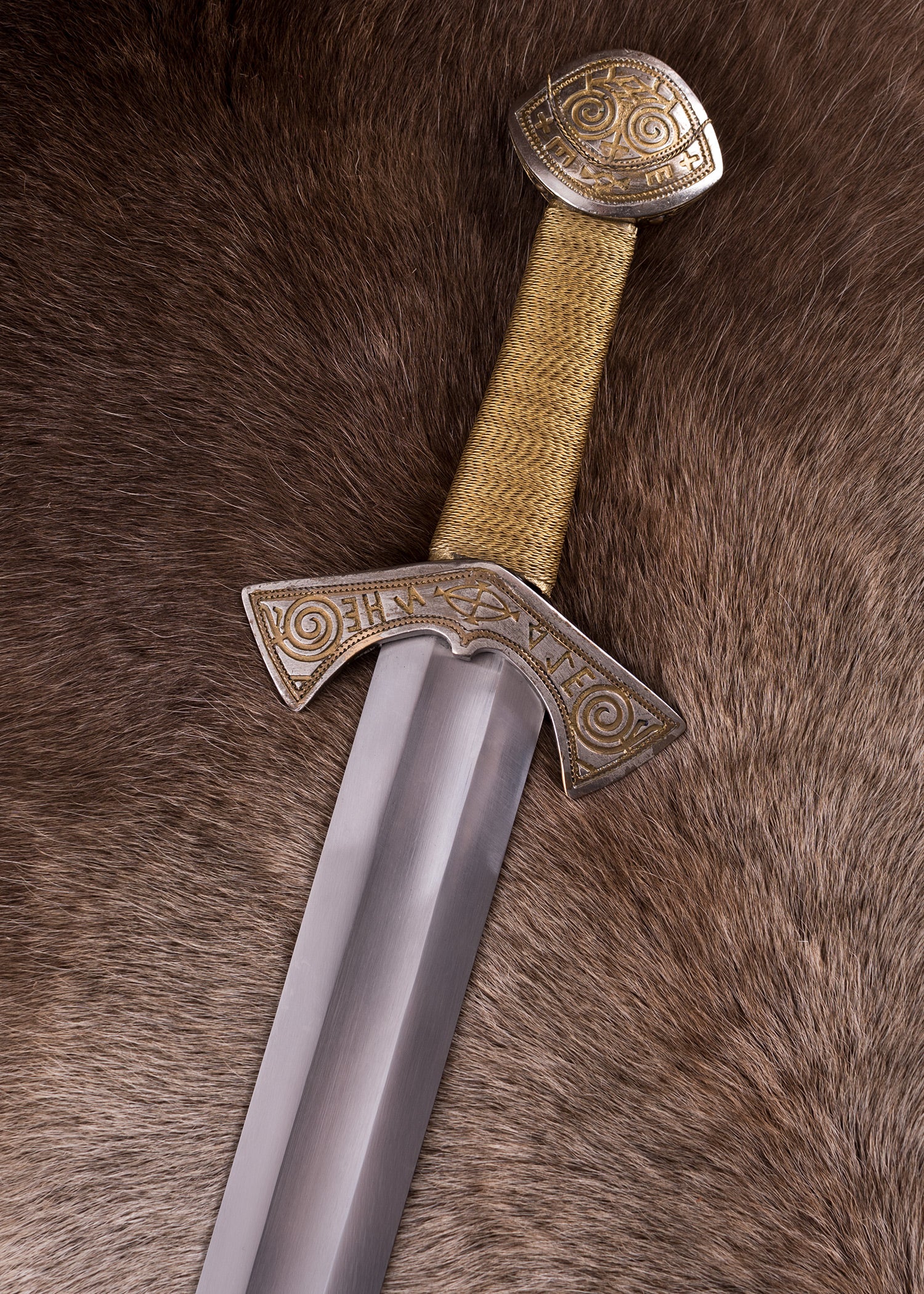
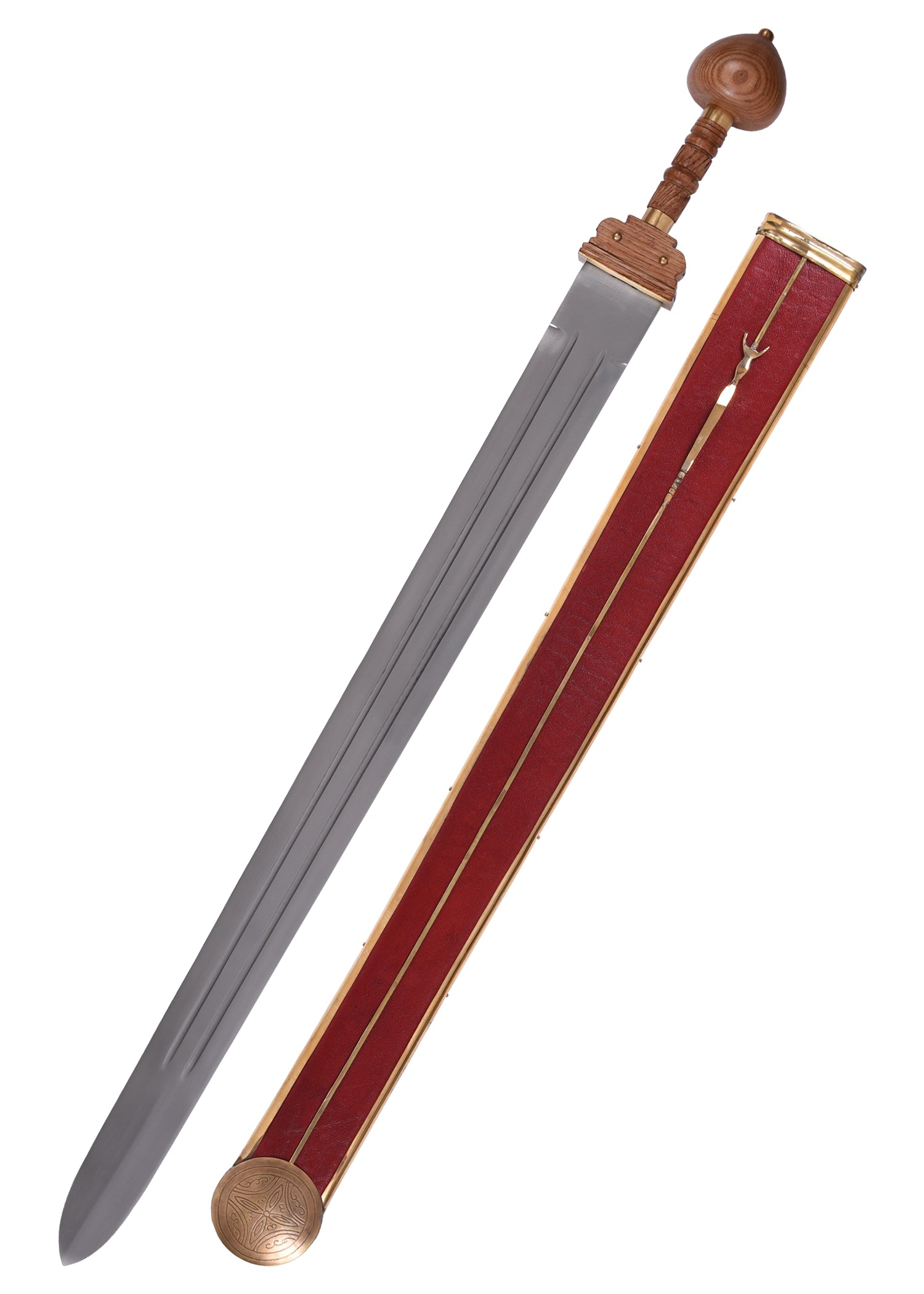
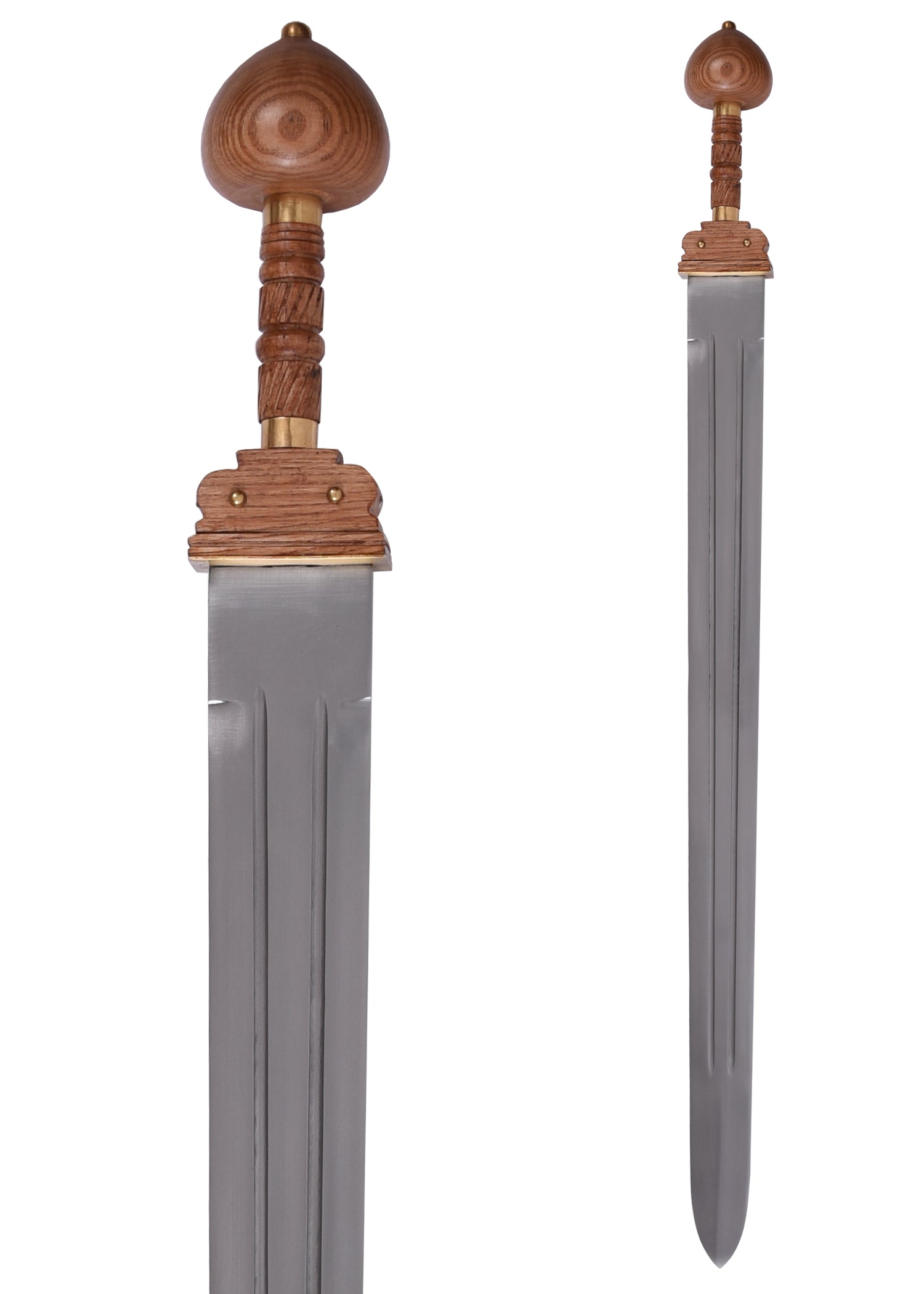
Unlike the late Roman spatha, the Feltwell sword features a simpler hilt and a structure adapted for individual combat.
While Roman weaponry prioritized military standardization, Germanic swords like the Feltwell reflect a more artisanal production.
The pommel and guard were functional, without the excessive ornamentation that would appear in later centuries.

Who used the Feltwell sword?
The Feltwell sword was not a common weapon. Its possession was restricted to high-status warriors within Anglo-Saxon communities.
It was likely used by warlords, tribal leaders, or experienced combatants.
In this period, carrying a sword was a symbol of power, prestige, and military authority, in addition to being a combat tool.
Military use and social function
On the battlefield, the Feltwell sword was mainly used for cuts and thrusts in close encounters. However, its function went beyond military use.
In early Germanic society, the sword represented the bond between the warrior and his lineage. It was common for these weapons to be passed down as heirlooms or deposited in graves as part of the grave goods.
Archaeological evidence and historical relevance
The discovery of the Feltwell sword provides key information about the evolution of weaponry in Britain after Roman rule. Its existence confirms the early establishment of Germanic military traditions on the island.
This type of sword is fundamental for understanding the origin of Anglo-Saxon weaponry and the formation of England's future warrior elites.