




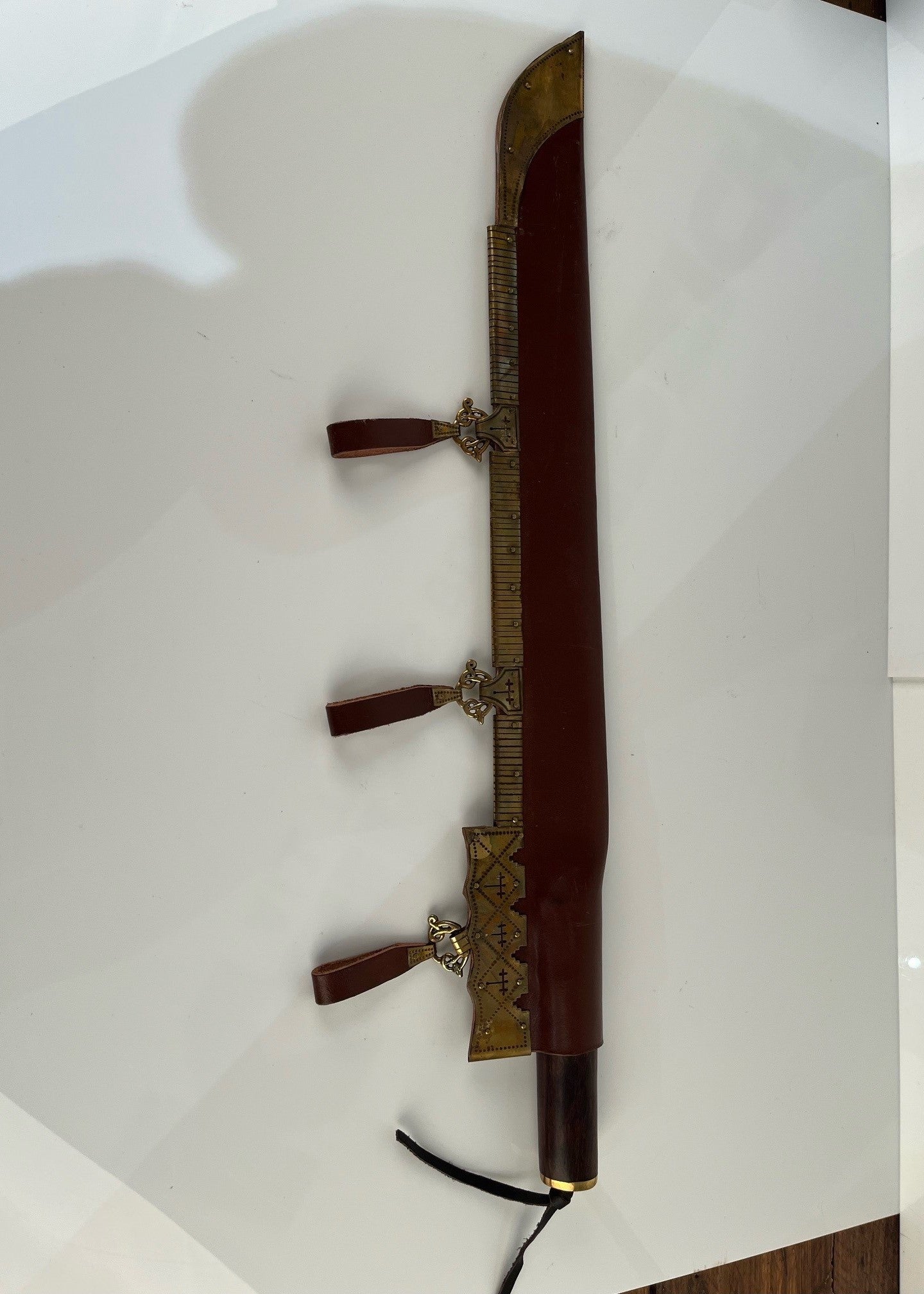
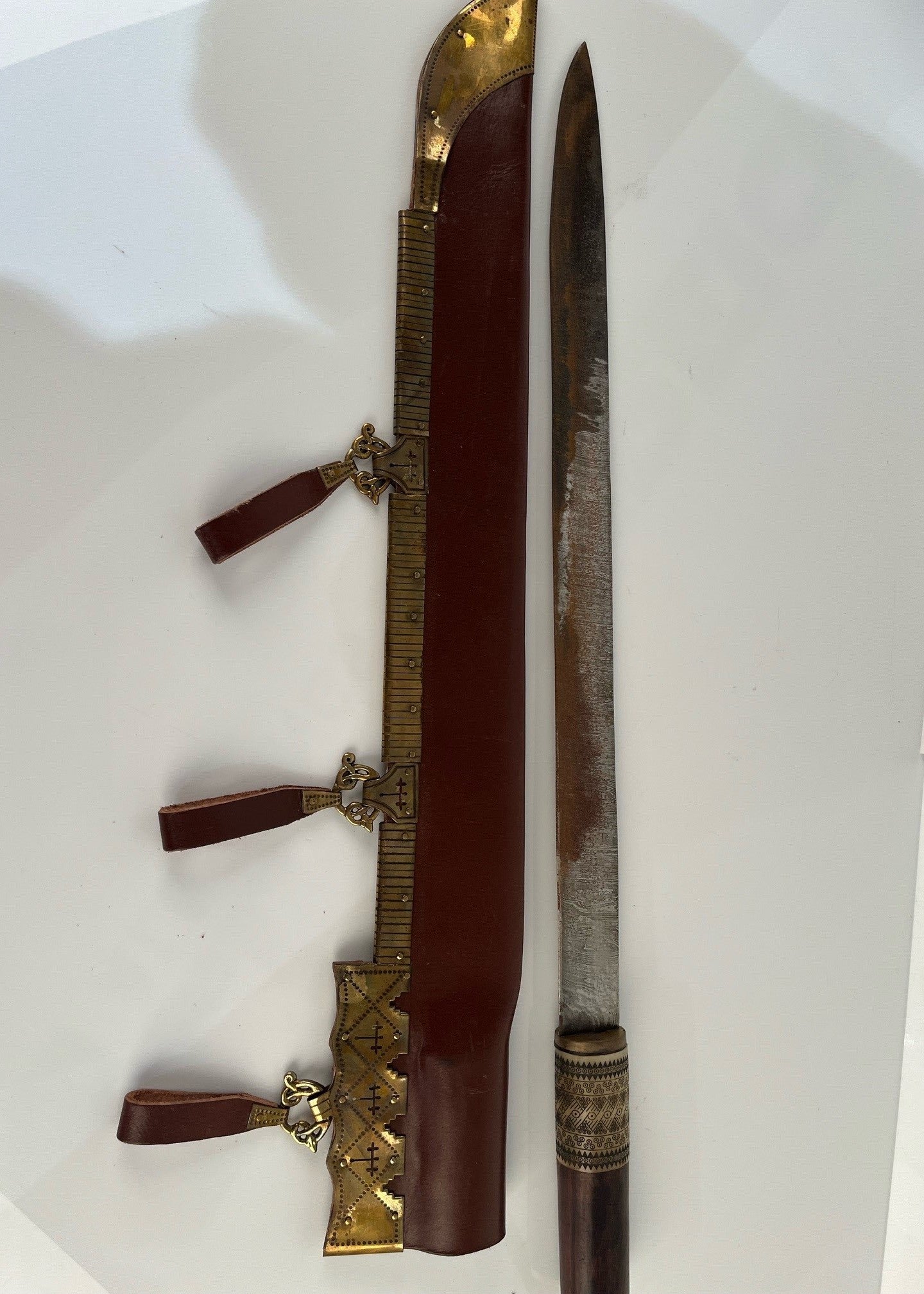
Birka Long Sax, Viking Sax Knife, Damascus Steel, With Flaws
Sold out
Consigue envío gratuito
Península Ibérica
Unión Europea
Importe estimado al añadir este producto. Sujeto al destino de entrega.
Este productos se enviará: 7-10 Day Shipping
Choose options
Consigue envío gratuito
Península Ibérica
Unión Europea
Importe estimado al añadir este producto. Sujeto al destino de entrega.
Este productos se enviará: 7-10 Day Shipping
Consigue envío gratuito
Península Ibérica
Unión Europea
Importe estimado al añadir este producto. Sujeto al destino de entrega.
Este productos se enviará: 7-10 Day Shipping
Birka Long Sax (Seax), Viking Sax (Seax) Knife, Damascus Steel, With Defects
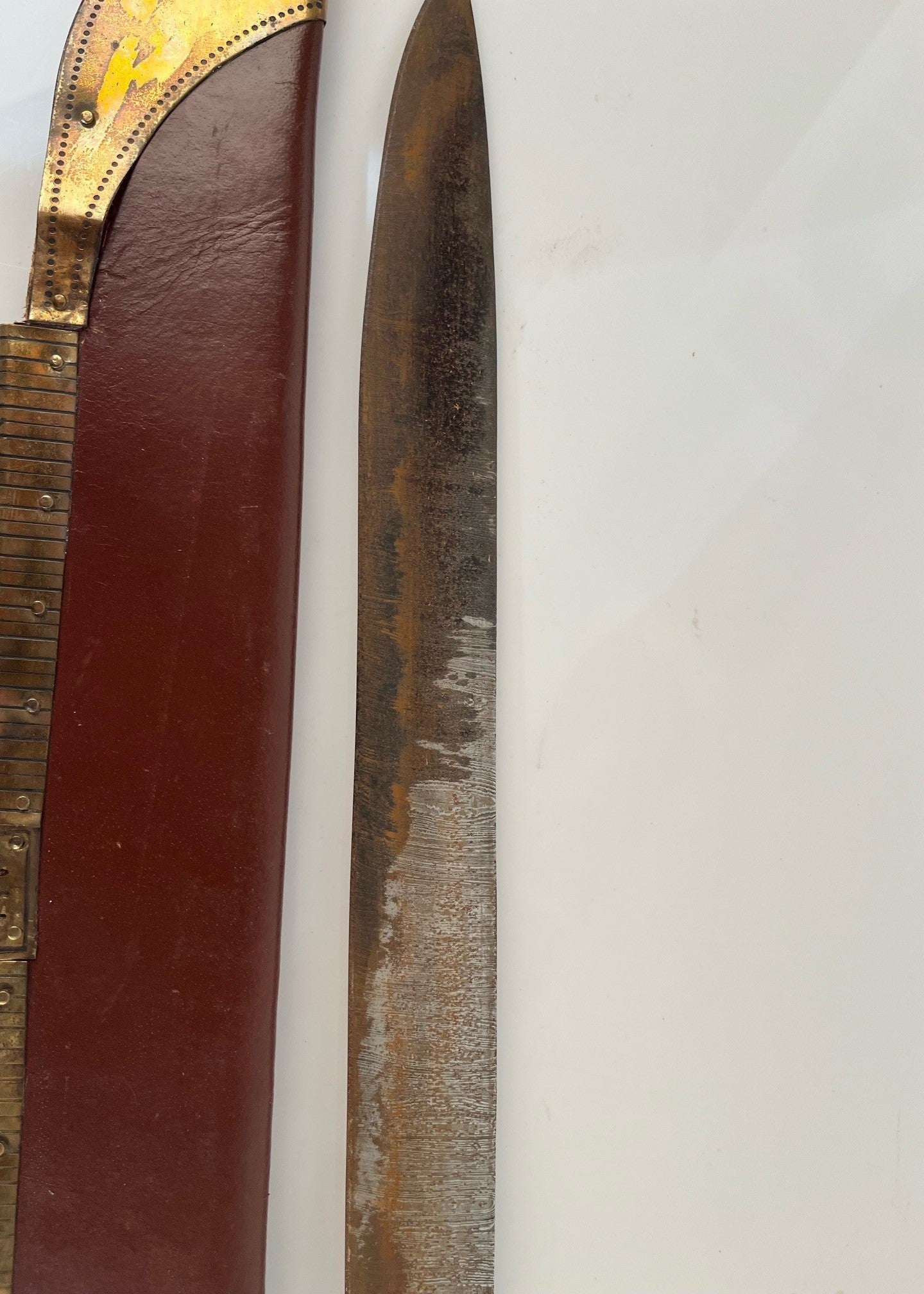
Birka long Sax (Seax), Viking Sax (Seax) knife, with Damascus blade and wood/bone handle, with defects
Defective item at a reduced price:
This Sax (Seax) has a heavily rusted blade (see photos). For this reason, this item is priced at a discount.
Please note that reduced-price products that are explicitly identified as defective items cannot be returned.
Important:
Several items with similar flaws are offered here. The images shown are for illustrative purposes only; the flaws vary from one piece to another.
This Viking-age knife with a sharpened blade made of 256-layer Damascus steel* is based on findings from Björkö/Birka (Grave 944), Sweden. The wood and bone handle has an oval cross-section and therefore fits firmly in the hand. The brass pommel cap is equipped with a practical lanyard hole (the leather strap is included). The bone handle is adorned with elaborate and elegant details. Since this scramasax is entirely handmade, these decorations may vary slightly from one specimen to another. Please also note that bone is a natural product and variations in color and/or grain are quite common. Therefore, no two handles of this Birka Sax (Seax) are the same, and the images above are for illustrative purposes only.
The beautiful sheath is made of vegetable-tanned, hand-dyed leather and decorated with elegant brass fittings. Thanks to three leather loops attached to brass rings, the knife can be worn horizontally on the belt in the typical Viking style. The original Birka findings also served as the model for the stylized details of the sheath.
*The term Damascus steel, Damascus steel or simply Damascus refers to a composite steel made from two or more different types of steel. The name derives from the Syrian city of Damascus, which is considered an ancient stronghold and the origin of Damascus steel production. Typically, a hard high-carbon steel and a soft low-carbon steel are joined through repeated forge welding and folding. The high-carbon steel provides greater hardness, better hardenability, and greater edge retention, while the softer steel gives the blade greater elasticity and higher resistance to breakage. With this technology, which was developed in an era of poor and changing steel qualities, the positive properties of different steels can be combined. Due to the different colors with varying carbon contents, stunning patterns of alternating layers are created, such as the so-called twist Damascus or rose Damascus. Due to these patterns, Damascus swords of the Middle Ages were said to have an inherent magic.
Details:
- Blade material: Damascus steel (4340 and 1070 steel, 256 layers), sharpened edge
- Also available in a regular version with a carbon steel blade (item no. 0364002551)
- Handle material: wood, animal bone, brass
- Overall length: approx. 60 cm
- Blade length: approx. 47 cm
- Weight: approx. 500 g (approx. 820 g with sheath)
- Vegetable-tanned leather sheath with brass fittings and carrying loops
The above specifications may vary slightly from one piece to another.
The steel used here is not stainless and may show slight signs of corrosion. We recommend maintaining the blade regularly, for example with Ballistol, a universal oil that is ideal for preserving steel products.
At Todo Medieval we have thousands of products from the Middle Ages and other eras. Discover them!