




Medieval Tewkesbury Sword, 15th Century Category B
Sold out
Consigue envío gratuito
Península Ibérica
Unión Europea
Importe estimado al añadir este producto. Sujeto al destino de entrega.
Este productos se enviará: 7-10 Day Shipping
Choose options
Consigue envío gratuito
Península Ibérica
Unión Europea
Importe estimado al añadir este producto. Sujeto al destino de entrega.
Este productos se enviará: 7-10 Day Shipping
Consigue envío gratuito
Península Ibérica
Unión Europea
Importe estimado al añadir este producto. Sujeto al destino de entrega.
Este productos se enviará: 7-10 Day Shipping
Get 15th Century Tewkesbury Medieval Sword
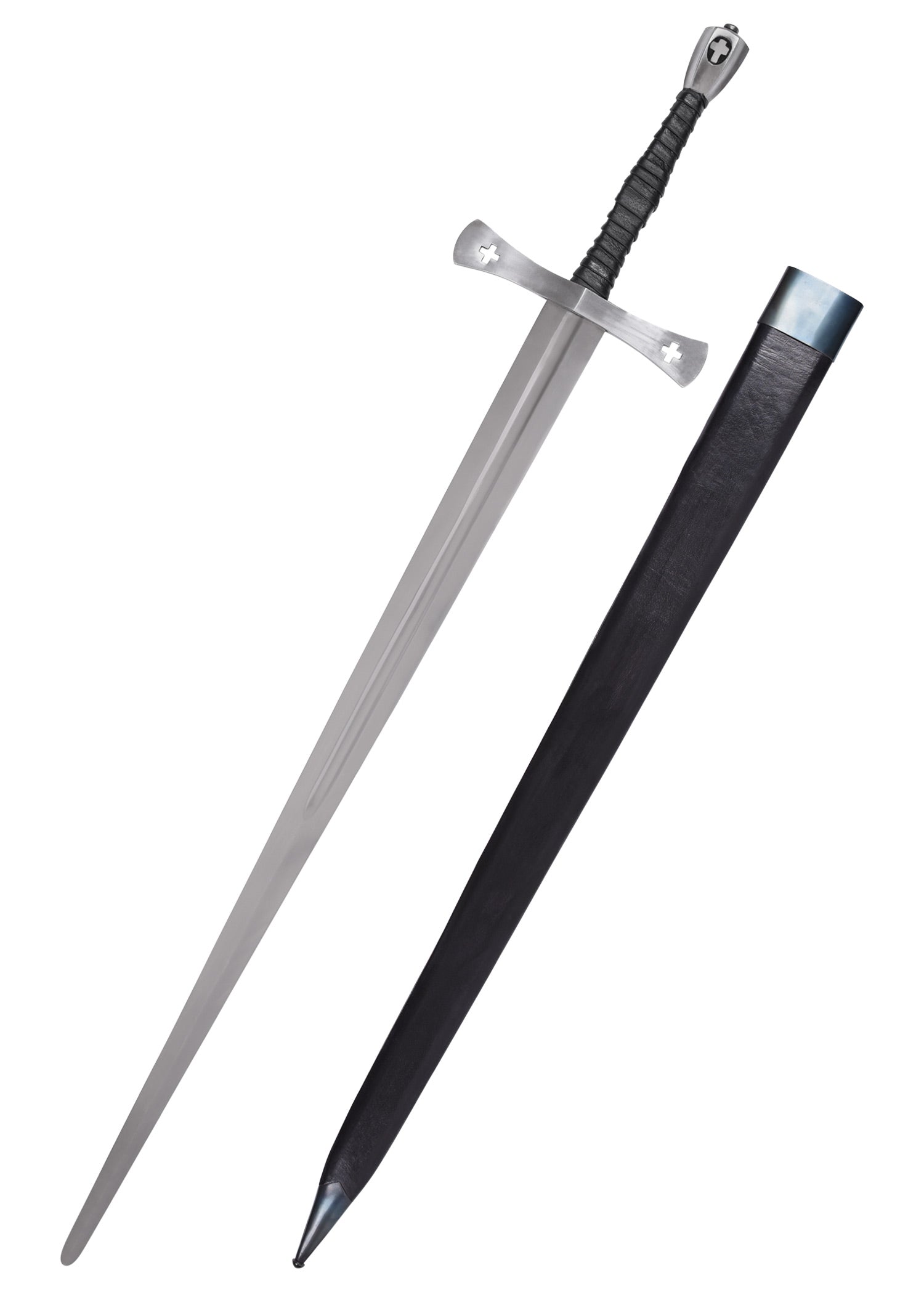
15th century tewkesbury medieval sword with scabbard
The Wars of the Roses (1455–1485) were a series of battles for the English crown fought between the noble houses of York and Lancaster. Both houses were branches of the same European ruling dynasty, the Plantagenets, which had ruled England for three centuries. These civil wars (interspersed with brief periods of relative peace) take their name from the roses that both rival families wore on their respective coats of arms: white for York and red for Lancaster. After 30 years of political maneuvering and horrific bloodshed, the family dispute finally led to the fall of the House of Plantagenet and the rise of the House of Tudor.
The Battle of Tewkesbury, which took place on May 4, 1471, was a decisive victory for the House of York. It ended with the death of the young Lancastrian heir apparent, Edward of Wales, which allowed King Edward IV to finally rule unopposed and ushered in England's longest period of political stability in this multi-generational conflict. When Edward IV died in 1483, power struggles for the throne immediately broke out again.
The Tewkesbury sword, named after this historic battle, is a classic example of a late medieval cut-and-thrust longsword. Although this beautiful and affordable hand-and-a-half sword (also called a bastard sword) is not an exact replica of a historical original from this great English battle, it has the typical characteristics of a traditional late medieval longsword and is inspired by the swords that were likely wielded on both sides of the conflict at that time.
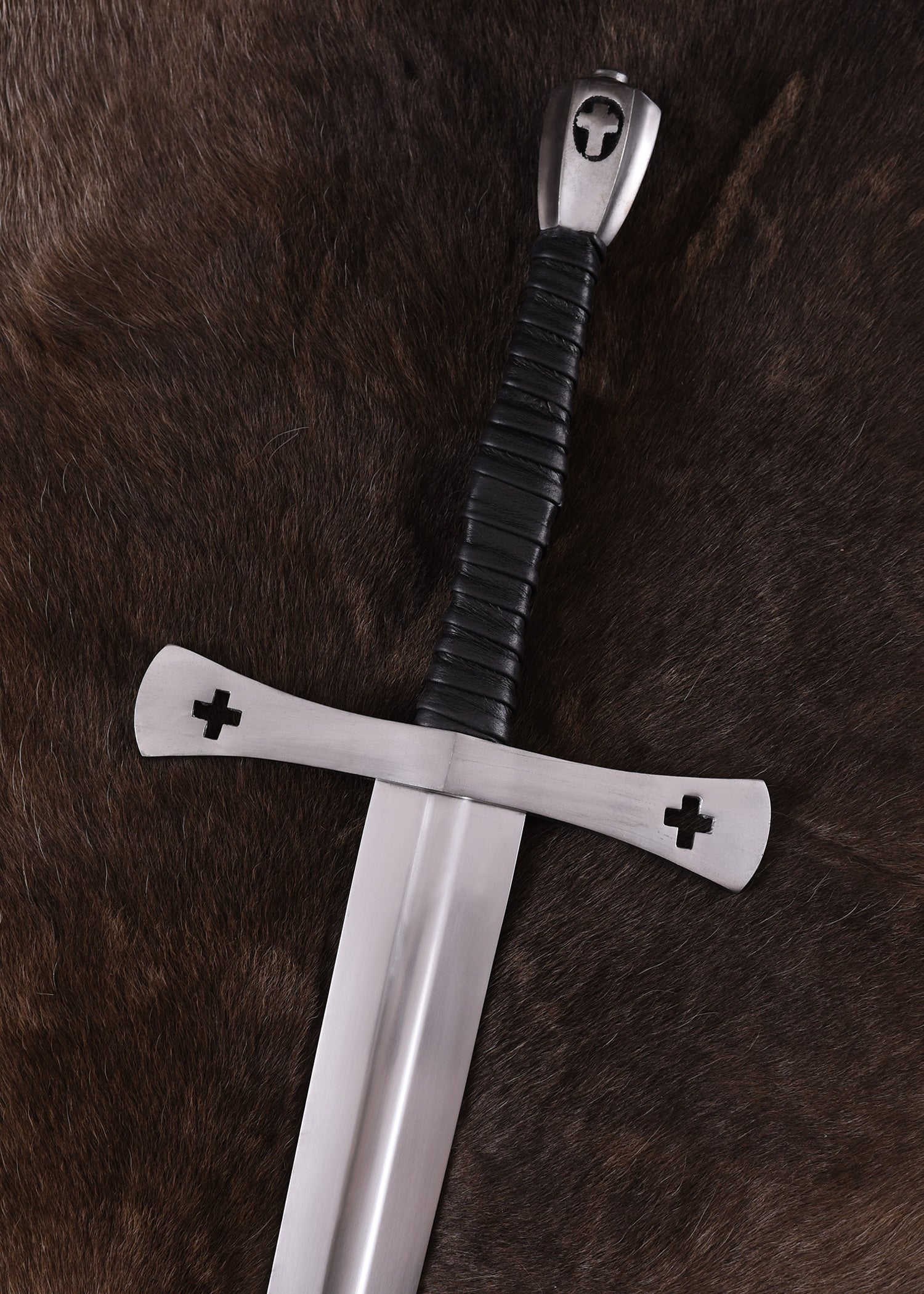
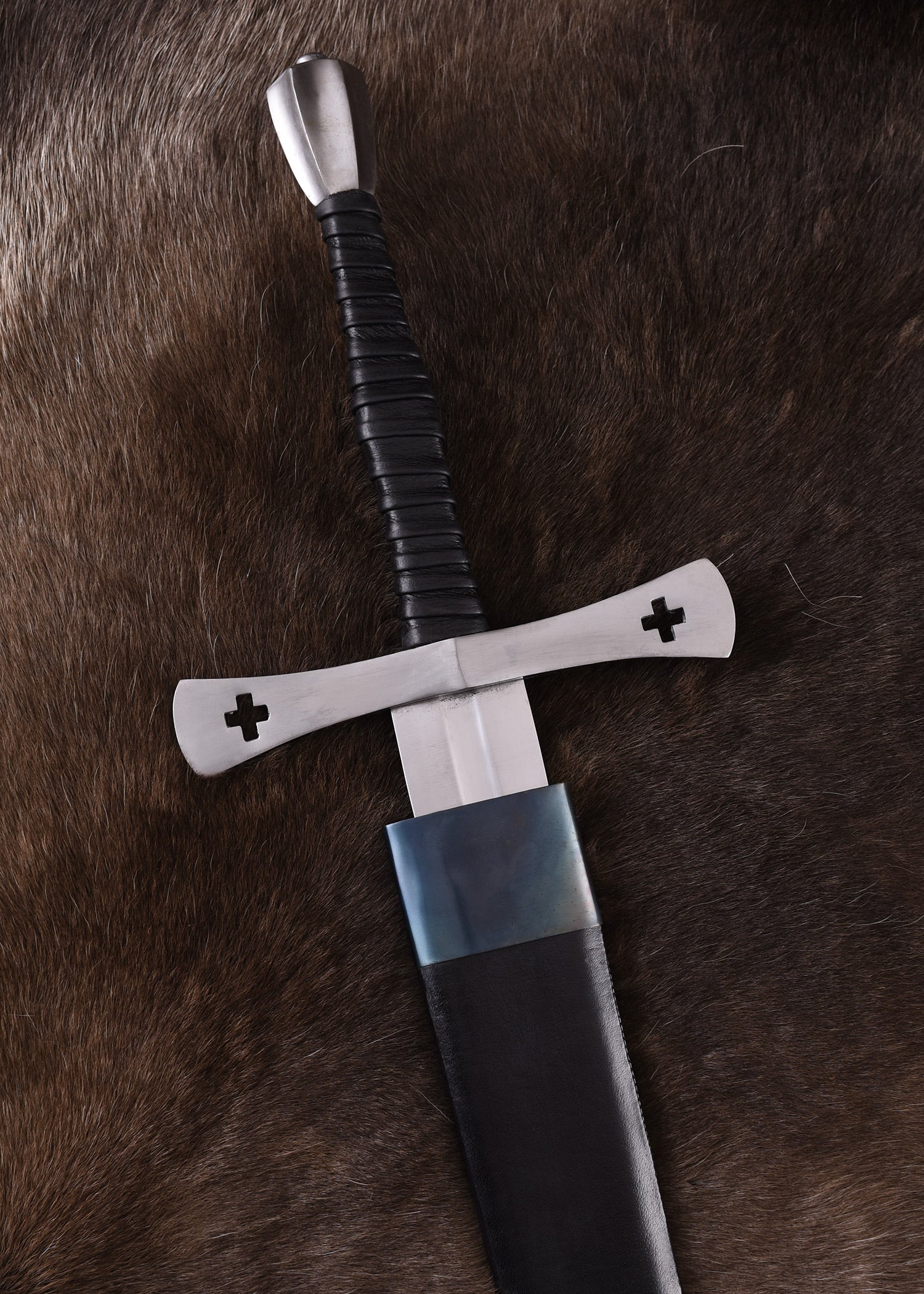
The long, double-edged blade is forged from hardened and heat-treated EN45 spring steel. It tapers gently towards the tip and is fullered on both sides for approximately half its length, with a flattened diamond-shaped cross-section towards the point. The cutting edges are not sharpened, and the full-tang blade is screwed to the end of the handle.
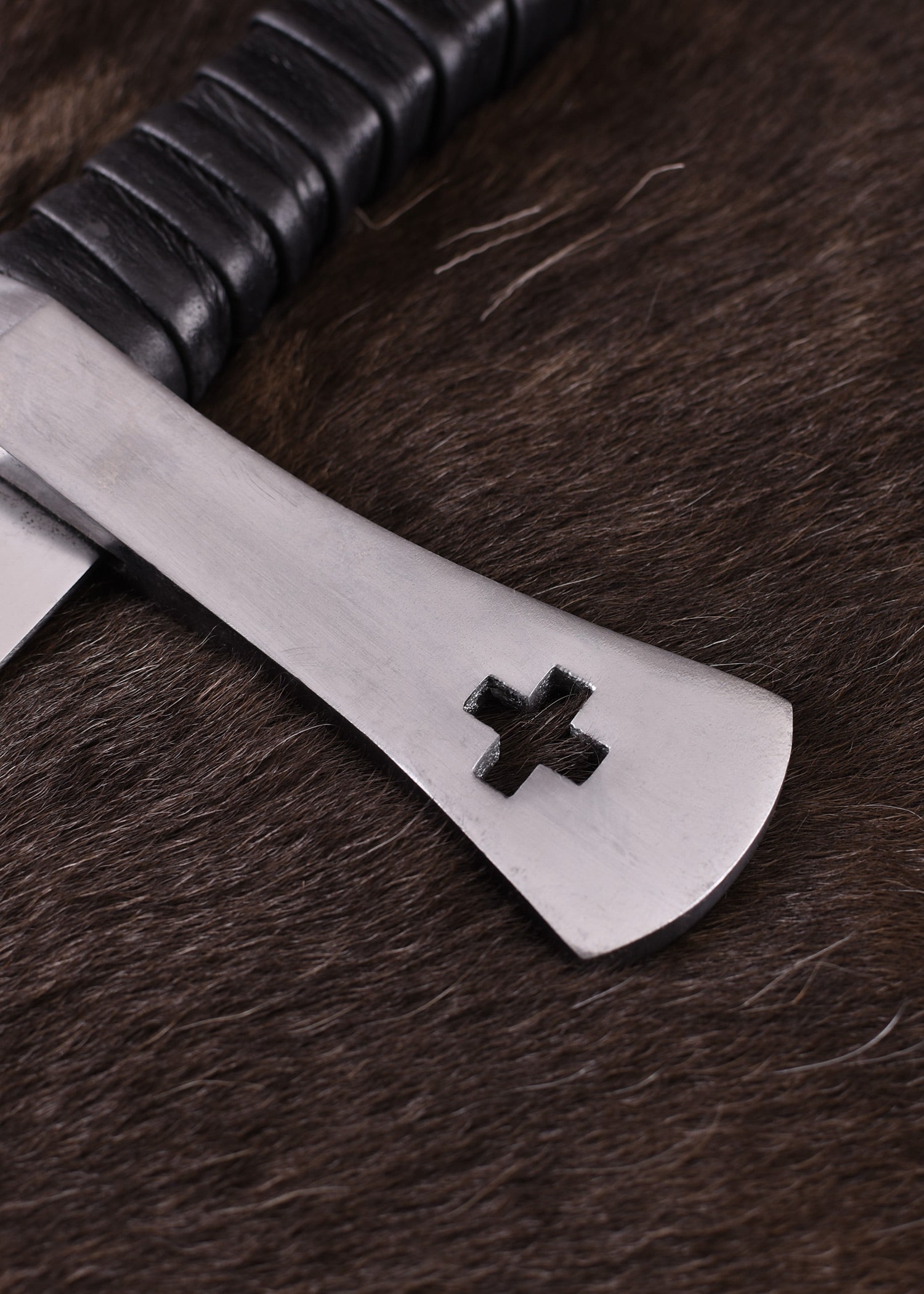
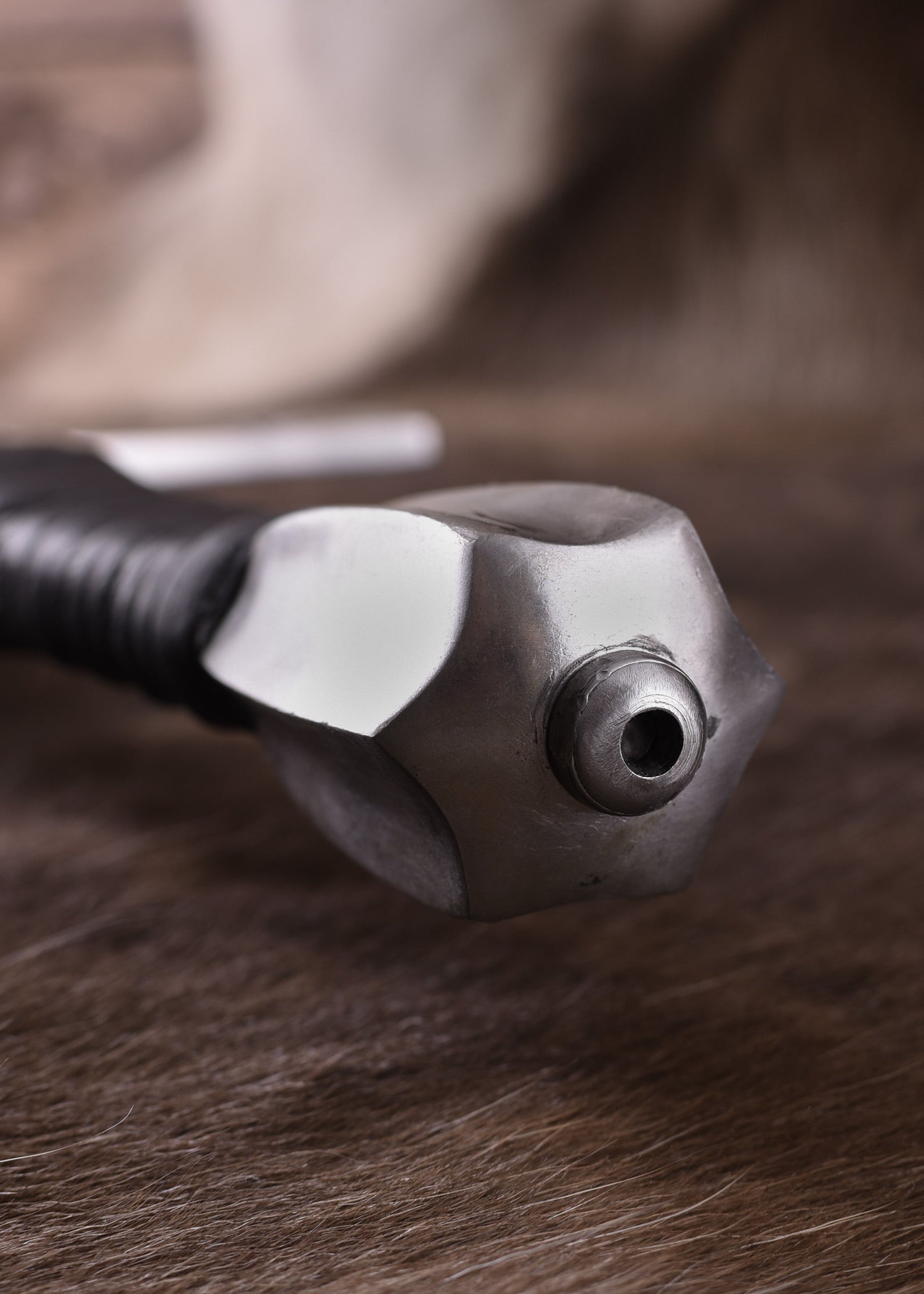
The hilt consists of a wood-core grip wrapped in black leather, a flattened steel crossguard, and an elongated six-faceted scent-stopper pommel, also made of steel, with slightly concave side surfaces. A cross is inlaid on one side of the pommel. The guard is approx. 23 cm long and 0.5 cm thick. Its ends are flared and each is decorated with a cutout cross.
The late medieval hand-and-a-half sword is delivered with a black wood/leather scabbard with blued steel chape and locket.
This sword is designed as a collector's item or decorative object and is also ideal as an accessory, for example to complete your costume.
Details:
- Material: EN45 spring steel blade (carbon steel, not stainless), steel guard and pommel, wooden handle with leather wrap
- Overall length: approx. 118 cm
- Blade length: approx. 90 cm
- Handle length: approx. 25 cm (grip section approx. 19 cm)
- Max. blade width: approx. 5.5 cm
- Point of balance: approx. 12.5 cm from the guard
- Incl. wooden scabbard with genuine leather wrap and steel fittings
- Weight without scabbard: approx. 1.8 kg
- Weight with scabbard: approx. 2.4 kg
The above specifications may vary slightly from piece to piece.
The steel used here is not stainless and may show slight signs of corrosion. We recommend that you maintain the blade and scabbard regularly, for example with Ballistol, a universal oil that is ideal for preserving steel products.
At Todo Medieval we have thousands of products from medieval and other eras. Discover them!