





Medieval Store Blog General
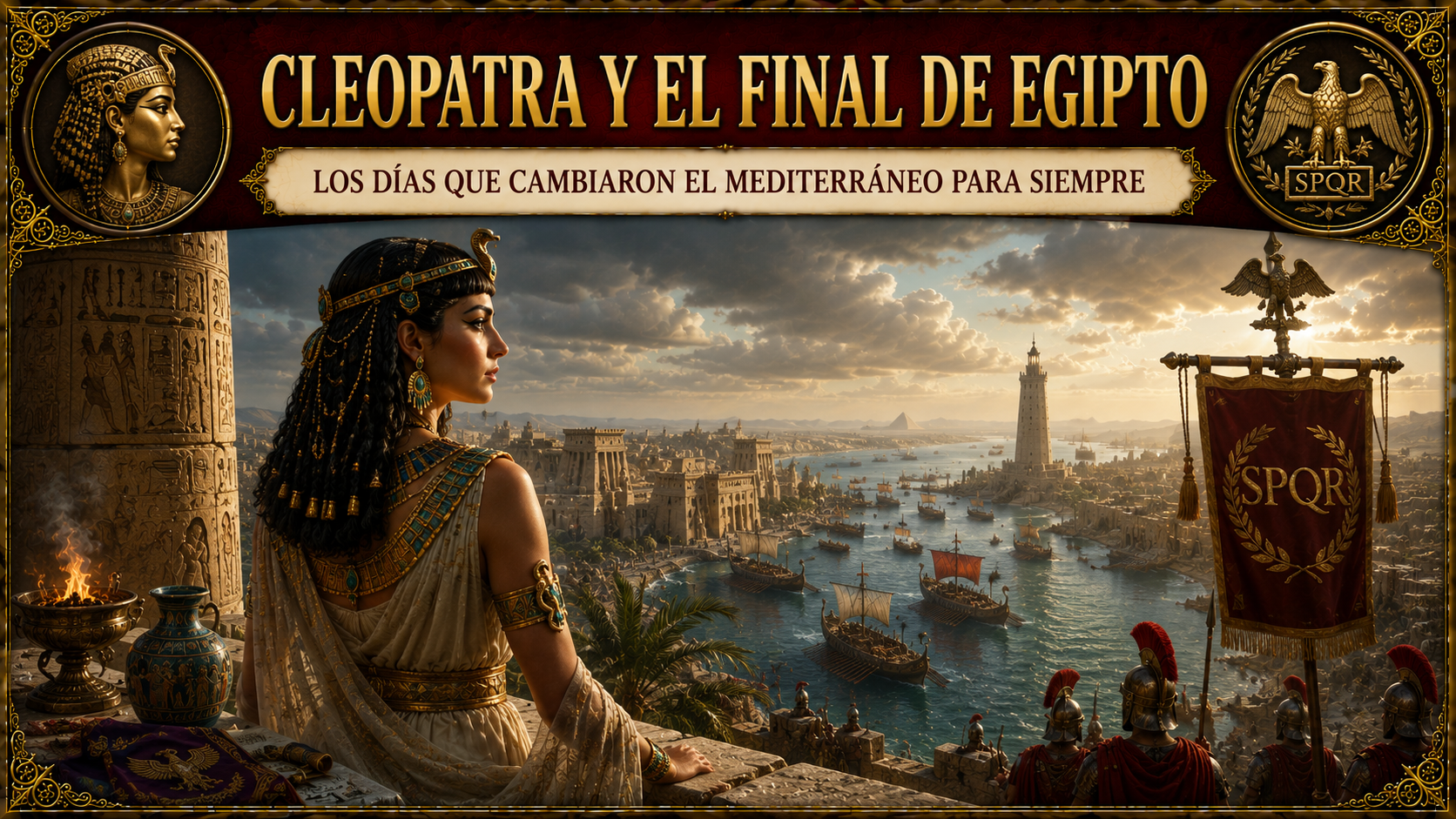
Egipto
Cleopatra and the End of Egypt: The Days That Changed the Mediterranean Forever
The fall of Cleopatra did not just signify the end of ancient independent Egypt, but also a decisive moment in the history of the Mediterranean.
The conquest of Alexandria by Octavian and the disap...
Cleopatra, Rome, and the birth of a new world
In August of 30 BC, two events changed the history of the Mediterranea...

Egipto
Khopesh: the curved sword of the pharaohs, a symbol of power in Ancient Egypt
The khopesh was one of the most iconic weapons of Ancient Egypt and a symbol of the pharaohs' power.Its characteristic curved blade made it one of the most recognizable swords in history.
Discover...
A weapon associated with the splendor of the New Kingdom
Throughout history, there have been countless legendary wea...

Arquitectura
213 years since the rediscovery of the Abu Simbel temple and the colossal statues of Ramses II in Egypt
The temple of Abu Simbel, carved in Nubia and built by Ramses II, houses colossal 20-meter statues and an interior that is astronomically aligned.
Rediscovered by Johann Ludwig Burckhardt in 1813 a...
The Abu Simbel temple, carved into a cliff in Nubia, southern Egypt, near the border with Sudan, is a monumental com...

África
Intef II: historical context and role in Egypt's Second Intermediate Period
Wegaf was a poorly documented pharaoh of the 13th Dynasty who ruled during Egypt's Second Intermediate Period, a time marked by political fragmentation and instability.
His brief reign reflects the...
Khepri II, also known in Egyptology as Jepri II, was a poorly documented pharaoh of the 13th Egyptian dynasty, a per...
