





Ancient Warfare Magazine Vol X.2 - Wars in Hellenistic Egypt
€11,94 EUR
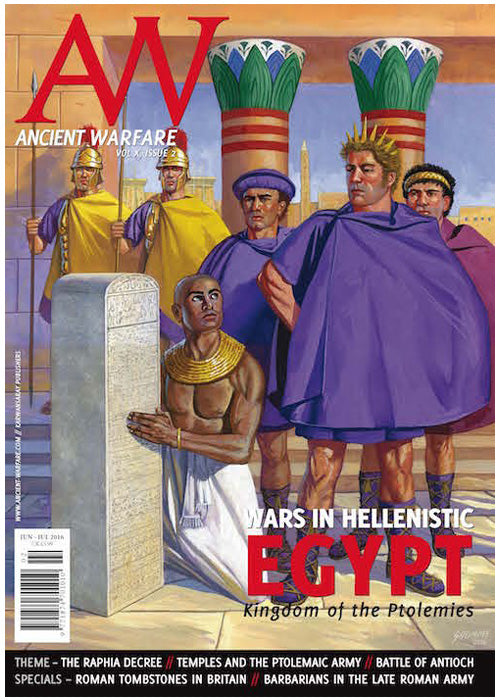
Ancient Warfare Magazine Vol X.2 - Wars in Hellenistic Egypt
In stock
Este productos se enviará: 7-10 Day Shipping
Choose options
In stock
Este productos se enviará: 7-10 Day Shipping
In stock
Este productos se enviará: 7-10 Day Shipping
Enjoy Ancient Warfare Magazine Vol X.2 - Wars in Hellenistic Egypt
Ancient warfare magazine vol x.2 - wars in hellenistic egypt
Topic: joshua j. mark, ptolemaic kingdom - historical introduction
Egypt had been dominated by a foreign power since it fell into the hands of the persians in 525 bce. when alexander the great conquered the
Persian empire in 331 bce, he founded the city of alexandria as the new capital of egypt. after his death, one of his generals, ptolemy lagides -later known as ptolemy i soter ('the savior')- took control of egypt and founded the hellenistic dynasty that would bear his name. this ptolemaic dynasty would last until egypt was taken under roman rule in 30 bce.
Source: michael j. taylor, ptolemy the pharaoh - the decree of raphia
The battle of raphia was one of the greatest battles of the hellenistic world (see ancient warfare iv.6). ptolemy iv, also known as a lazy alcoholic, played an unexpectedly important role, personally rallying his phalanx to crush the seleucid center. to celebrate the triumph, a group of high-ranking egyptian priests, no doubt with the open encouragement and warm approval of the palace, erected a series of commemorative stelae, written in greek, egyptian hieroglyphs, and demotic.
Topic: mateo beazley, thorakitai - armed in the roman manner
All the successor kingdoms carried out military reforms in response to external threats. at the end of the 3rd century bce, a new type of soldier appeared in written accounts. ancient writers such as polybius referred to these soldiers as thorakitai ('men with cuirasses'). they were heavy infantry employed in situations that would have been disadvantageous for a phalangite force.
Topic: arnold blumberg, stratiotes hos euergetai - army and temple building in ptolemaic egypt
During the approx. 300 years that the ptolemies ruled egypt, the nation's army played a fundamental role in shaping the economic development of the kingdom, as well as in creating a more ethnically integrated society. during the 2nd and 1st centuries bce, this relationship was marked, among other things, by the funding, construction, and dedication of religious temples by officers and rank-and-file soldiers of the egyptian army.
Topic: marc g. desantis, egyptian leviathans - the battle fleet of ptolemy ii philadelphus
The fleet of ptolemy ii philadelphus of egypt (r. 283-246 bce) was an extraordinary variety of ships. as reported by athenaeus of naucratis in his deipnosophistae, this remarkable fleet contained some 224 ships in the categories of quadriremes, triremes, and lighter vessels, but what is most striking about the egyptian navy is the large number of large, even giant, warships that ptolemy ii possessed.
Topic: sidney e. dean, road to antioch - the beginning of the end of hellenistic rule in the east
The six syrian wars between the ptolemaic dynasty of egypt and the seleucids of asia minor seriously weakened the hellenistic kingdoms. this benefited rome, whose intervention to end the last syrian war in 168 bce left egypt dependent on the protection of the senate. the continuation of inter-hellenistic conflict in the decades following the sixth syrian war finally led to the loss of the eastern satrapies of the seleucid empire and paved the way for roman dominance over egypt and asia minor. a crucial moment was the battle of antioch in 145 bce.
Topic: alex zakrzewski, to the barricades! urban warfare in ancient alexandria
At the end of 48 bce, julius caesar arrived in alexandria in search of his great rival pompey the great. although he was horrified to learn that the egyptians had murdered pompey, he was at the same time intrigued to discover the ruling ptolemies in the midst of a dynastic civil war. the alexandrians felt no great love for their royal family, but they absolutely hated roman interference in their affairs. when caesar announced that he would take sides, the entire city rebelled. the conqueror of gaul suddenly found himself fighting a costly battle for survival in the streets of one of the great cities of the ancient world.
Topic: seán hußmann, war of words: rome and egypt in the time of mark antony
We tend to think of political propaganda as a modern invention, a devious method devised by the stalins and goebbelses of the industrialized world to influence the masses, incite them against a common enemy, and legitimize their own worldview. propaganda, however, has existed since humans began to organize themselves into political communities.
Special: paolo morisi, in the name of the roman empire - roman military tombstones in great britain
Although the roman army often prevailed, many of its soldiers died by the sword and their slaughtered bodies littered the battlefield. whether roman soldiers died in battle or of old age, they were often buried under colorful tombstones which, along with the remains of forts and artifacts, represent a vital source of information about their war machine. these monuments not only allow us a glimpse of what roman soldiers were like, but also help us understand the importance of combat and warfare in ancient society.
Special: jeroen wijnendaele, enemy within - barbarian recruitment in the late roman empire
Generations of historians have often treated the large-scale recruitment of barbarians into the late roman army as one of the root causes of the decline of the western roman empire. but the evidence coming from literary and material sources on the views of this so-called "barbarization" of the field armies during the 4th century ce has been exaggerated and misinterpreted. on the contrary, the increasing presence of barbarians in the roman war machine did not diminish the status of the empire as a mediterranean superpower.
Hollywood novels: graham sumner, the roman army on screen, part 4 - the robe (1953) and demetrius and the gladiators (1954)
Hoping to capitalize on the success of quo vadis, the entry of rival studio twentieth-century fox into the epic genre was the robe, an adaptation of a bestseller novel written by lloyd c. douglas. the robe was also the first film to be released in the new widescreen cinemascope process, marketed as the miracle of entertainment that you can see without glasses, a shrewd commentary on the then-current fad for 3d films.
At Todo Medieval we have thousands of medieval and other era products. Discover them!
Free shipping
The entire Iberian Peninsula from €60 (*Does not include islands) and worldwide shipping check our rates
Customer service
We are available from Monday to Friday to answer your questions.
Secure Payment
We comply with all regulations to ensure Secure Payment
Contact us
Need to contact us? Simply send us an email at [email protected]
