





Sir William Marshall Sword with Damascus Steel Blade, Sharpened
€689,98 EUR
Sir William Marshall Sword with Damascus Steel Blade, Sharpened
Este productos se enviará: 7-10 Day Shipping
Otros clientes también compraron...

Choose options
Este productos se enviará: 7-10 Day Shipping
Otros clientes también compraron...
Este productos se enviará: 7-10 Day Shipping
Otros clientes también compraron...
Give the Gift of a Sir William Marshall Sword with Damascus Steel Blade.
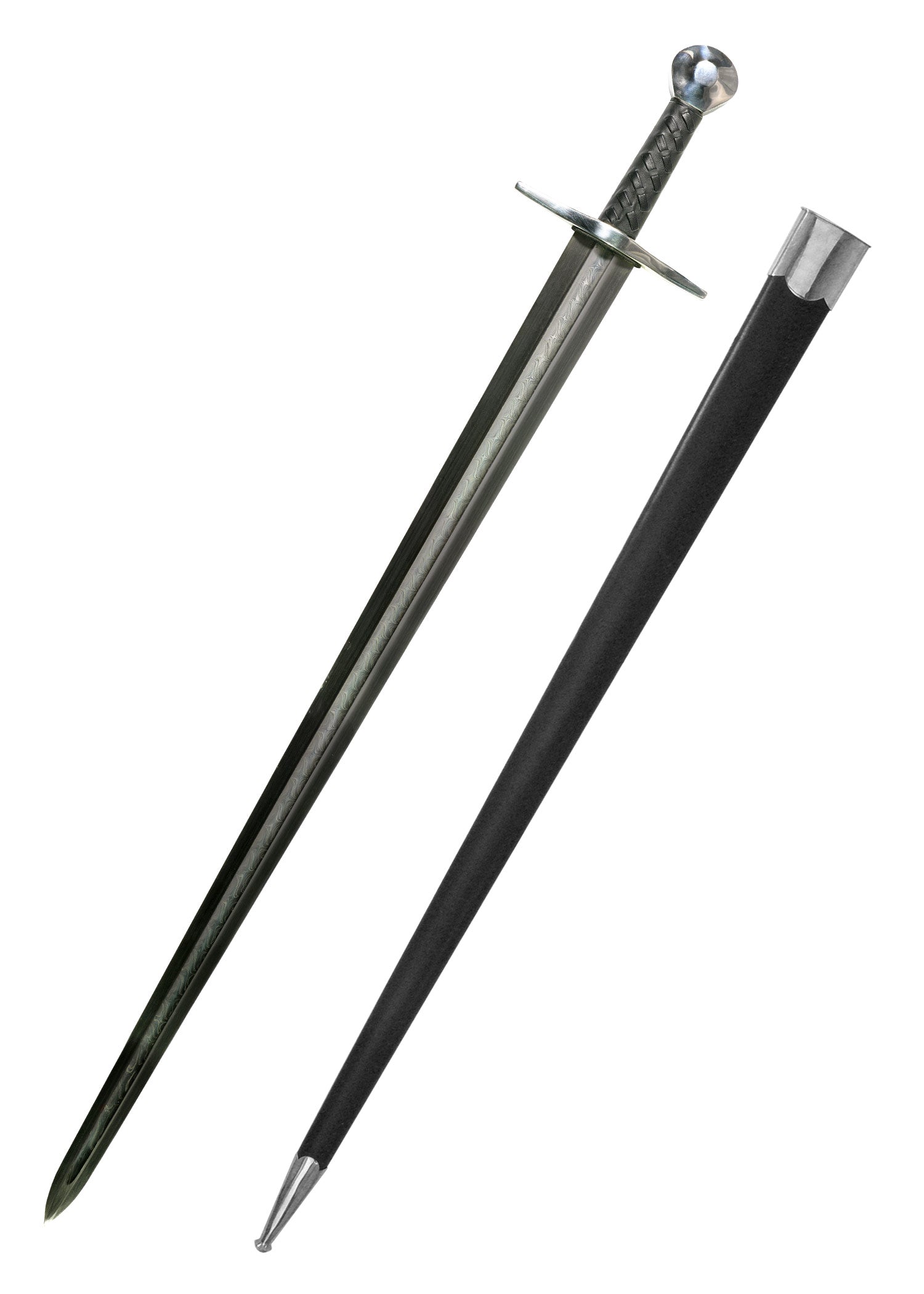
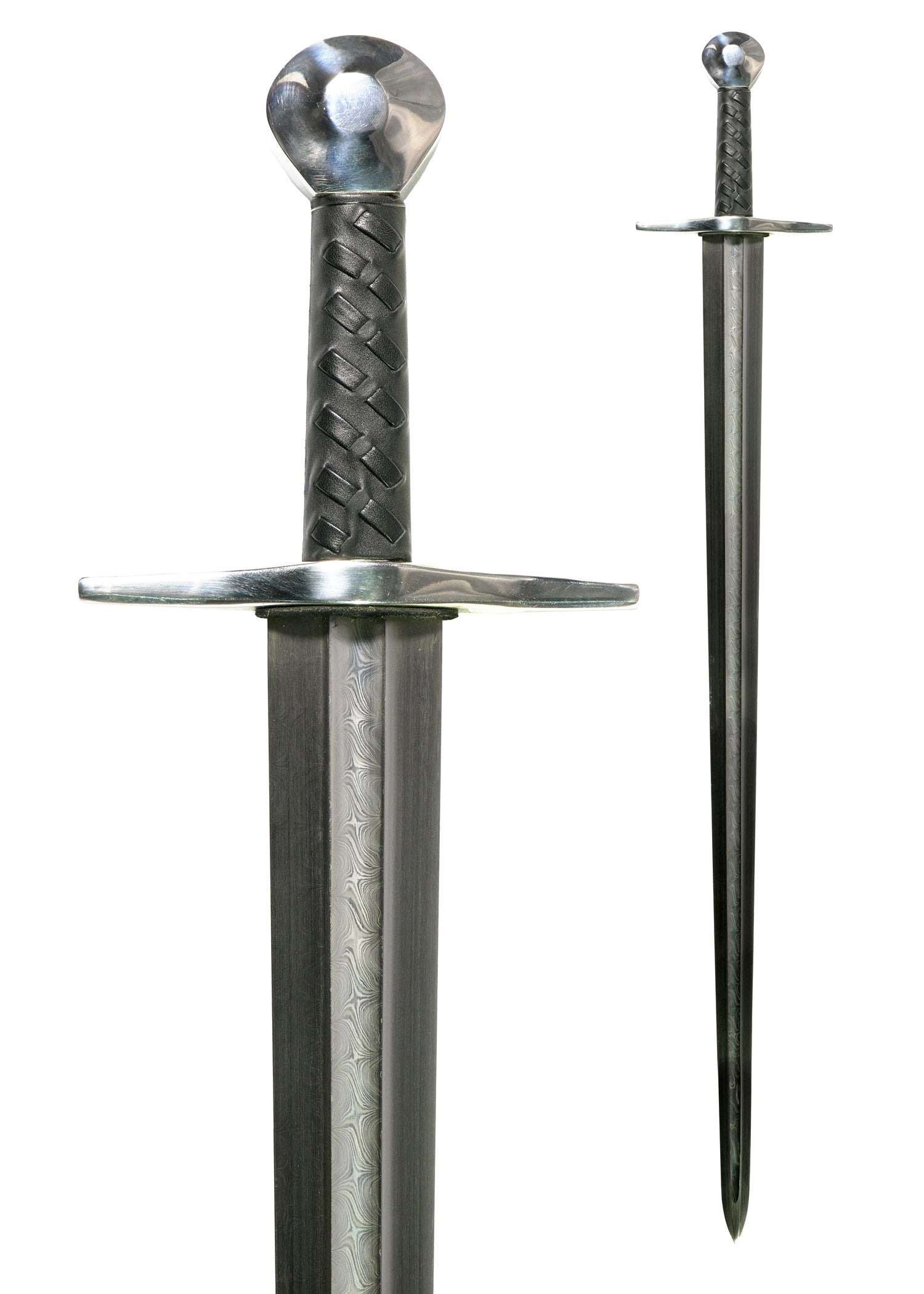
Sir William Marshall sword with Damascus steel blade
This Hanwei one-handed sword sets new standards of quality and authenticity in broadsword design. One of England's proudest knights, Sir William Marshall, who served the crown loyally under Henry II, Richard the Lionheart, and John Lackland, carried this beautiful sword. Our replica is a detailed reproduction of the original, which is now on display in a British museum.
The one-handed sword is available with two different blades: one with a carbon steel blade, but also with a Damascus steel blade (HN-SH2001). Both blades are heat-treated to a Rockwell hardness of HRC 52 and offer the same handling properties. The blade has a central fuller along its entire length, a huge challenge for the blacksmith, resulting in a great combination of speed and strength. The handle is wrapped and lined with leather. The crossguard and pommel are compelling for their simple elegance and functionality. The scabbard is leather-covered and has steel fittings.
A sword for connoisseurs and enthusiasts.
Key features:
- Authentic replica of a museum original.
- Excellent balance;
- Fully functional
- Folded Damascus steel blade
The term Damascus steel, Damask steel, or simply Damascus refers to a composite steel made from two or more different types of steel. The name derives from the Syrian city of Damascus, which is considered an ancient stronghold and the origin of Damascus steel production. Typically, a hard high-carbon steel and a soft low-carbon steel are joined by repeated forge welding and folding. The high-carbon steel provides greater hardness, better hardenability, and increased edge retention, while the softer steel gives the blade greater elasticity and higher resistance to breakage. With this technology, which was developed in an era of poor and inconsistent steel qualities, the positive properties of different steels can be combined. Due to the different colors of steels with varying carbon contents, impressive patterns of alternating layers are created, such as the so-called twist Damascus or rose Damascus. Because of these patterns, Damascus swords of the Middle Ages were said to have inherent magic. The Edda describes a Damascus sword as a bloody worm or a venomous serpent.
Details:
- Total length: approx. 101.6 cm.
- Blade length: approx. 84.5 cm.
- Handle length: approx. 17.15 cm.
- Weight: approx. 926 g.
- Center of gravity: approx. 20.3 cm
- Harmonic point: approx. 58.4 cm
- Width at the crossguard: approx. 46.5 mm
- Width at the tip: approx.
- Thickness at the crossguard: approx. 5.6 mm
- Thickness at the tip: approx. 0.46 mm
- Manufacturer's item number: SH2001
Information may vary slightly from one specimen to another.
This sword is also available in a more economical version with a carbon steel blade (item number HN-SH2000).
At Todo Medieval we have thousands of medieval and other historical products. Discover them!
Free shipping
The entire Iberian Peninsula from €60 (*Does not include islands) and worldwide shipping check our rates
Customer service
We are available from Monday to Friday to answer your questions.
Secure Payment
We comply with all regulations to ensure Secure Payment
Contact us
Need to contact us? Simply send us an email at [email protected]
