





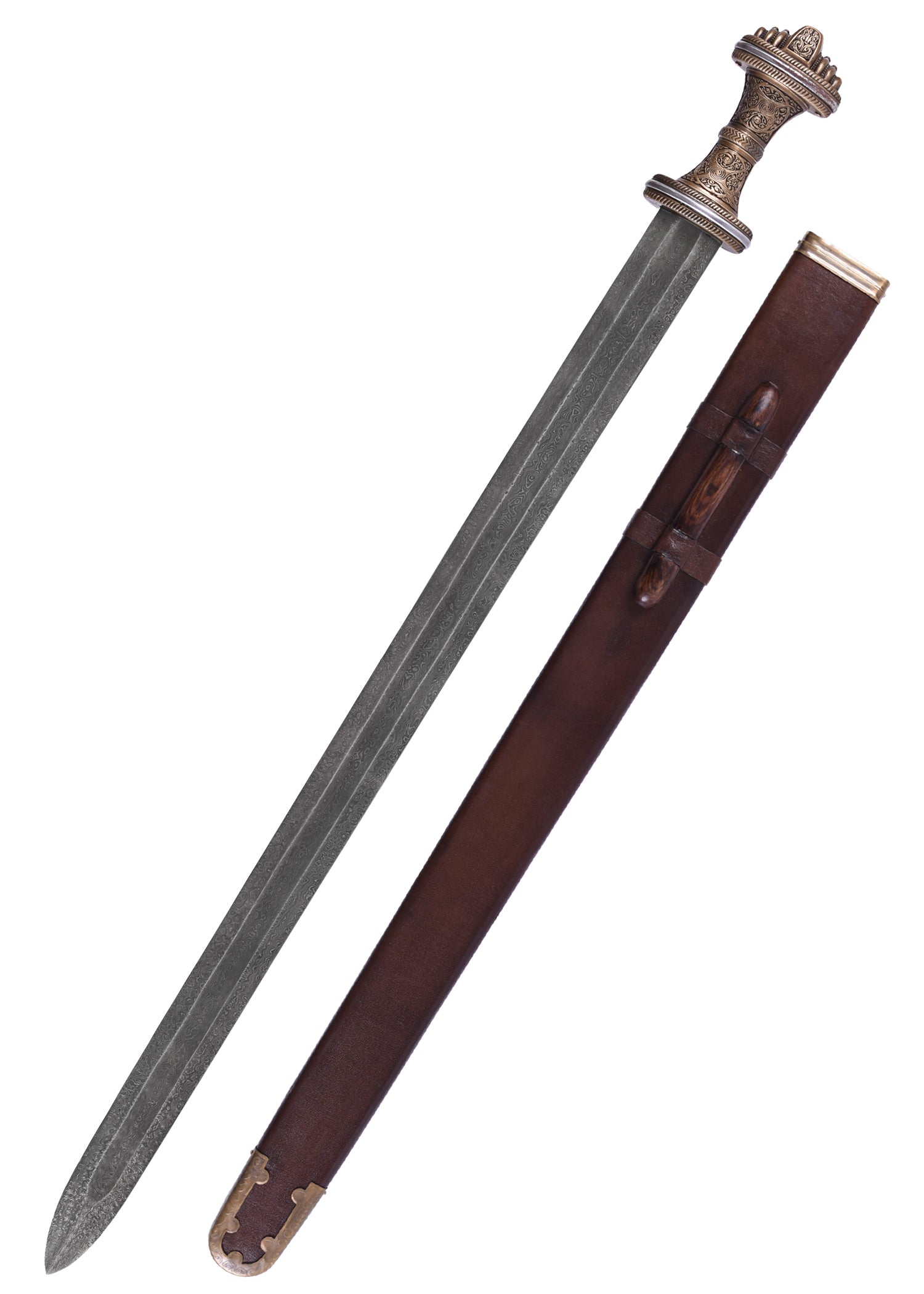
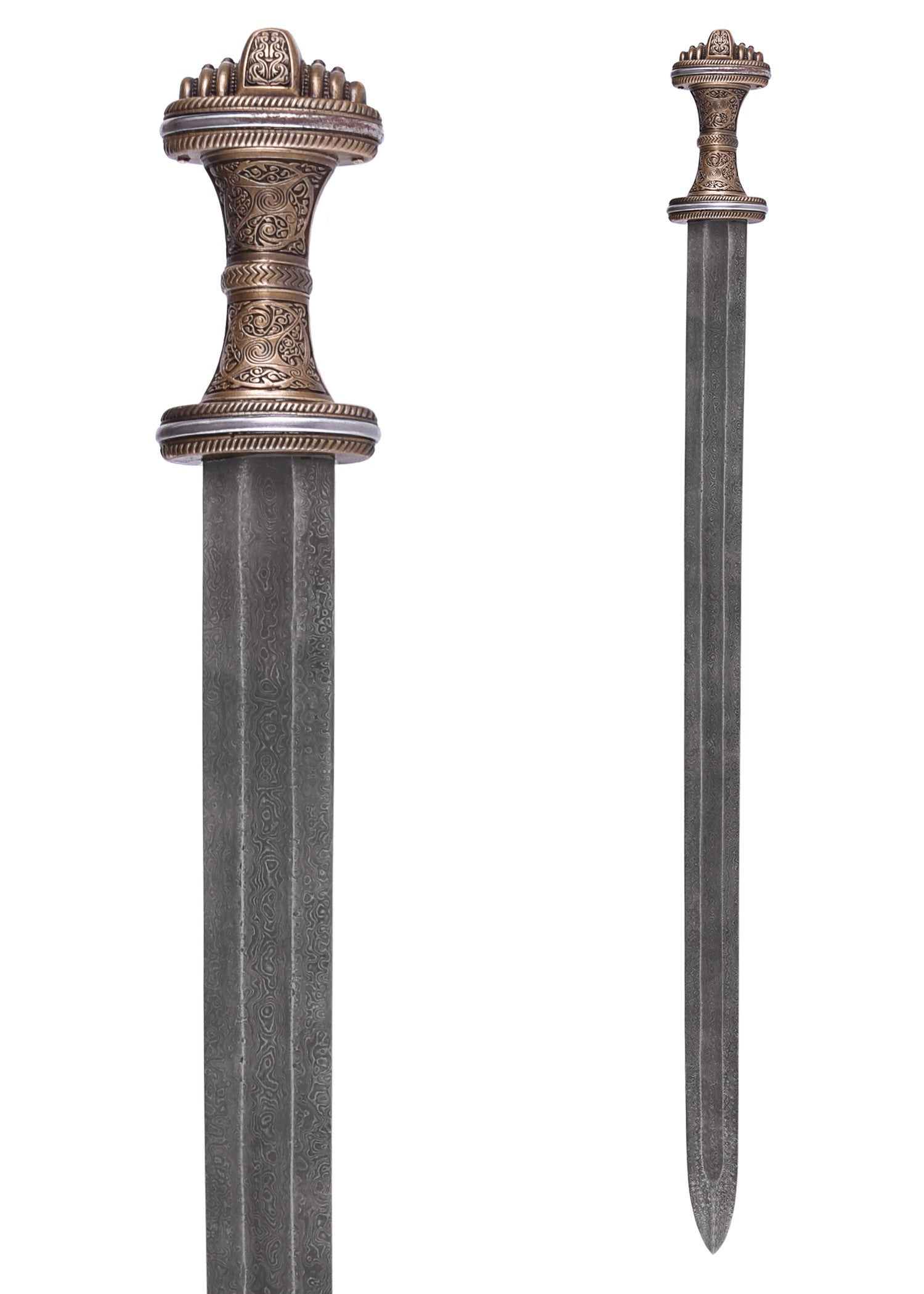
Anglo-Saxon Fetter Lane Sword, 8th Century, Damascus Steel, Category C
Este productos se enviará: 7-10 Day Shipping
Otros clientes también compraron...

Choose options
Este productos se enviará: 7-10 Day Shipping
Otros clientes también compraron...
Este productos se enviará: 7-10 Day Shipping
Otros clientes también compraron...
Gift the Fetter Lane Anglo-Saxon Sword, 8th Century, Damascus Steel
Fetter Lane Anglo-Saxon sword with scabbard, 8th century, Damascus blade
This magnificent one-handed Anglo-Saxon sword is based on the remains of an original artifact (the upper part of a sword hilt, including the pommel) that was unearthed during construction work on Fetter Lane, London (hence the name) and donated to the British Museum in 1893. The original find, of gilded silver, very well preserved and beautifully detailed, is an absolutely unique piece of mid-Anglo-Saxon history that can still be admired today at the British Museum in London. Due to its construction, shape and sophisticated ornamentation, this finely crafted masterpiece dates back to the late 8th century. It is believed to have been part of the prestige or ceremonial weaponry of a wealthy warrior or nobleman of Germanic descent.
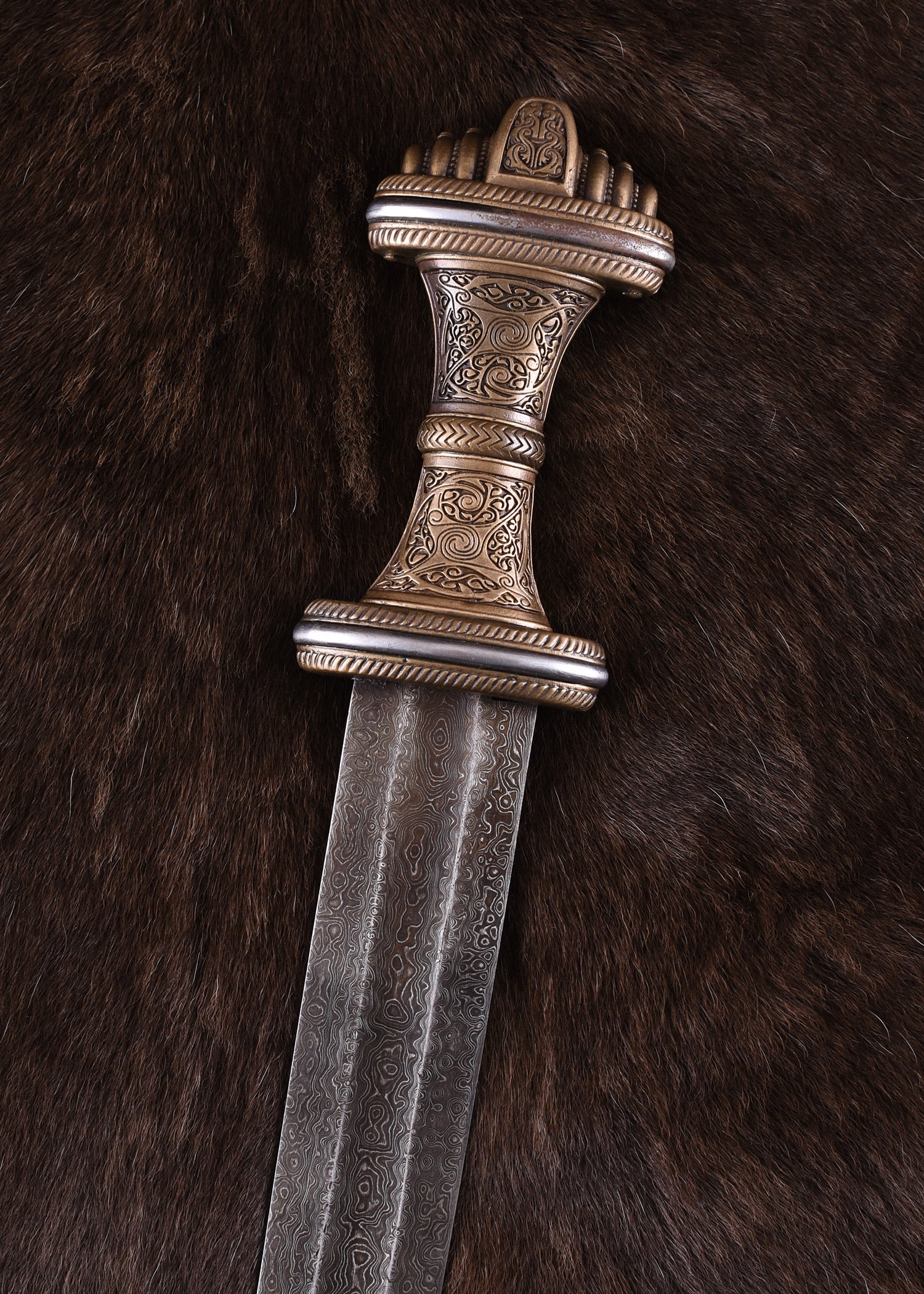
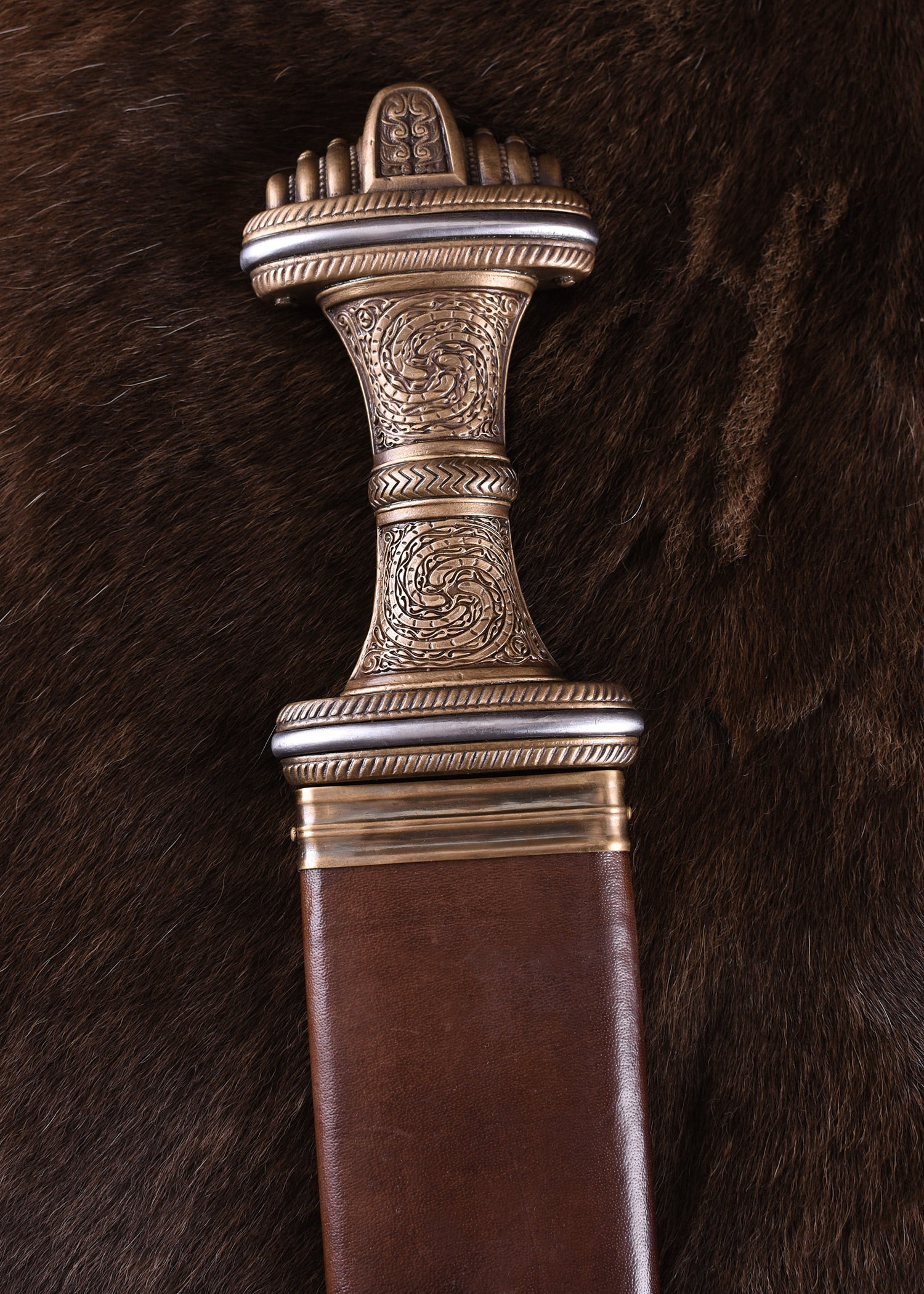
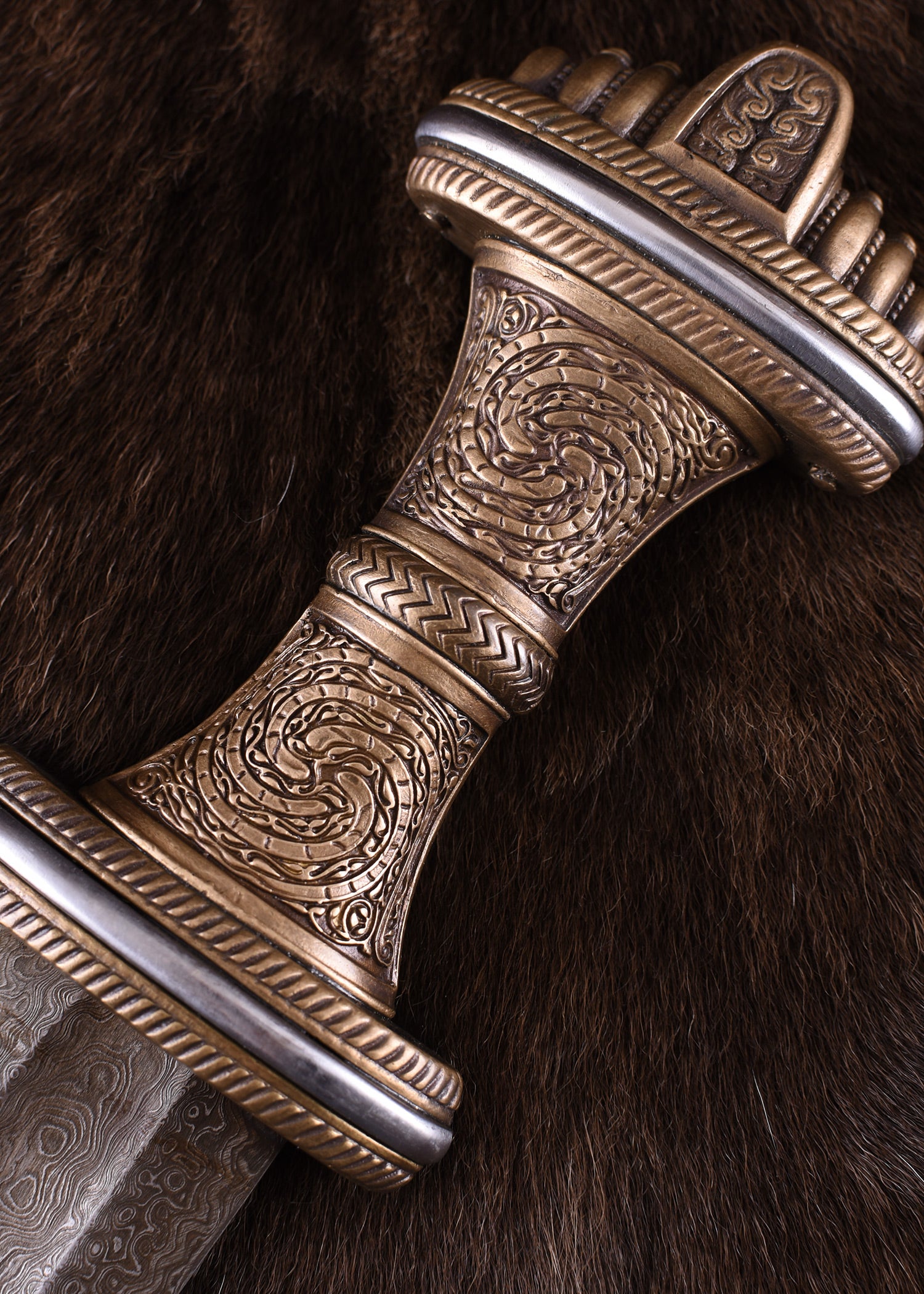
Since the blade is missing from the original archaeological find, a classic (wide, straight, double-edged) early medieval style blade was selected for this detailed reconstruction of the Fetter Lane sword. It is made of Damascus steel* and has a wide fuller on both sides that extends almost to the tip. The parallel cutting edges are not sharpened. The richly decorated hilt is made of brass. Like the original, it consists of several pieces riveted together. The filigree motifs that adorn the museum piece have been reproduced as faithfully as possible. The top cap of the pommel consists of an arched central element, which is framed on both sides by three smaller beads with wire patterns. The pommel base and the guard are constructed in three parts with diagonal decorative fluting and a tinned brass intermediate layer. The luxuriously decorated hilt features different intertwined plant/leaf and animal motifs on each side (writhing serpents on one side and a bird or eagle-like creature on the other).
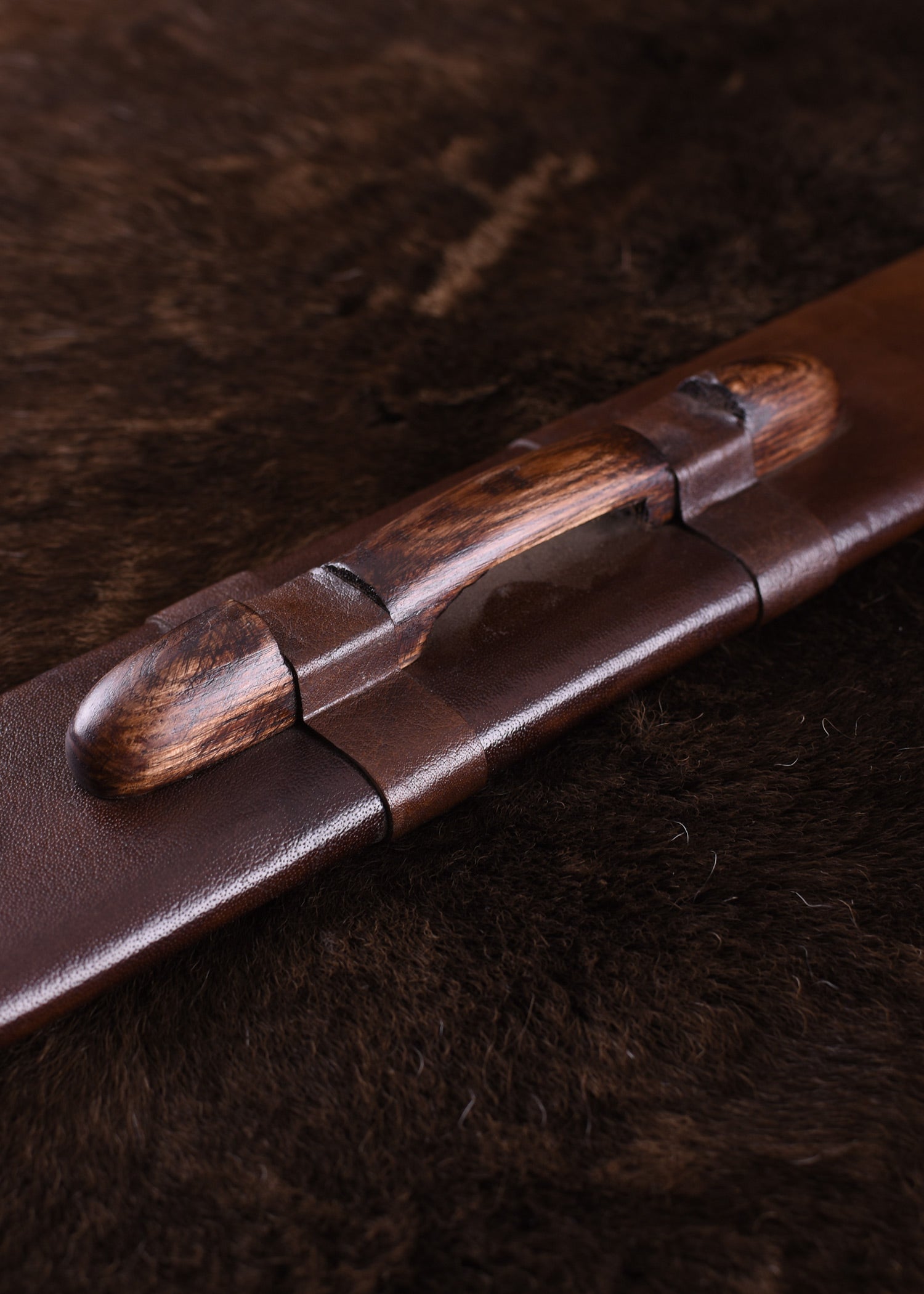
This early medieval one-handed sword is delivered with a brown wood/leather scabbard with a wooden belt loop (maximum belt width 5 cm) and a brass chape and locket.
This sword is designed as a collector's item or decorative object and is also ideal as an accessory, for example to complete your costume.
Details:
- Material: Damascus steel blade (carbon steel, not stainless), brass hilt with tinned details
- Total length: approx. 94 cm
- Blade length: approx. 79 cm
- Blade thickness: approx. mm (cutting edges approx. 1 mm)
- Hilt length: approx. 15 cm (grip section approx. 8.5 cm)
- Maximum blade width: approx. 4.5 cm
- Center of gravity: approx. 13 cm in front of the guard
- Incl. wooden carrying loop and brass fittings
- Weight without scabbard: approx. 1.65 kg
- Weight with scabbard: approx. 2.1 kg
A regular version of this sword with an EN45 spring steel blade is also available in our shop (item no. 0116041300).
Details:
- Material: Damascus steel blade (carbon steel, not stainless), brass hilt with tinned details
- Total length: approx. 94 cm
- Blade length: approx. 79 cm
- Blade thickness: approx. 4.5 mm (cutting edges approx. 1 mm)
- Hilt length: approx. 15 cm (grip section approx. 8.5 cm)
- Maximum blade width: approx. 4.5 cm.
- Center of gravity: approx. 13 cm in front of the guard
- Includes wooden scabbard with genuine leather cover, wooden carrying loop and brass fittings.
- Weight without scabbard: approx. 1.65 kg
- Weight with scabbard: approx. 2.1 kg
The specifications above may vary slightly from specimen to specimen.
The steel used here is not stainless and may show slight signs of corrosion. We recommend caring for the blade and scabbard regularly, for example with Ballistol, a universal oil ideal for preserving steel products.
*The term Damascus steel, Damascus steel or simply Damascus refers to a composite steel made from two or more different types of steel. The name derives from the Syrian city of Damascus, which is considered an ancient stronghold and the origin of Damascus steel production. Usually, a hard steel with high carbon content and a soft steel with low carbon content are joined together by repeated forge welding and folding. The high carbon steel provides greater hardness, better hardenability and greater edge retention, while the softer steel gives the blade greater elasticity and higher resistance to breakage. With this technology, which was developed in a time of poor and changing steel qualities, the positive properties of different steels can be combined. Due to the different colors with different carbon contents, impressive patterns of alternating layers are created, such as the so-called twist Damascus or the rose Damascus. Due to these patterns, Damascus swords of the Middle Ages were said to have an inherent magic.
At Todo Medieval we have thousands of products from the medieval period and other eras. Discover them!
Free shipping
The entire Iberian Peninsula from €60 (*Does not include islands) and worldwide shipping check our rates
Customer service
We are available from Monday to Friday to answer your questions.
Secure Payment
We comply with all regulations to ensure Secure Payment
Contact us
Need to contact us? Simply send us an email at [email protected]
