





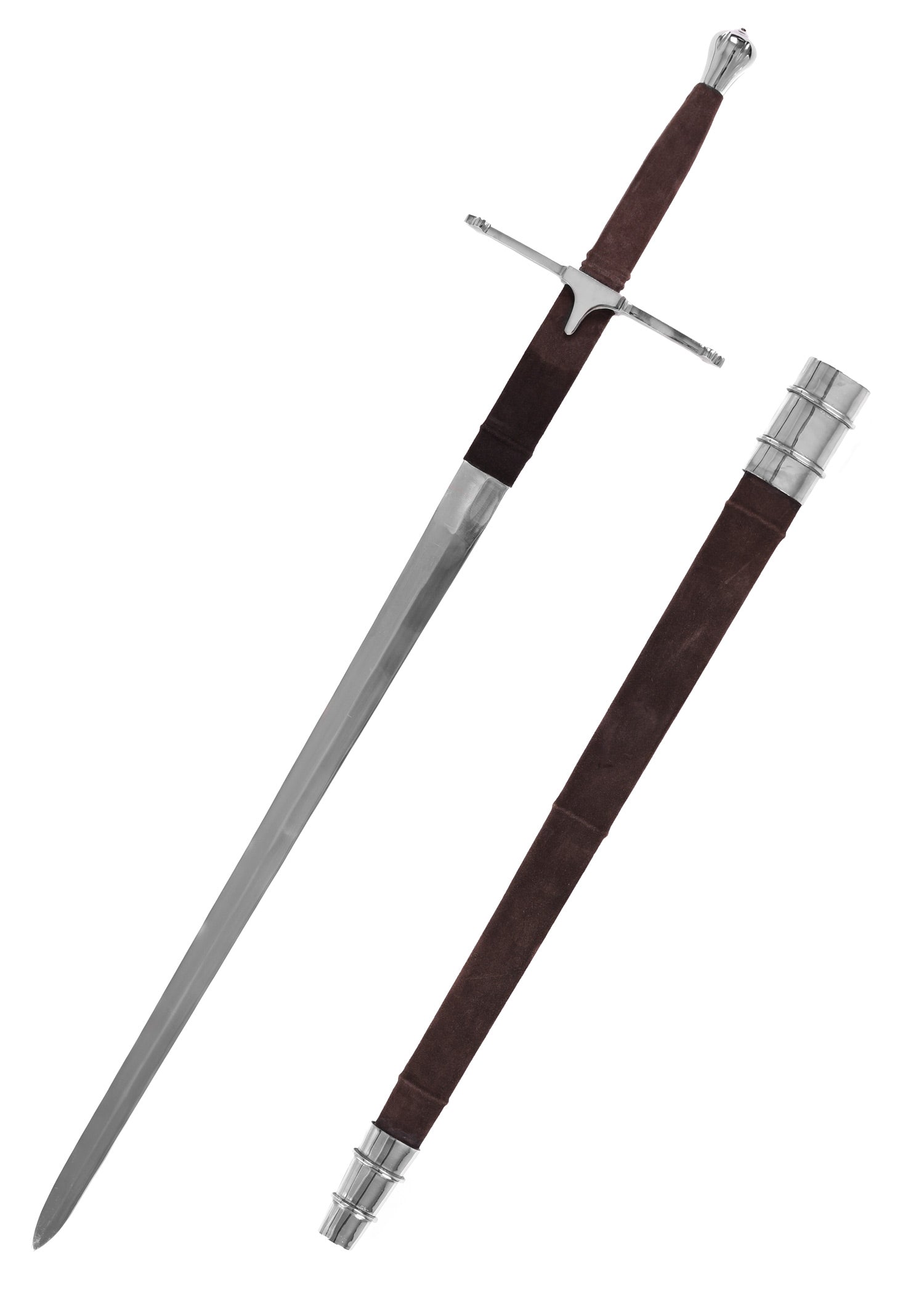
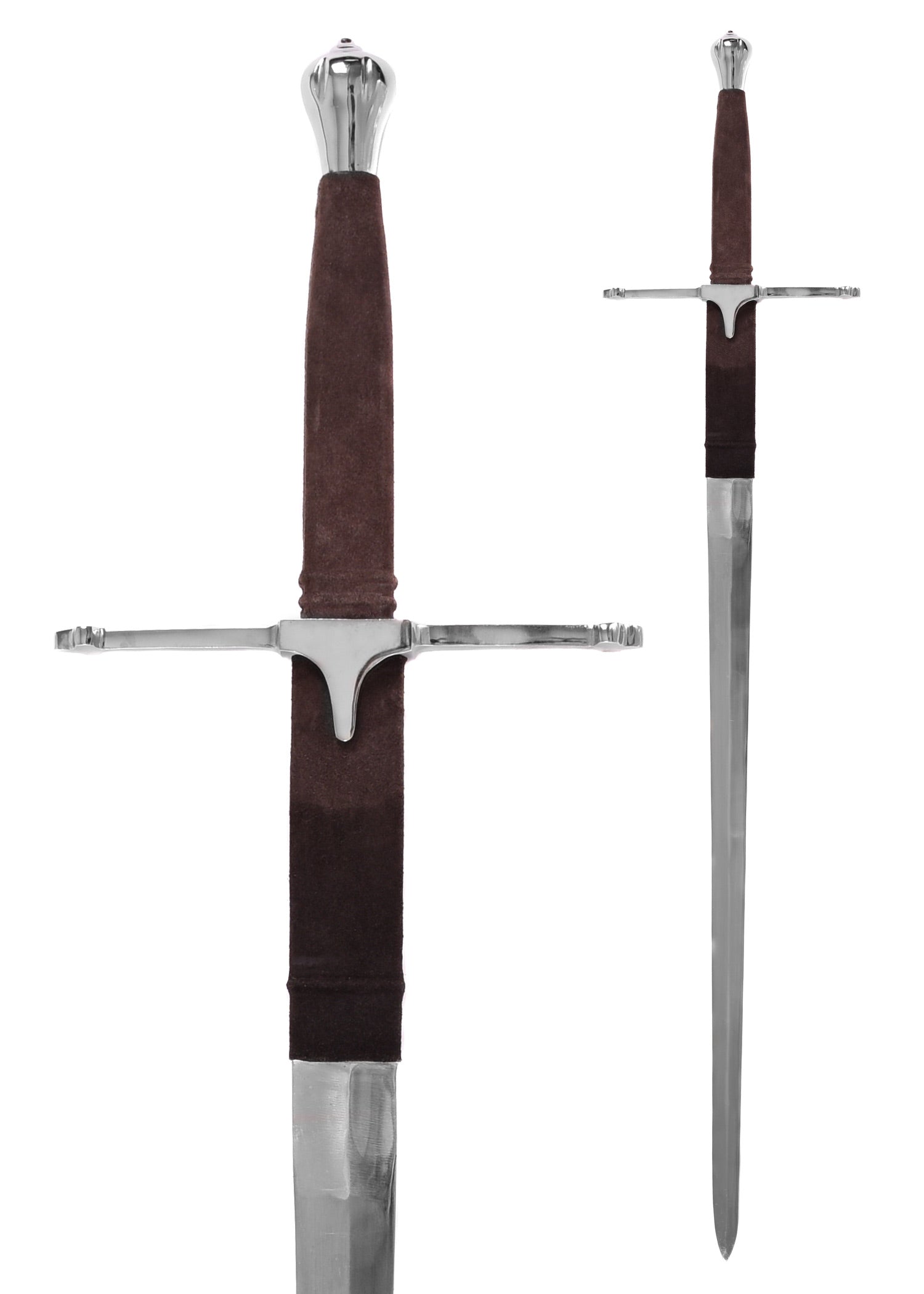


The Scottish dress sword emerged between the 17th and 18th centuries, in a context where edged weapons began to acquire a strong ceremonial value in addition to their military one.
In Scotland, marked by internal conflicts, Jacobite rebellions, and a very defined clan identity, the sword came to represent not only combat capability, but also social rank and political loyalty.
Evolution from the combat sword
Scottish dress swords derive from functional weapons such as the basket-hilted sword and the late claymore.
As the military use of the sword declined in the face of firearms, its presence was maintained in official acts, parades, and ceremonies. This transition preserved the general shape of the weapon, but prioritized aesthetics and symbology.

Formal characteristics of the Scottish dress sword
The dress sword features a long, straight blade, generally made of polished steel, often not intended for intensive combat use.
The hilt is usually richly decorated, with elaborate guards, engravings, inlays, and metallic finishes.
Although it maintains proportions similar to functional swords, its balance is designed for ceremonial carrying.
Materials and manufacturing techniques
These swords were manufactured by specialized armorers, both in Scotland and in European workshops, especially in Germany.
The materials used included high-quality steel for the blade and precious metals or worked alloys for the hilt.
The decoration reflected heraldic, clan, or military motifs, always in accordance with the wearer's status.
Who used the Scottish dress sword?
The Scottish dress sword was used by clan chiefs, military officers, nobles, and institutional representatives. It also formed part of the official attire of members of Scottish regiments within the British Army.
Its use was strictly linked to ceremonies, oaths, official receptions, and solemn events.

Ceremonial use and symbolic function
In the ceremonial realm, the dress sword symbolized authority, honor, and historical continuity. Carrying one implied legitimacy and social recognition.
In many cases, these swords were passed down as a family or clan heirloom, reinforcing their symbolic value beyond their function as a weapon.
Who used the Scottish dress sword?
Following Scotland's integration into the United Kingdom, Scottish regiments retained elements of their own tradition, including the dress sword. These weapons were incorporated into the dress uniform of officers, consolidating a distinct military identity within the British Army.
Presence in collections and historical documentation
Scottish dress swords are currently preserved in museums, private collections, and military records.
Their study allows for an understanding of the evolution of European weaponry toward representative and ceremonial functions, as well as the importance of the sword as a cultural symbol in Scotland.


