









During the end of the Middle Ages and, especially, throughout the Renaissance, the evolution of warfare and civil combat gave rise to new weapons adapted to an increasingly urban world.
Among them, the rapier and the left-hand dagger established themselves as two of the most representative weapons of European Renaissance combat, highly prevalent in Spain, Italy, and France between the 15th and 17th centuries.

The historical context of Renaissance combat
With the gradual disappearance of heavy armor and the rise of civilian attire, weapons were adapted for faster and more precise encounters.
Combat ceased to be focused solely on the battlefield and became part of daily life: duels, self-defense, and the demonstration of social status.
In this context, the combined use of a primary and secondary weapon emerged, a practice widely documented in historical fencing treatises.
The rapier or "espada ropera"
The rapier, known in Spain as espada ropera, was a characteristic weapon of the Renaissance.
Its long, narrow, and rigid blade was designed primarily for thrusting rather than cutting. This typology allowed for fast and lethal attacks against vulnerable areas of the adversary, especially in the absence of full armor.
The rapier was usually carried with one hand and became a symbol of nobility and urban gentry.
In addition to its combat function, the rapier fulfilled an important social role: it was part of men's attire and reflected rank, honor, and education in the art of fencing.
The left-hand dagger or parrying dagger
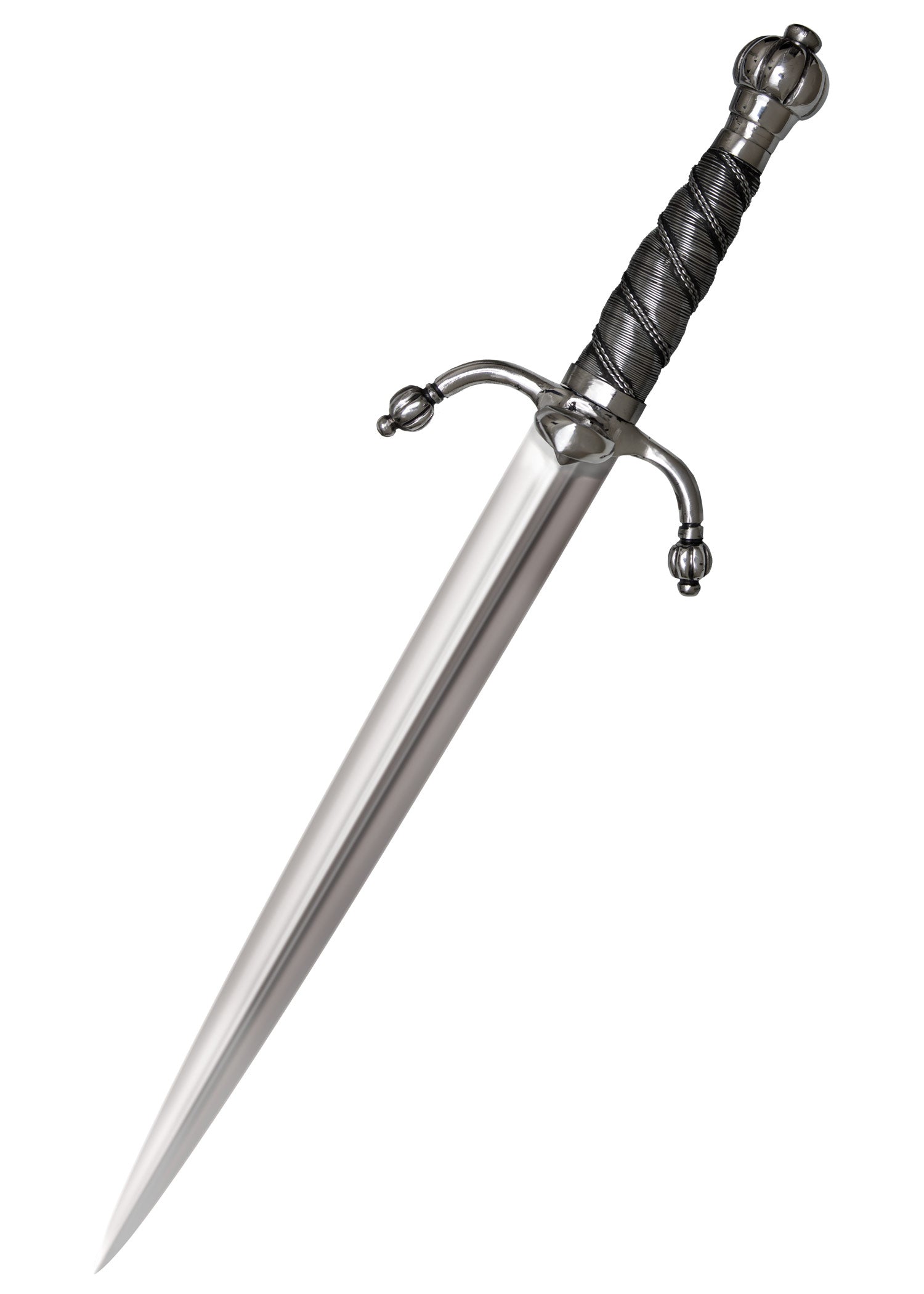
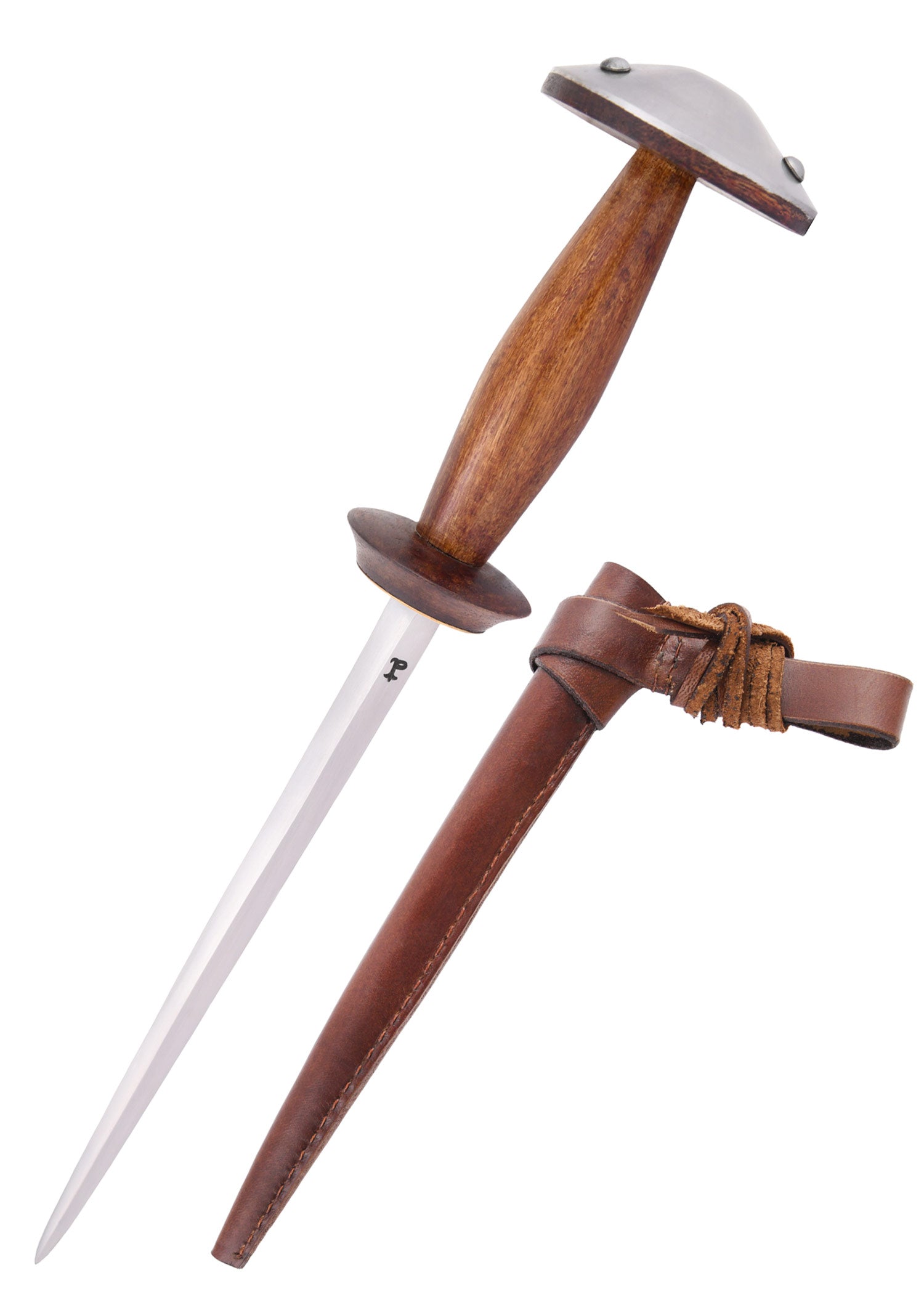
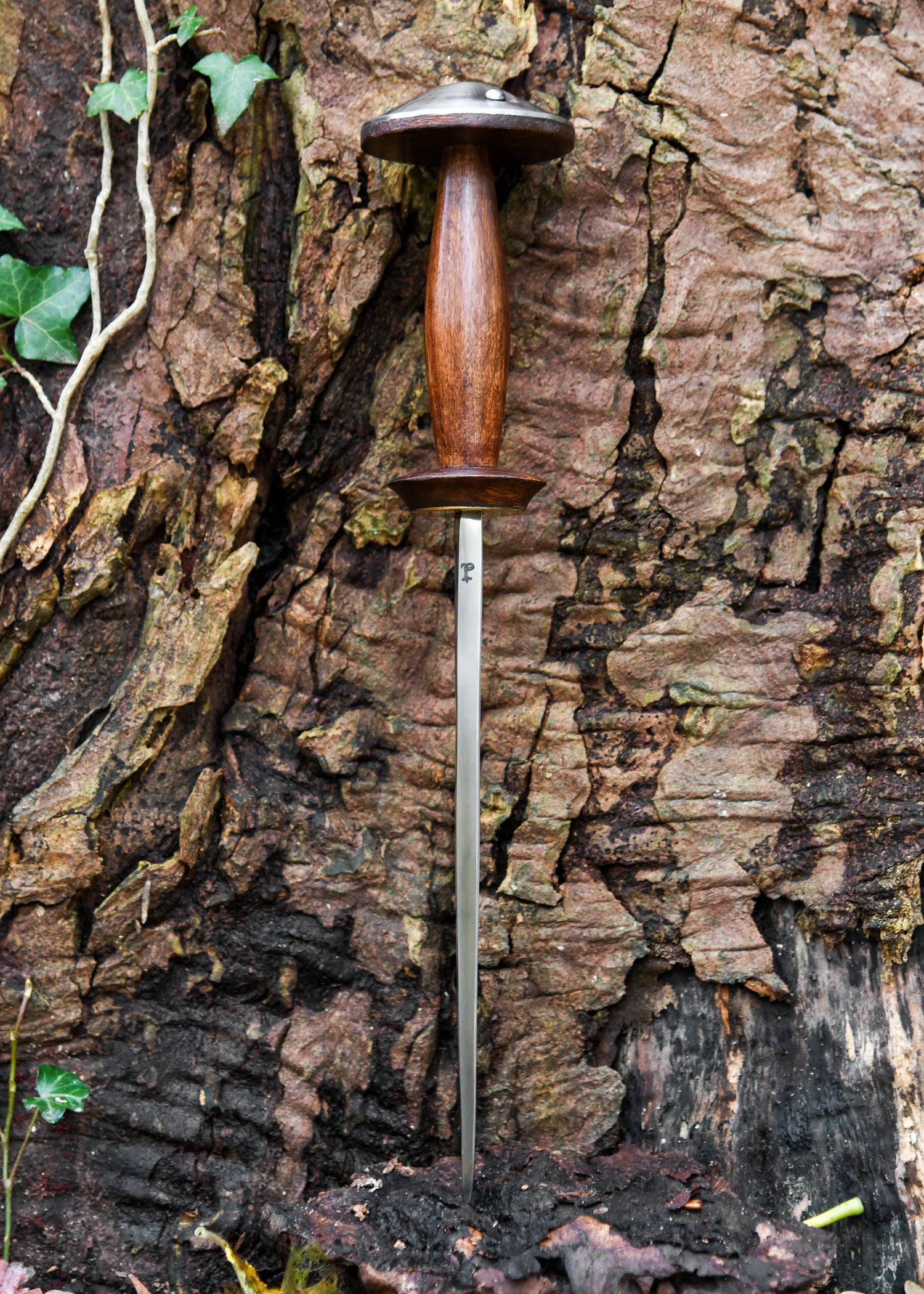
The Renaissance dagger used alongside the rapier was known as a left-hand dagger or parrying dagger.
It was wielded with the non-dominant hand and served to deflect attacks, block thrusts, and create defensive openings.
Its use is widely documented in historical manuals such as those by Achille Marozzo or Camillo Agrippa.
Many of these daggers featured elaborate guards, pronounced points, and central fullers—elements designed to trap or deflect the adversary's blade.
Although some daggers were fully functional weapons, others also fulfilled a symbolic and ornamental function, reinforcing the social status of their bearer.

Dual-weapon combat: technique and prestige
The combined use of rapier and dagger gave rise to a highly technical two-weapon combat style.
This form of fighting required training, coordination, and knowledge of distance. Therefore, it was not accessible to just anyone and was associated with educated classes, professional soldiers, and experienced duelists.
In many cases, carrying a dagger did not necessarily imply its use in combat, but rather it acted as an element of prestige and a complement to civilian attire.
Historical value and cultural legacy
The rapier and the dagger represent the transition toward a more refined, technical, and urban form of combat.
These weapons reflect the Renaissance mentality: a balance between functionality, aesthetics, and social symbolism.
Today, their study is fundamental to understanding the evolution of historical European fencing and the culture of honor in Renaissance Spain.
Examples that can currently be obtained
If you want to see more details of some of the examples you can find in our store, Todo Medieval...


