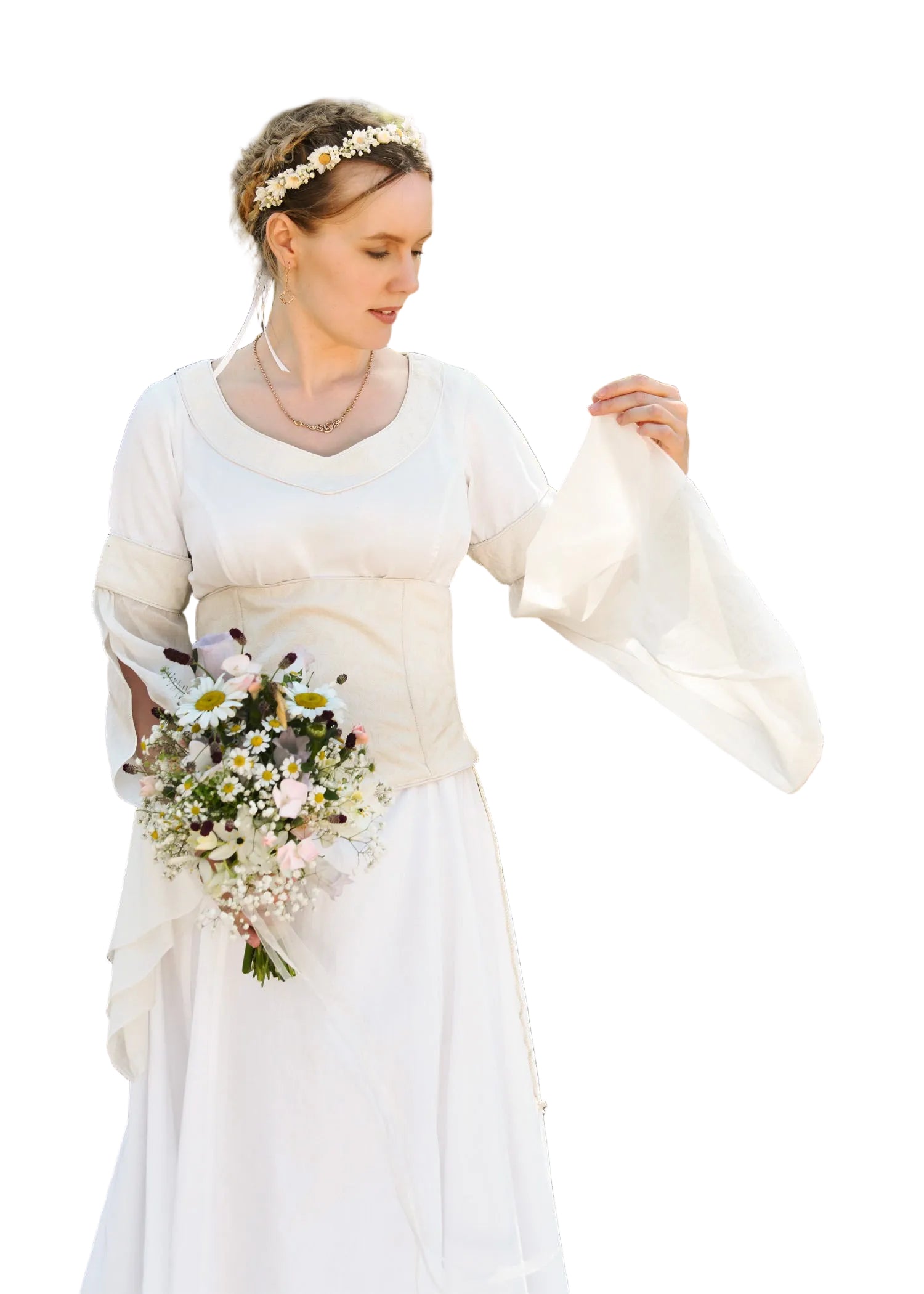


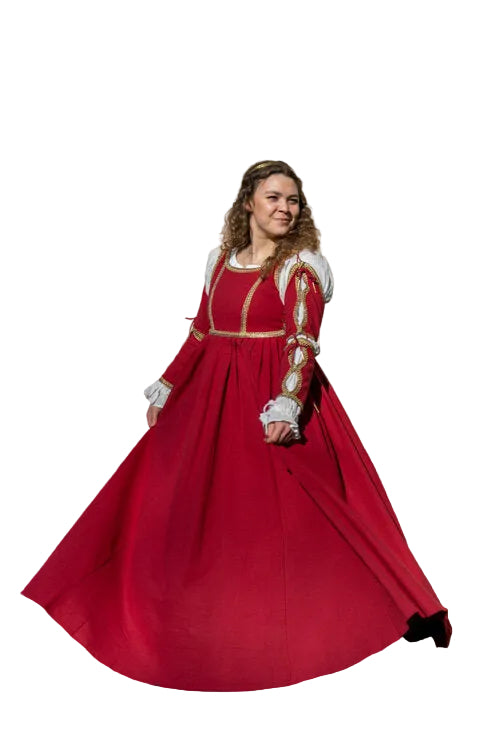

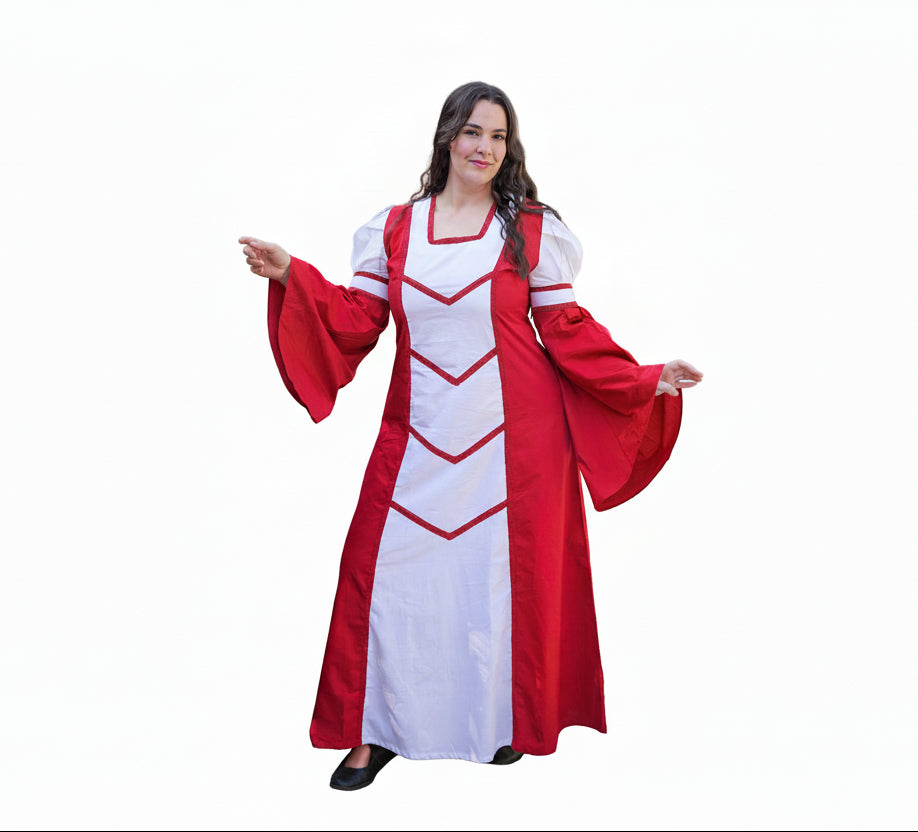

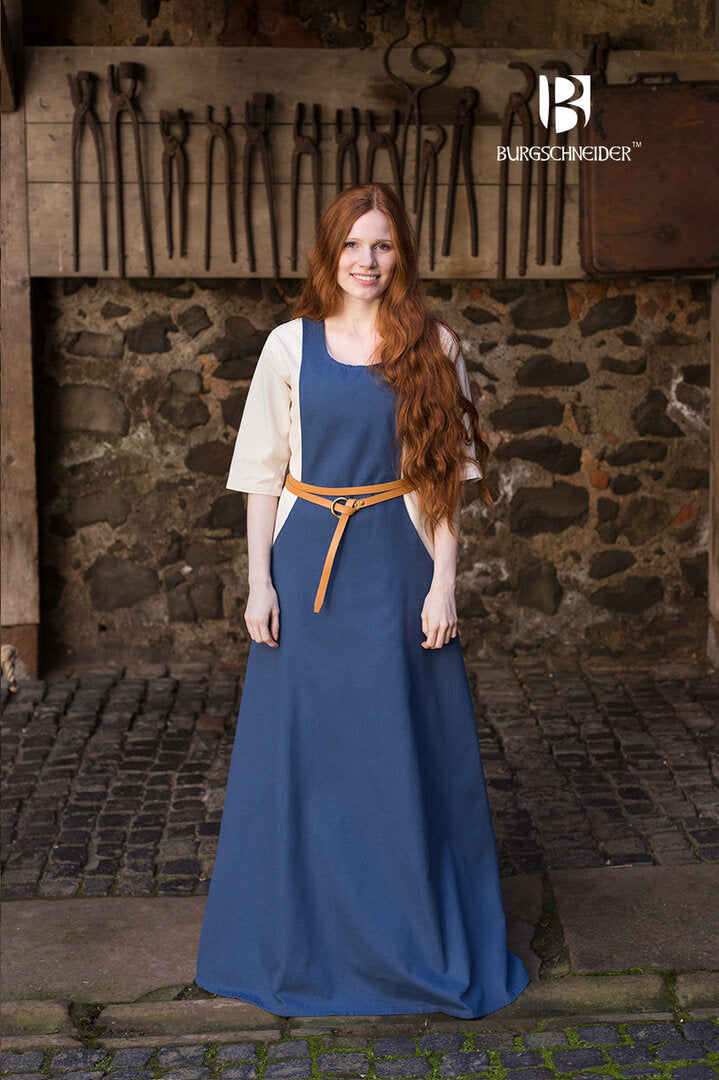


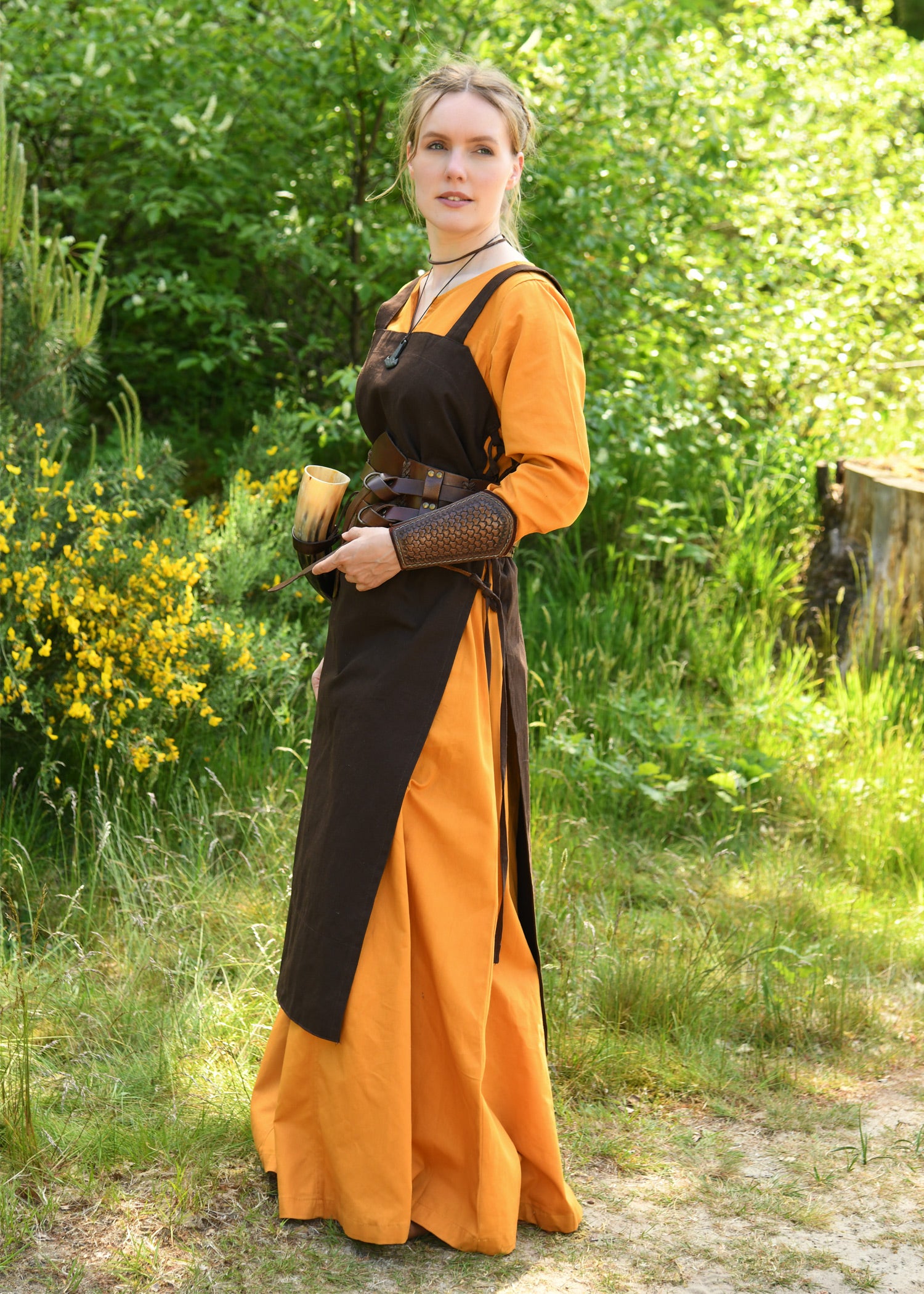
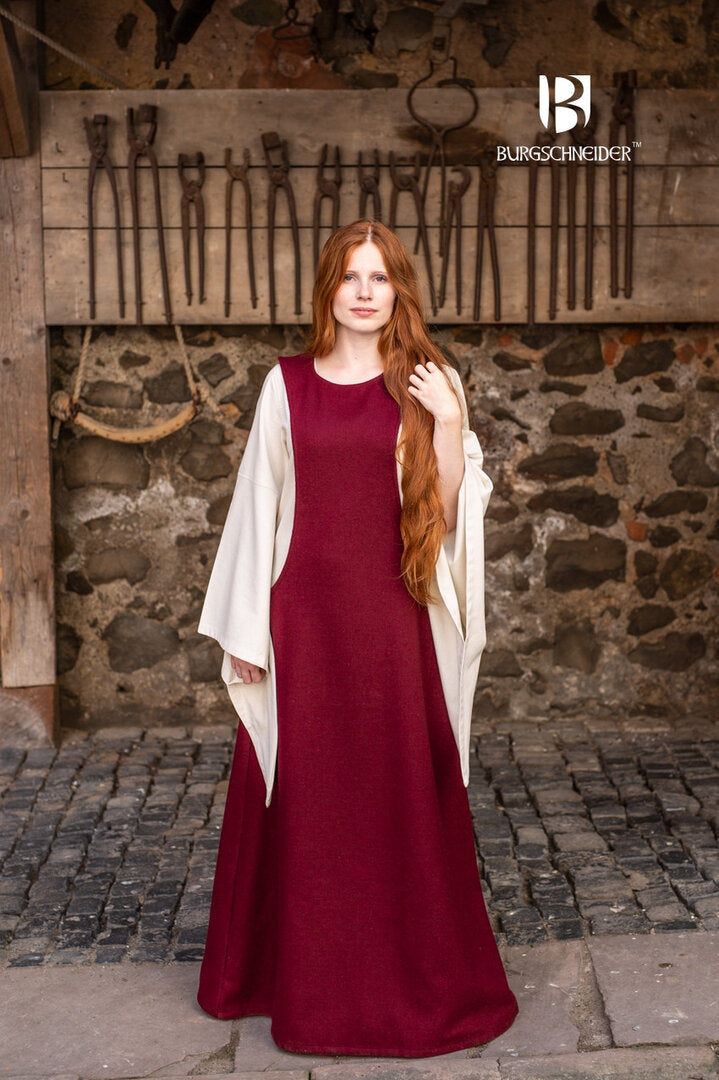

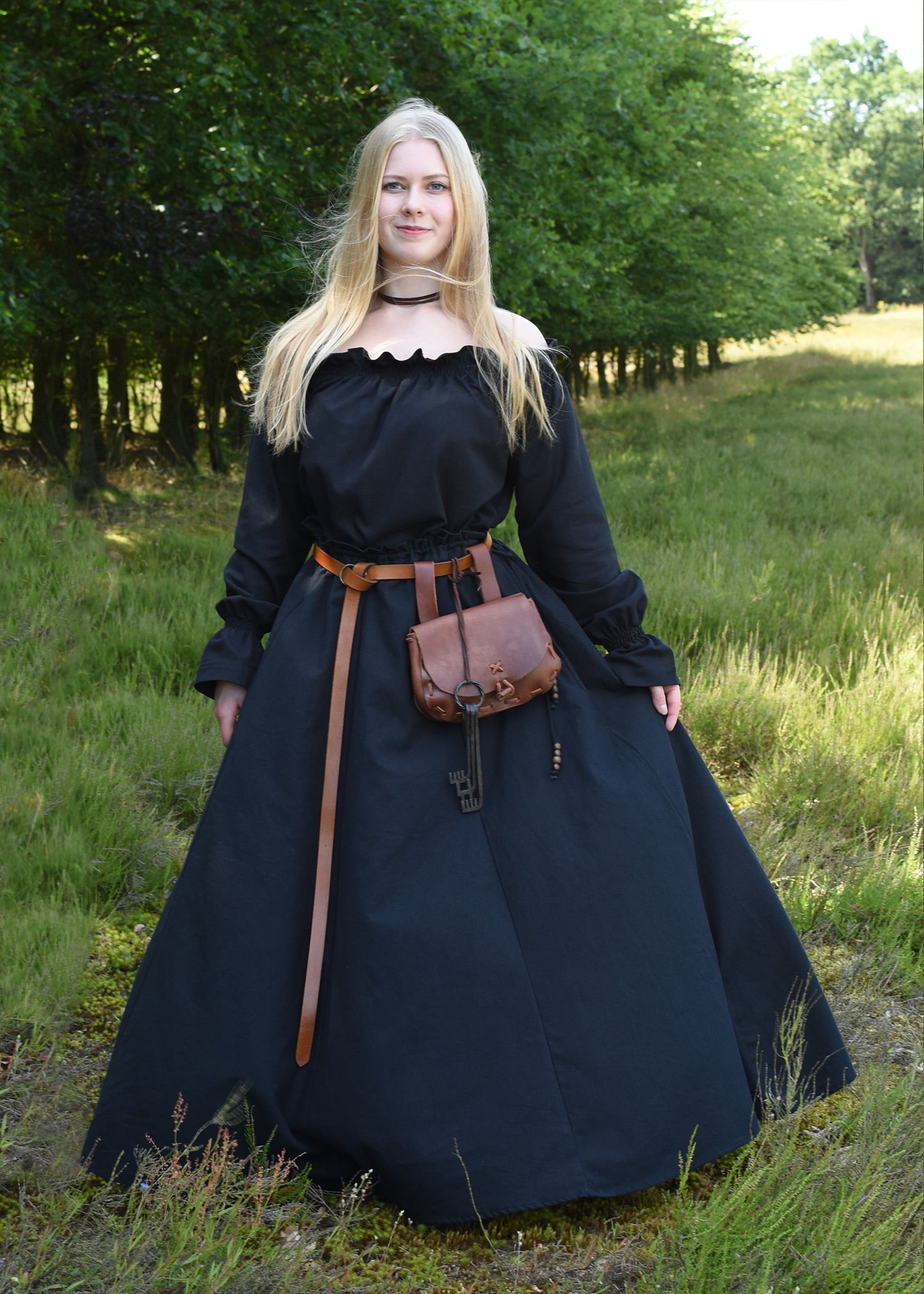
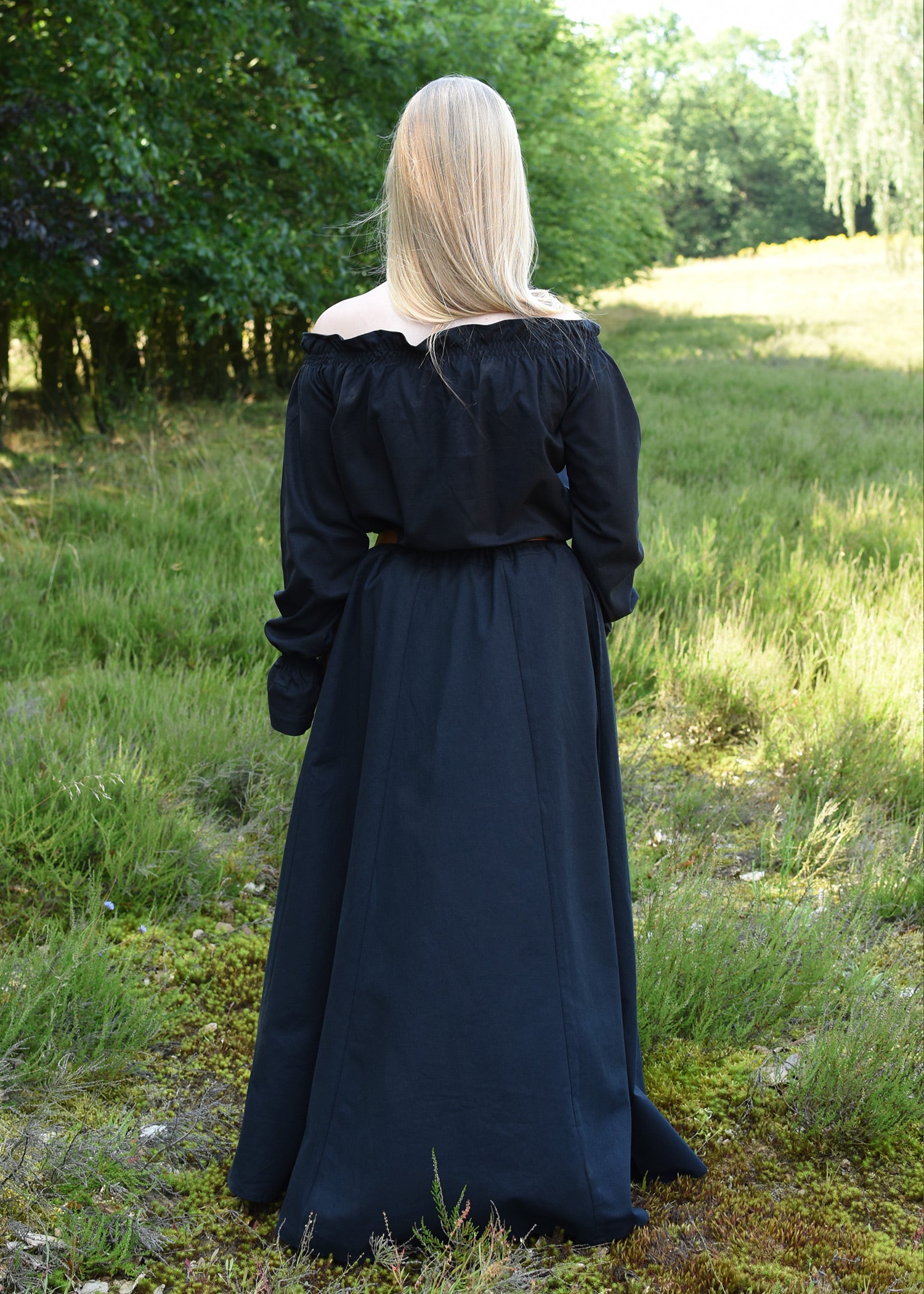
Medieval clothing evolved over nearly a thousand years, from the Early Middle Ages, following the fall of the Roman Empire, to the Late Middle Ages, before the Renaissance.
Analyzing elements such as sleeve cut, garment structure, textile materials, length, and tailoring techniques allows for the precise dating of a garment and an understanding of its historical context.

Clothing of the Early Middle Ages (ca. 500 – 1000)
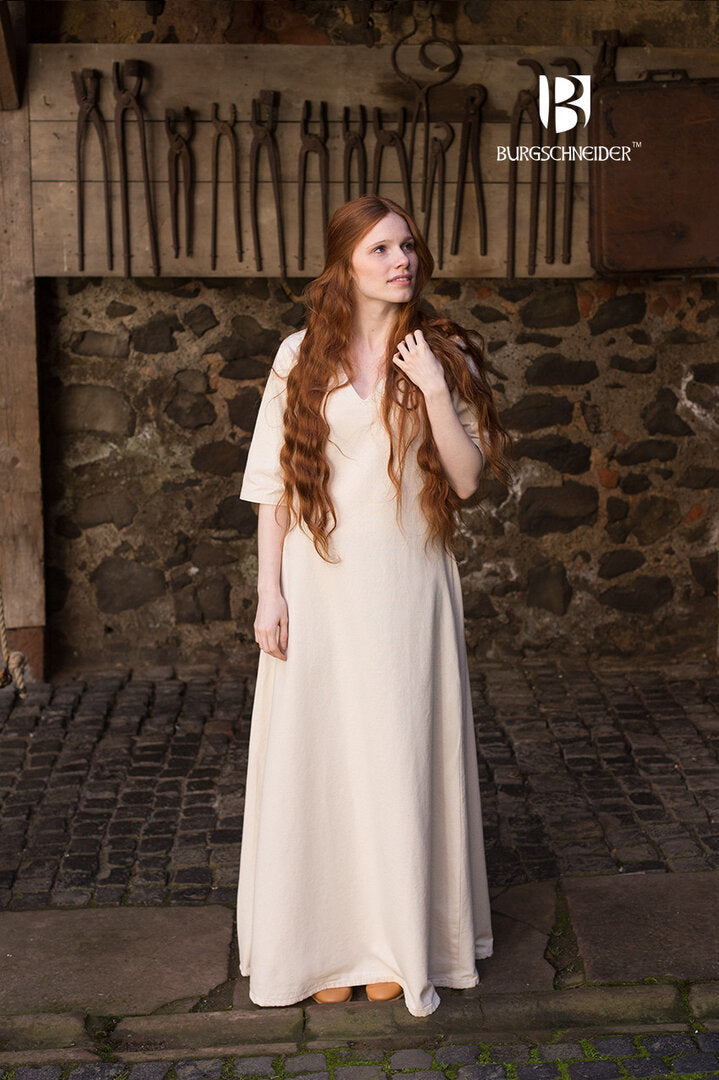
Early medieval clothing was essentially practical and functional. Most garments consisted of long tunics and simple cloaks, with little differentiation between social classes in terms of general appearance.
Wide sleeves and basic structure
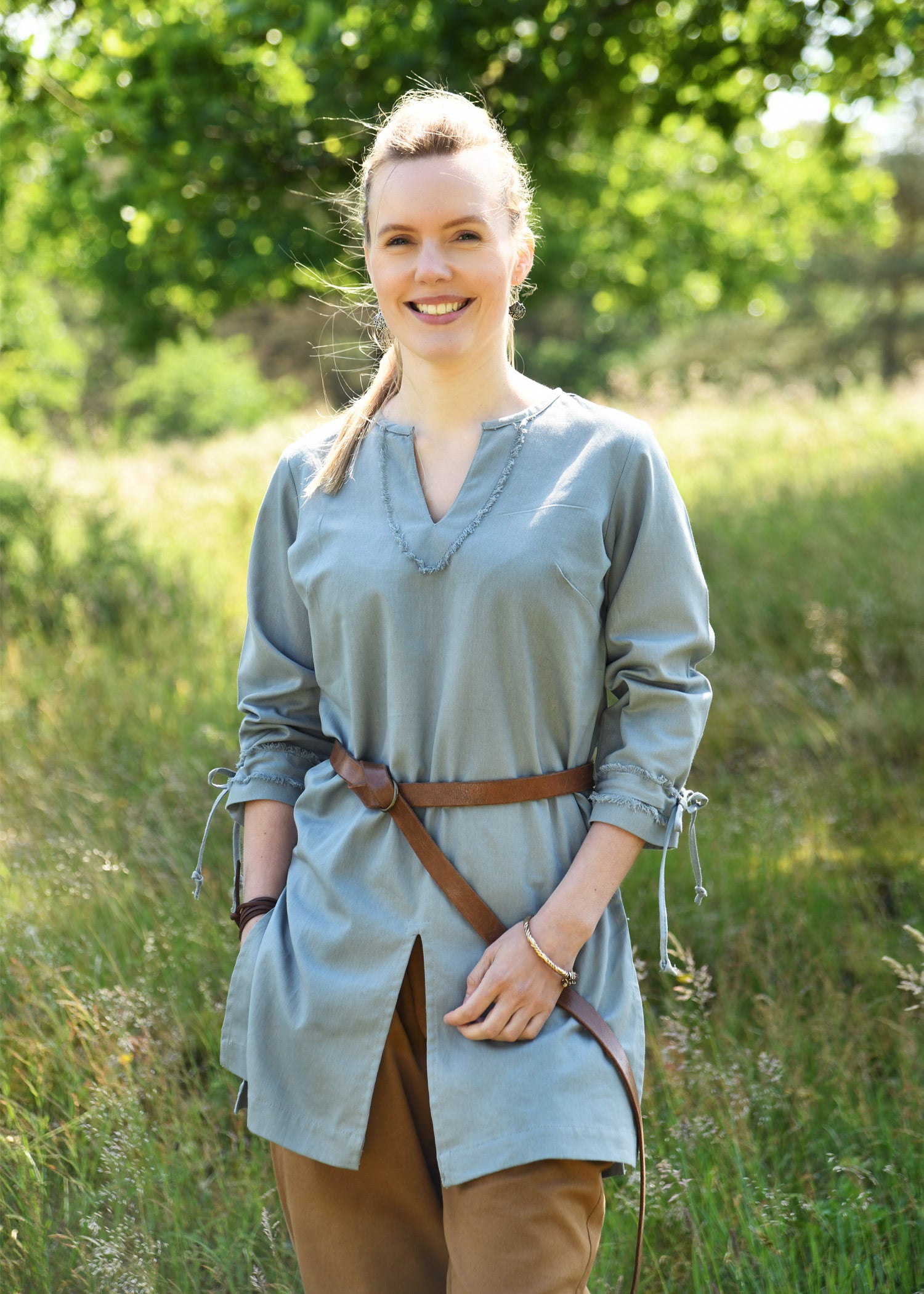
Tunic sleeves were generally wide, unstructured, and simply sewn, without complex pieces for cinching or fitting.
Necklines were straight or V-shaped, lacking elaborate historical closure systems, and simple brooches or fibulae were often used to fasten the garment.
Loose waist and utilitarian belts
During this period, garments were loose and comfortable, designed with a focus on functionality.
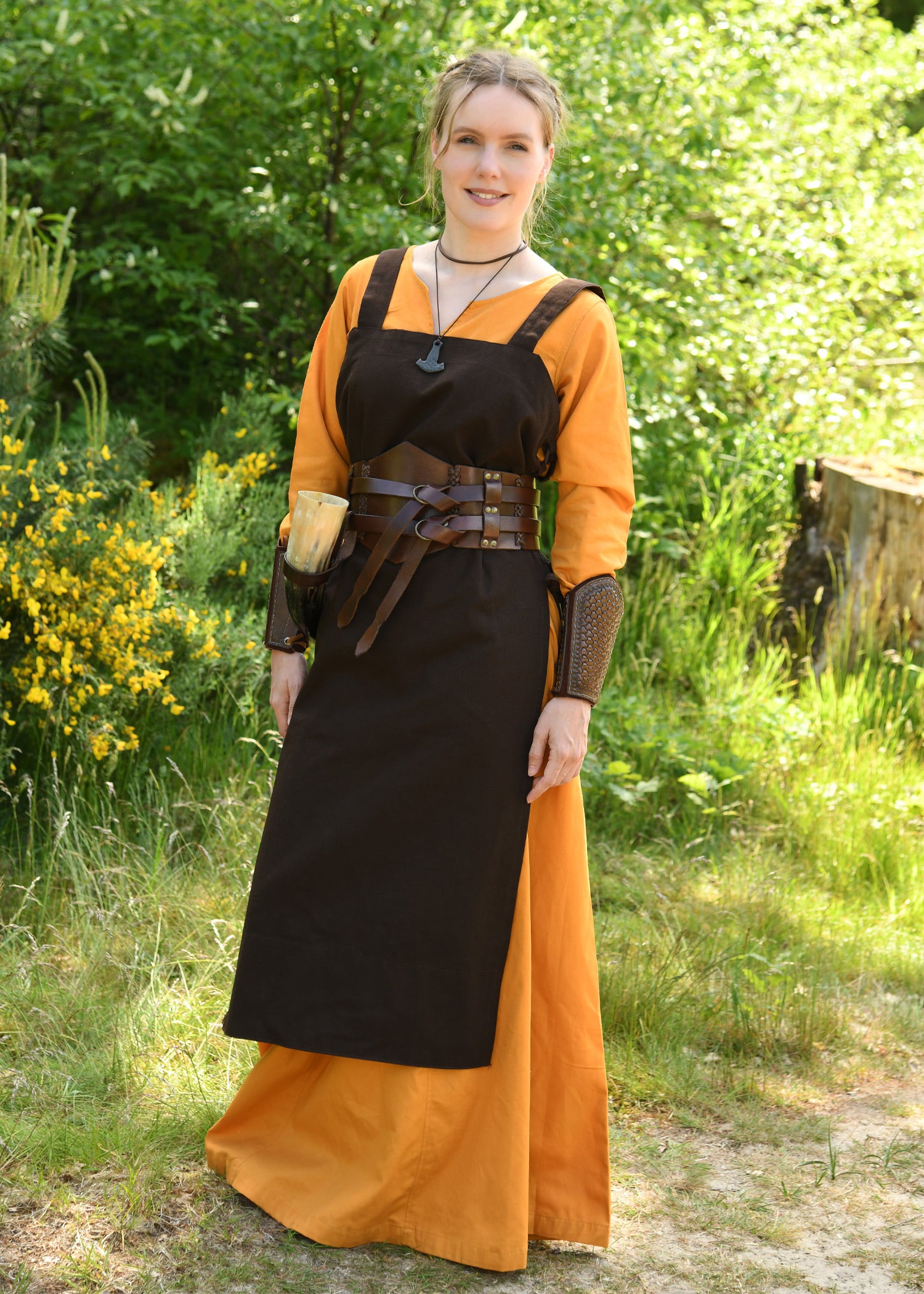
Simple leather belts were used to hold tools, slightly adjust the clothing, or carry everyday objects, but not to significantly shape the figure.
Simple and durable materials
The predominant fabrics were natural fibers like linen and wool, produced locally and without elaborate dyes.
Garments were intended for warmth and durability, rather than for display or fashion.
Functional length
Dresses and tunics were generally ankle-length, for both men and women, meeting the need for protection against the elements, mud, and dirt.

Evolution toward the Late Middle Ages (ca. 1250 – 1500)
From the 13th and 14th centuries onward, medieval clothing began to reflect not only functionality but also aesthetics, social status, and fashion, thanks to advancements in tailoring and the fabric trade.
Body fit and tailoring techniques
In the Late Middle Ages, more advanced sewing techniques were developed, with garments no longer limited to simple rectangular panels. Curved panels, waist cuts, and side seams were introduced, allowing for a closer fit to the torso and waist.
These advances were combined with the use of buttons, ties, or laces as closure systems to adapt the garment to the body.
Differences in sleeves and silhouettes
Sleeves evolved from large and simple to more elaborate and structured shapes.
In many cases, late-period garments featured fitted or long, decorative sleeves, indicative of a greater mastery of cutting and tailoring techniques.
Rich materials and ornamentation
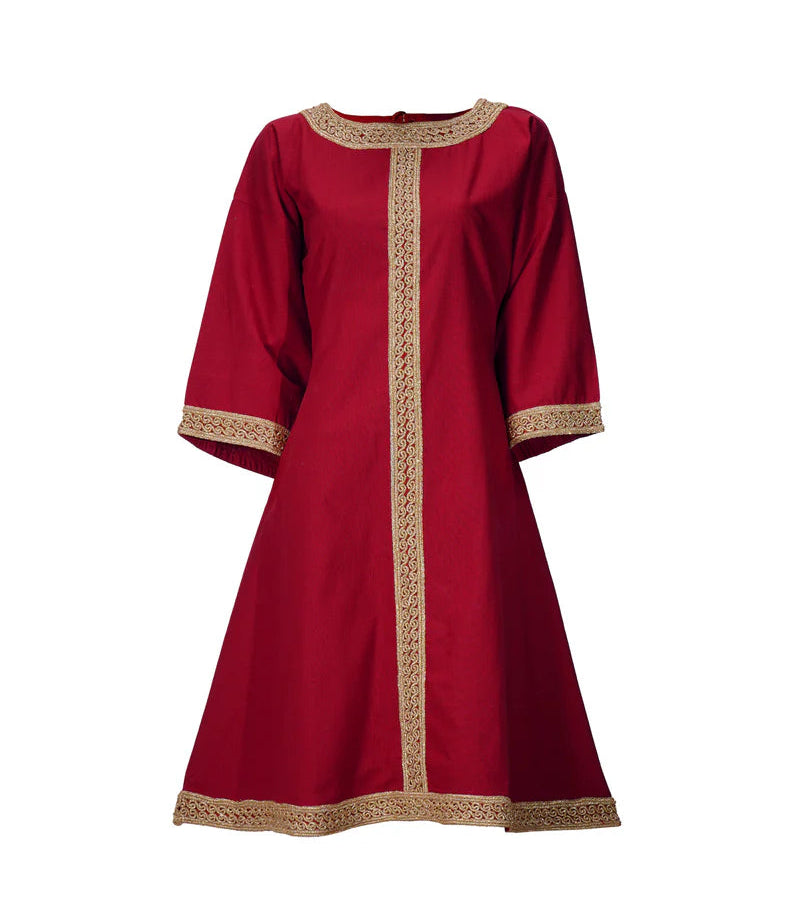
During this period, silks, velvets, brocades, and vibrant colors imported via trade routes began to be used, along with ornamentation such as embroidery and precious details that signaled social status.
Variations in length and fashion
Silhouettes in the Late Middle Ages showed significant variations: fuller skirts, fitted dresses, and garments such as the gamurra (cotehardie) and the houppelande, which reflected aesthetic and cultural changes in late fashion.

General ways to distinguish them
Materials and fibers as chronological indicators
Fabrics help differentiate eras: linen and wool without ornamentation are typical of the Early Middle Ages, while the presence of silks, brocades, velvets, or decorated fabrics is characteristic of the Late Middle Ages.
For the lower classes, materials remained simpler even in later periods, but differences in textile treatment are key to chronologically placing a garment.
Contextual length and functionality
While the Early Middle Ages prioritized long, practical, and simple dresses, the Late Middle Ages showed greater variety in the length and cut of garments, with options that reflected differences in fashion and social status.
Tailoring techniques as historical markers
The transition from garments cut in simple shapes to complex cuts with fitted panels and elaborate closure systems is one of the clearest indicators of technological evolution in medieval clothing.
This reflects the development of urban tailor shops and the specialization of shapes according to function and fashion.