











Historical background: the peninsula after the Muslim conquest
At the beginning of the 8th century, the Iberian Peninsula was undergoing a profound political transformation following the defeat of the Visigothic kingdom by Muslim forces in the year 711.
The rapid Umayyad expansion allowed for control of a large part of the territory in a few years, relying on local pacts and the administrative reorganization of the former Visigothic structures. However, the mountainous regions of the north offered natural resistance to effective rule, both due to their geography and the survival of local elites.
In that scenario, a center of opposition was consolidated in Asturias, where Hispano-Gothic groups and local communities sought to maintain their political and cultural autonomy.

Causes of the conflict in Asturias
The resistance in the Cantabrian range was not an immediate, massive uprising, but rather a gradual process linked to political, territorial, and social factors.
The Asturian mountains hindered continuous military control, which favored the emergence of local leaderships.
Don Pelayo, a figure documented in later chronicles, headed a core of opposition that rejected Muslim authority in the region.
Medieval Christian sources interpret the conflict as a defense of Visigothic legitimacy, while modern historiography analyzes it as an episode of regional resistance against Umayyad administrative expansion.
Covadonga thus emerges as the result of accumulated tensions rather than an open war between great armies.
Development of the Battle of Covadonga
The traditional date of March 18, 722, which is usually associated with the Battle of Covadonga, comes from Christian chronicles written centuries later, which is why historians consider the approximate year rather than the exact day.
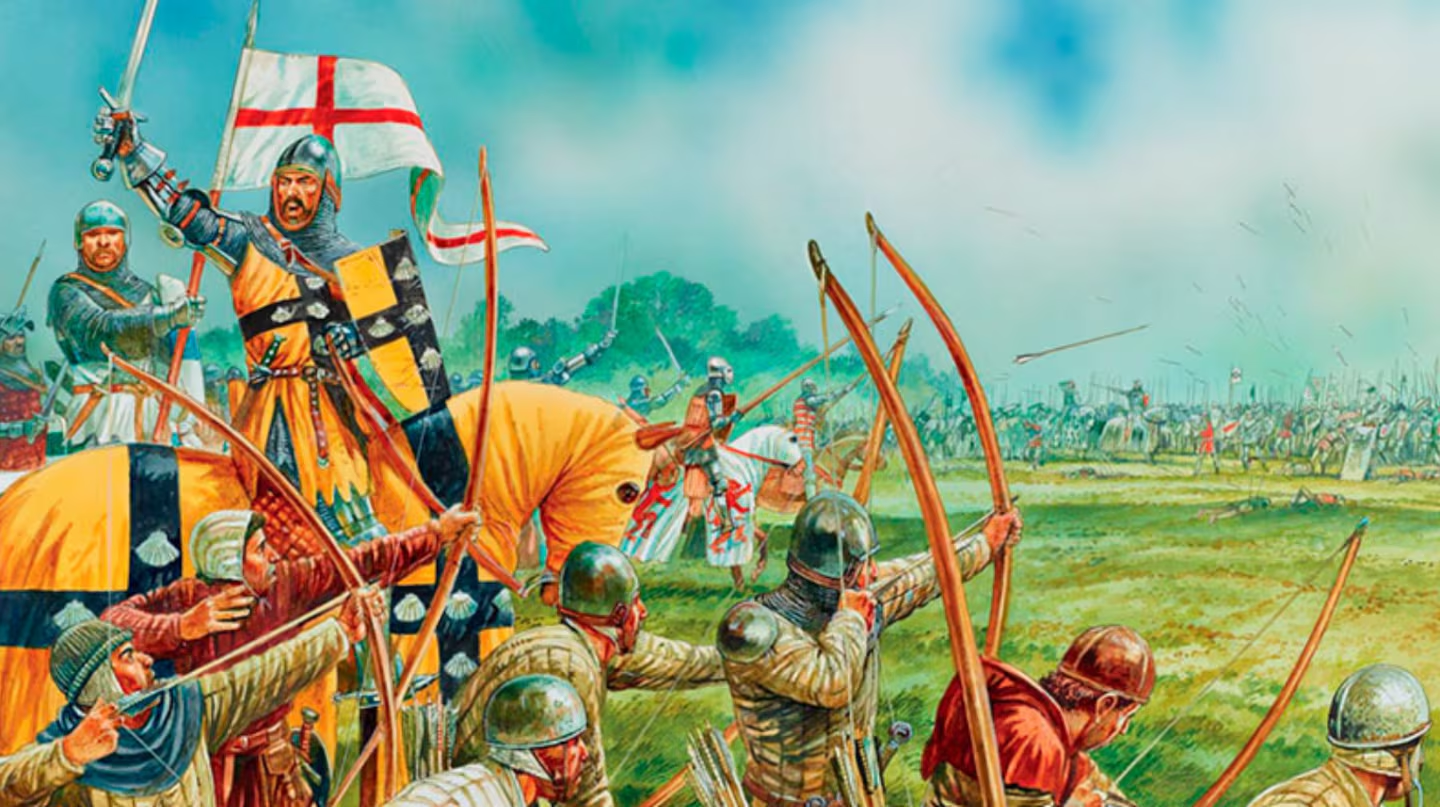
The confrontation took place in a mountainous environment, where the terrain favored defensive tactics.
The sources describe a skirmish in which Pelayo's contingent took advantage of the topography to neutralize a Muslim force sent to quell the rebellion.
More than a great field battle, Covadonga was likely a limited clash with strong later symbolic weight.
Its importance lies in the strategic result: the inability of the Umayyad authorities to consolidate direct control of the area.

Consolidation of Asturian power
After the confrontation, the core led by Pelayo managed to stabilize its position in Asturias. This territorial control allowed for the formation of an embryonic political structure that would lead to the Kingdom of Asturias.
The region became a space for the reorganization of Visigothic traditions adapted to new local realities.
Consolidation did not imply immediate expansion, but rather the survival of an autonomous enclave that served as a base for subsequent political processes.
Current historiography interprets this phase as the creation of a regional power rather than the beginning of continuous military campaigns.
Historical consequences and symbolic significance
Covadonga acquired historical relevance due to its later interpretation as the symbolic starting point of the Reconquista.
Although the concept of the Reconquista is a historiographical construction developed centuries later, the episode was used by medieval chroniclers to legitimize the Christian political continuity in the northern peninsula.
In the long term, the establishment of the Kingdom of Asturias influenced the configuration of the medieval Christian kingdoms.
From a modern perspective, Covadonga represents a moment of regional resistance that contributed to the political plurality of the peninsula, rather than an immediate decisive victory in military terms.