














Throughout European history, coronations were not mere symbolic ceremonies, but decisive political acts that consolidated powers, redefined territories, and triggered far-reaching conflicts.
In the month of February, three especially relevant coronations took place, separated by centuries but united by their lasting impact: that of Otto I as emperor in 962, that of Edward III of England in 1327, and that of Edward VI in 1547.
Each of them tangibly altered the course of European history.
February 2, 962 – Coronation of Otto I as emperor: birth of the Holy Roman Empire

On February 2, 962, Otto I was crowned emperor by Pope John XII in Rome.
This act formalized the restoration of the imperial title in Western Europe, giving rise to the Holy Roman Empire.
Otto had already been King of Germany since 936 and had consolidated his authority after defeating rebel nobles and halting Magyar invasions, especially with the victory at the Battle of Lechfeld in 955.
The coronation was the result of a strategic alliance between secular power and the papacy.
Rome needed military protection against internal and external threats, while Otto sought universal legitimacy for his rule.
From this moment on, the emperor considered himself the defender of Western Christendom and the heir to the Roman Empire in the West.
The consequences were profound. A supranational political structure was established that dominated much of Central Europe for almost nine centuries.
The Holy Roman Empire influenced the feudal organization, the relationship between Church and State, and the power balances among European kingdoms.
Furthermore, Otto's coronation inaugurated a tradition according to which imperial dignity depended on papal approval, which generated recurring conflicts between emperors and pontiffs.
February 1, 1327 – Coronation of Edward III of England: a key reign in the Hundred Years' War

Edward III was crowned King of England on February 1, 1327, following the deposition of his father, Edward II.
The political context was unstable: the kingdom was marked by military defeats, noble tensions, and a severe crisis of authority.
During the first few years, effective power was in the hands of his mother, Isabella of France, and Roger Mortimer.
In 1330, Edward III assumed direct control of the government after ordering the execution of Mortimer. From then on, he began an active and militaristic reign.
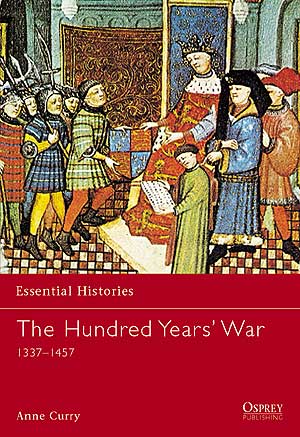
His most momentous decision was to claim the throne of France in 1337, based on his maternal ancestry as the grandson of Philip IV.
This claim was one of the main triggers of the Hundred Years' War.
The coronation of Edward III was key because it marked the beginning of an expansionist policy that decisively influenced the evolution of the medieval war.
Under his reign, victories such as Crécy (1346) and Poitiers (1356) took place, where the organized use of the English longbow allowed for effective attacks at medium and long range before the close-quarters combat that was predominant at the time.
These campaigns reinforced English political identity and contributed to the progressive weakening of the traditional feudal system.
February 20, 1547 – Coronation of Edward VI of England: consolidation of the Protestant Reformation

Edward VI was crowned on February 20, 1547, at only nine years old, following the death of his father, Henry VIII.
Although the king was a minor, his coronation had a significant political and religious impact.
The government remained in the hands of regents, first Edward Seymour and later John Dudley.
The context was that of an England in religious transition.
Henry VIII had broken with Rome, but many doctrinal aspects remained ambiguous.
During the reign of Edward VI, there was a clear acceleration of the Protestant Reformation.
The Book of Common Prayer was introduced, traditional Catholic practices were abolished, and reformed theology was strengthened.
The consequences were lasting.
The coronation of Edward VI laid the foundations of Anglicanism as a Protestant confession and provoked internal tensions, rebellions, and a religious polarization that would mark the subsequent reign of Mary I and, later, that of Elizabeth I.
Although Edward died young in 1553, his reign was decisive for the religious and political course of England.