





The feeling of belonging to another era
There are garments that are not just worn, but transform the way the surroundings are perceived.
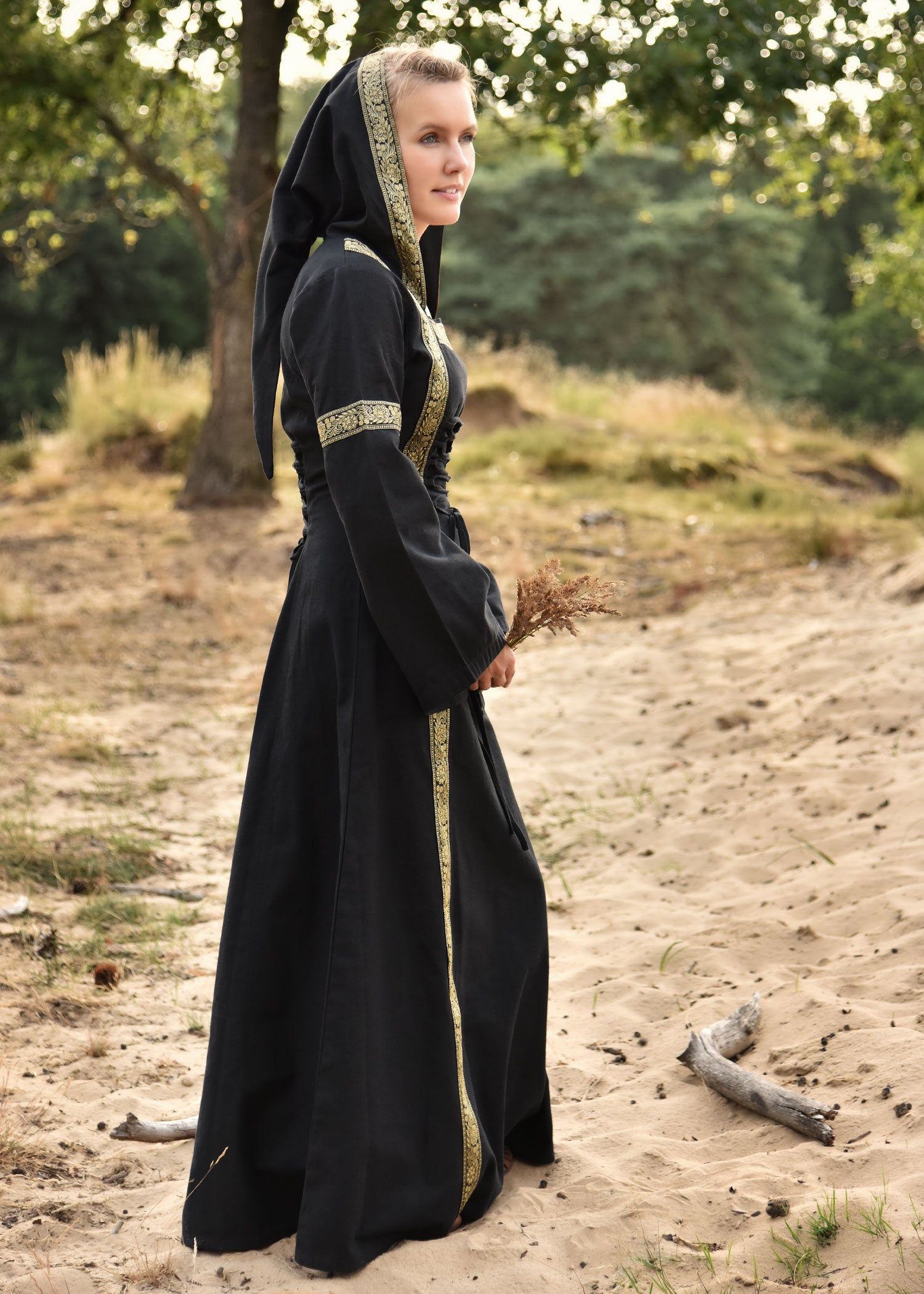
The Eleanor hooded medieval dress directly evokes the aesthetic of the Late Middle Ages, a period in which clothing reflected not only style, but also identity, status, and character.
This type of medieval dress is associated with the nobility and with settings where presence and elegance did not need an explanation.
The drape of the fabric, the way it follows movement, and the overall structure generate a sense of continuity with an era where every detail had a clear meaning.

Design as an expression of history
The cut of the dress, along with the pointed hood, is reminiscent of the fashion worn in aristocratic medieval contexts.
This type of medieval hood is not an isolated element, but part of a coherent visual composition that reinforces the historical aesthetic of the ensemble.
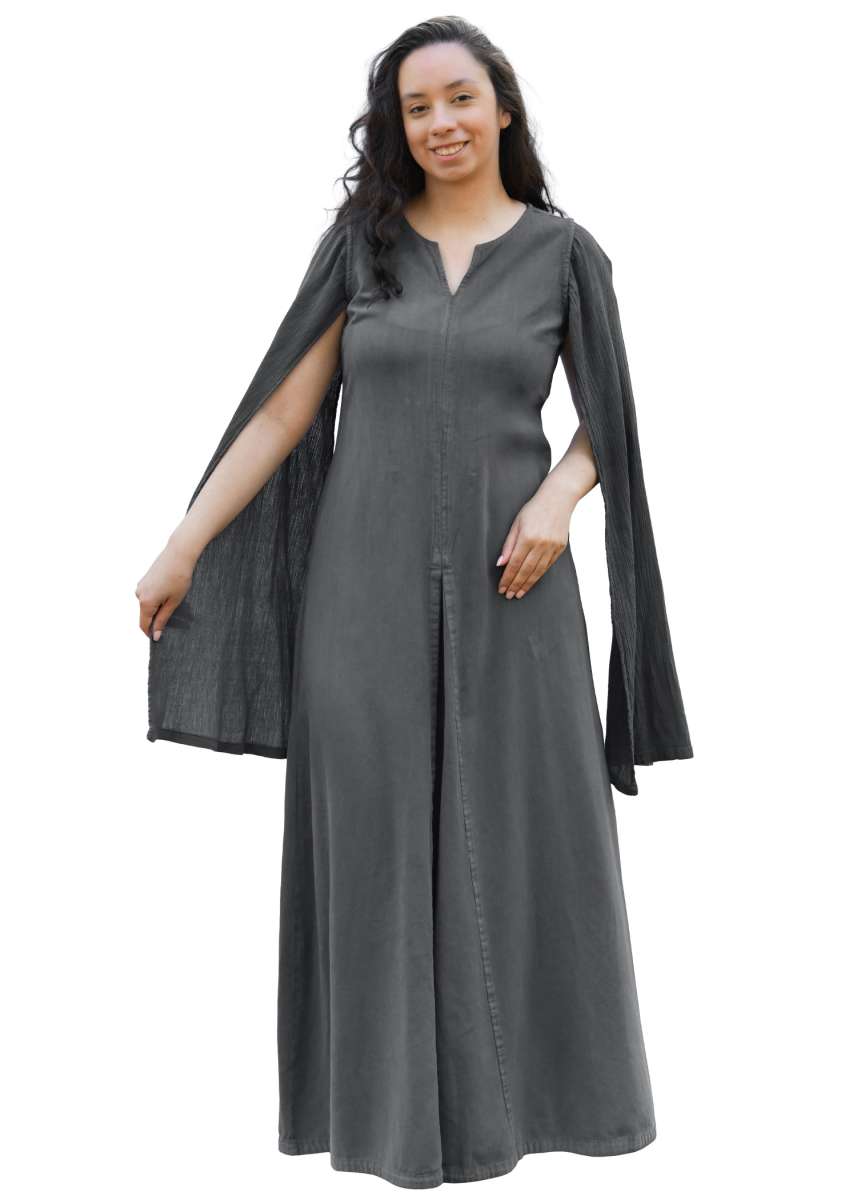
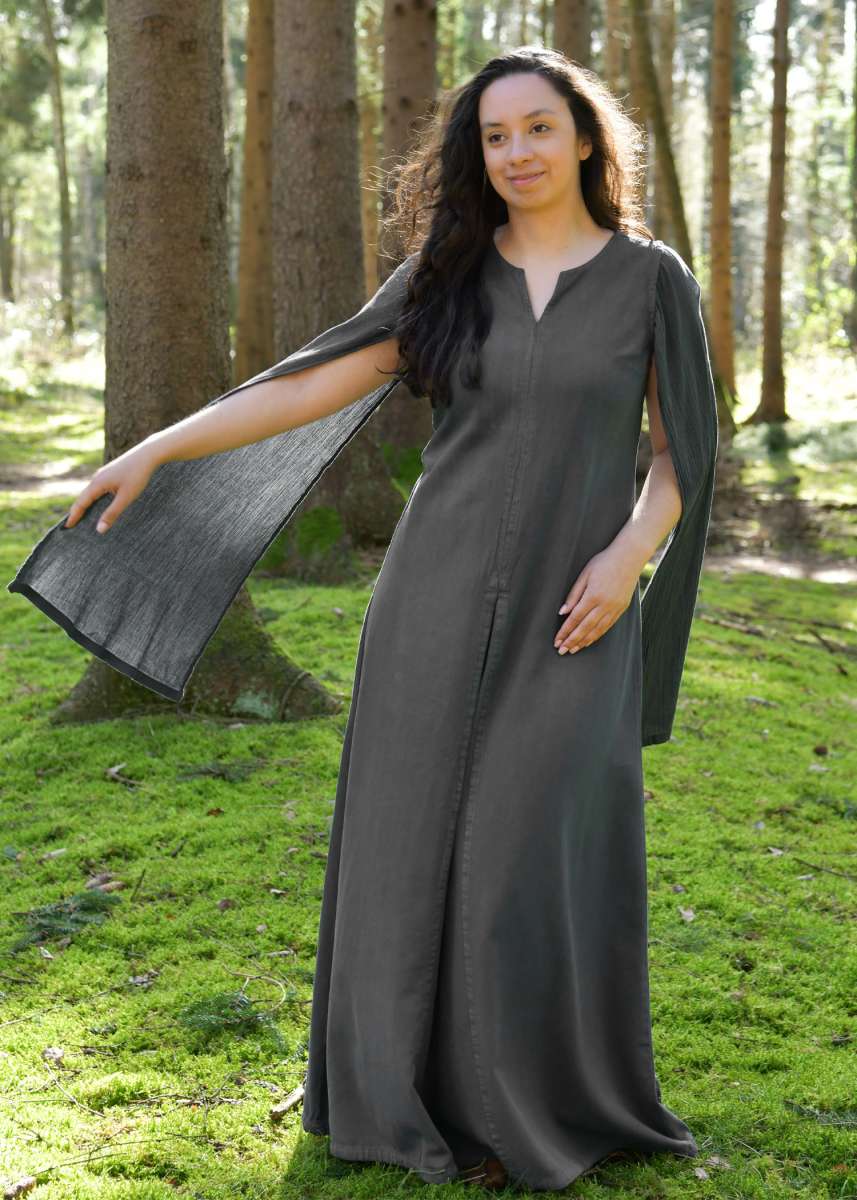
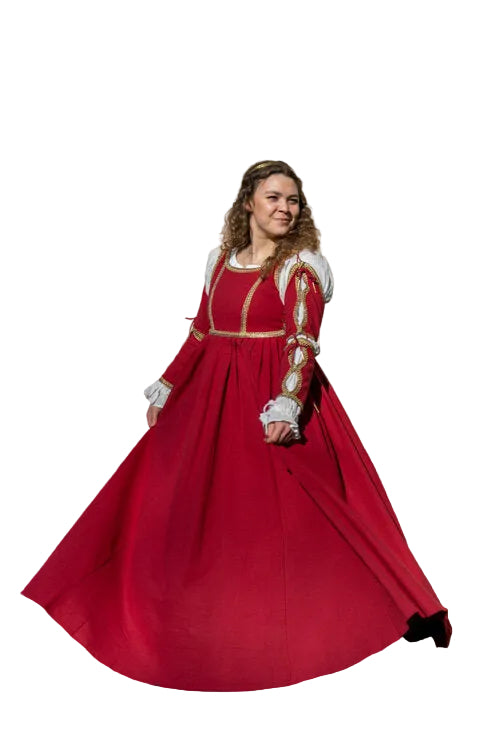
The bell sleeves add volume and movement, creating a visual presence that stands out without the need for artifice.
This design is common in historic medieval dresses and in garments inspired by faithful recreations, where the fluidity of the fabric becomes part of the experience.

Color as symbol and narrative
Black has historically been associated with sophistication, authority, and a reserved character.
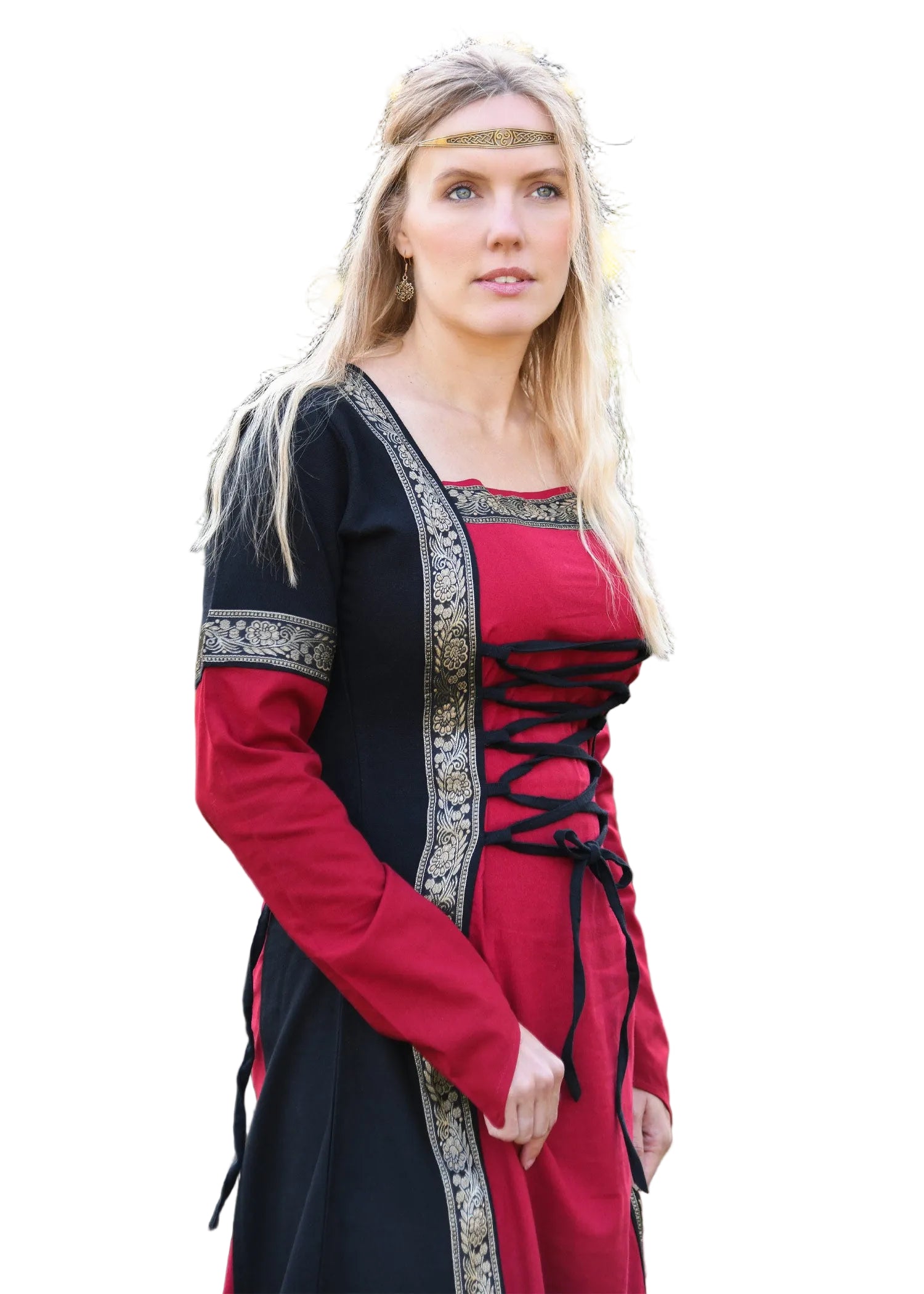
However, in the Middle Ages, other colors with strong symbolic weight also existed, such as wine, deep blue, dark green, or burgundy tones, widely used in period clothing and medieval dresses for women.
In this context, each color did not only respond to an aesthetic choice, but to a social and economic reality: more intense and deep tones were usually associated with the nobility or court settings due to the cost of dyes, while more muted colors were more common among the working classes; in the same way, black, deep blue, and wine or burgundy tones were associated with social distinction, especially in court environments and among the elite.
Dark greens, on the other hand, were more common in less exclusive contexts, linked to the affluent classes but not necessarily noble ones, where functionality prevailed without sacrificing a certain aesthetic presence.
The choice of color in these types of garments is not only about aesthetics, but about an intention: to convey presence, identity, and a style consistent with the environment in which it is worn.
In historical recreations, the color black or intense tones provide a sense of sobriety that fits perfectly with the character of the medieval nobility.

Fit, shape, and wearing experience
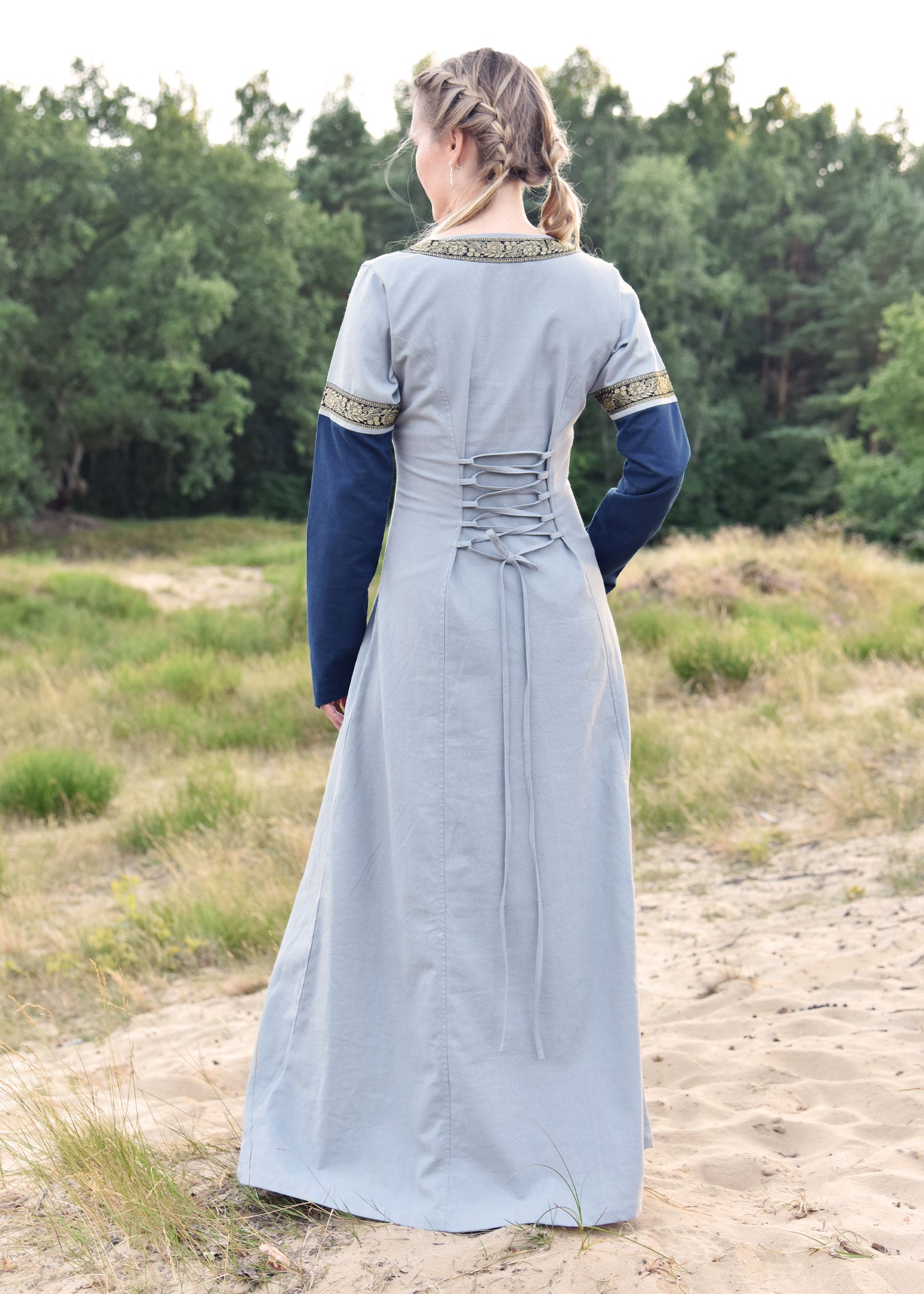
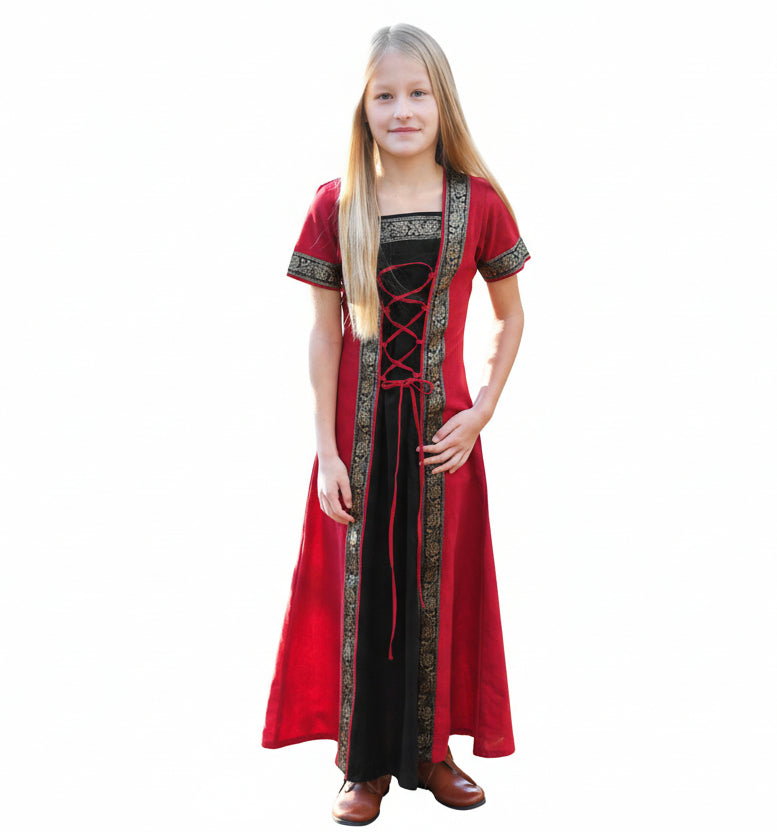
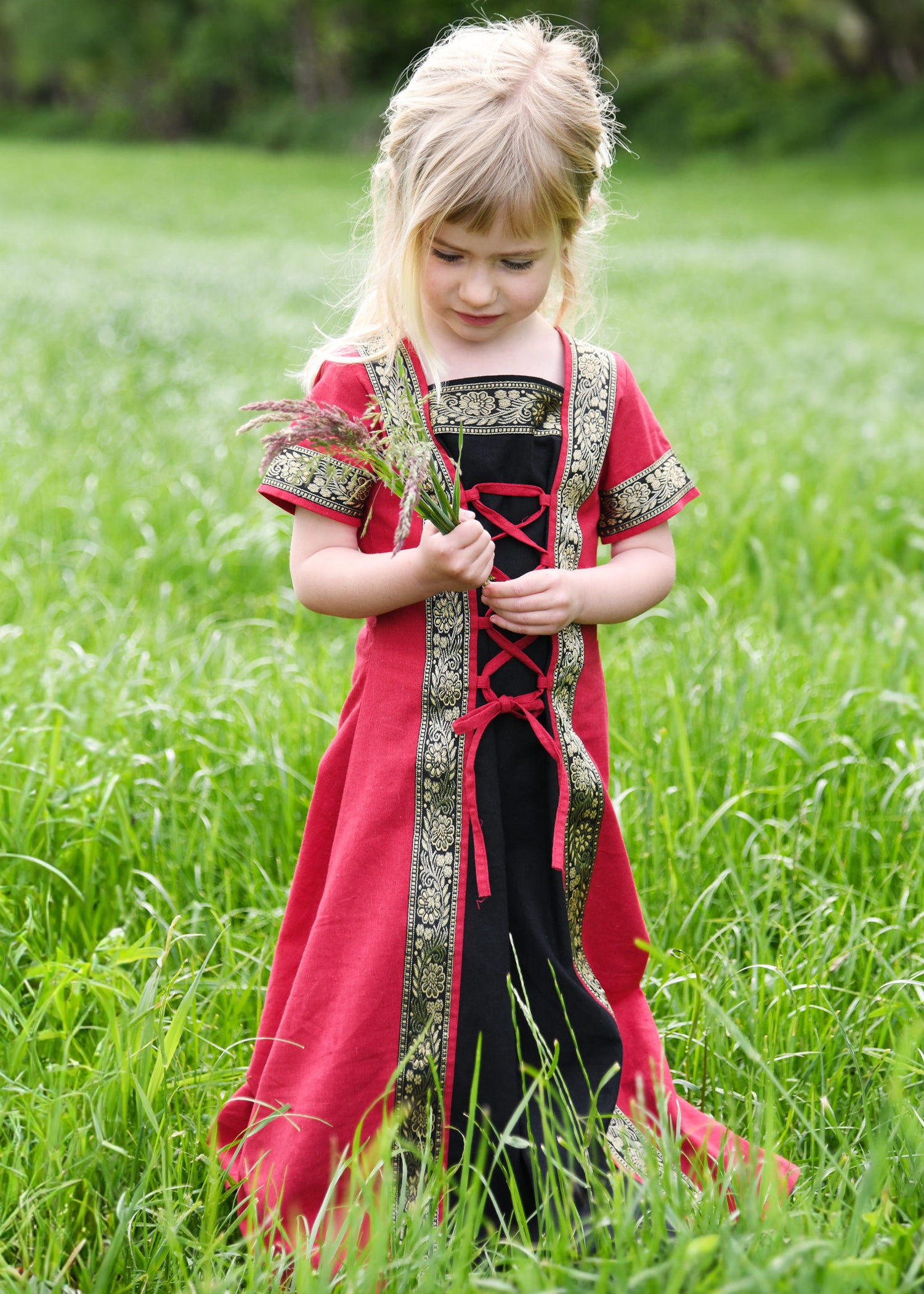
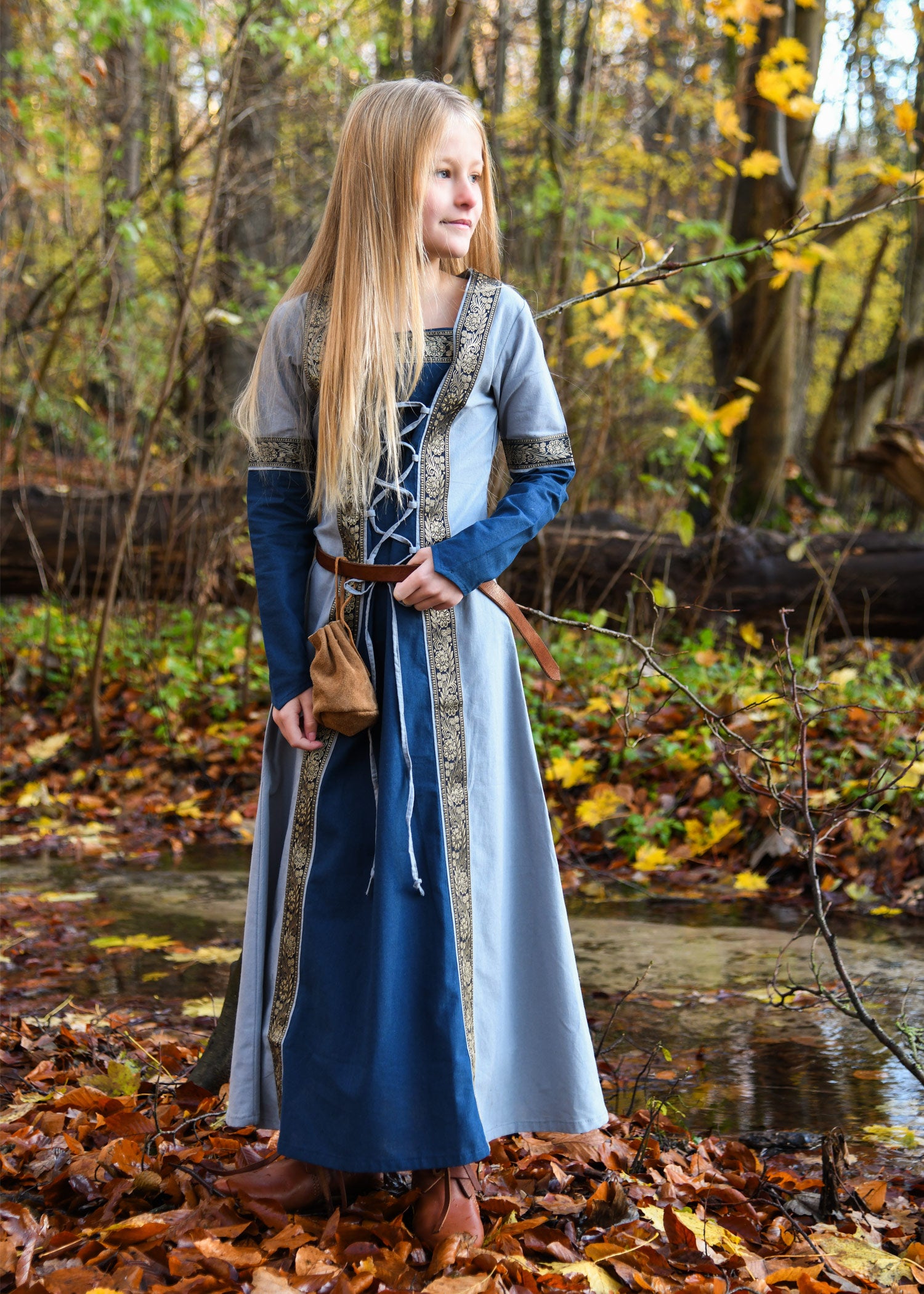
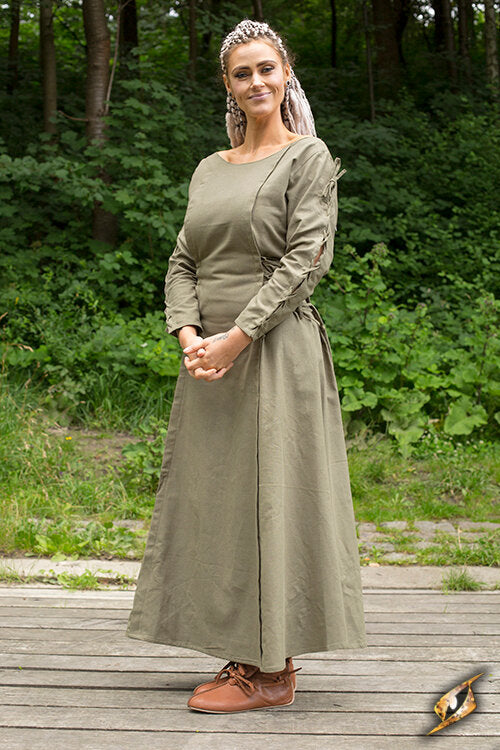
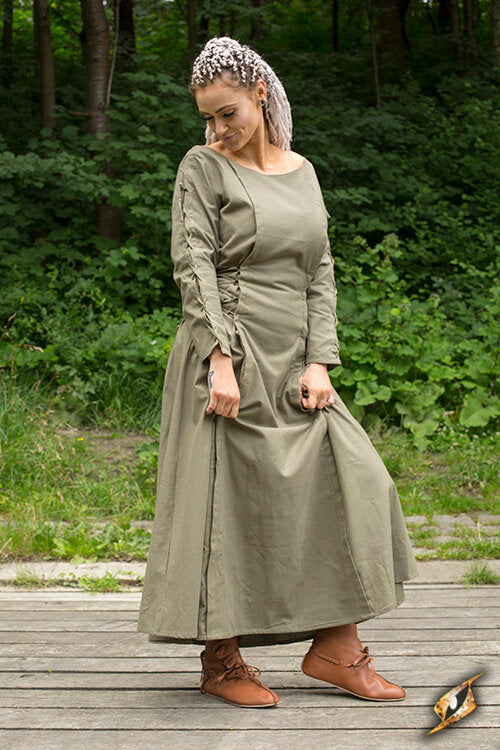
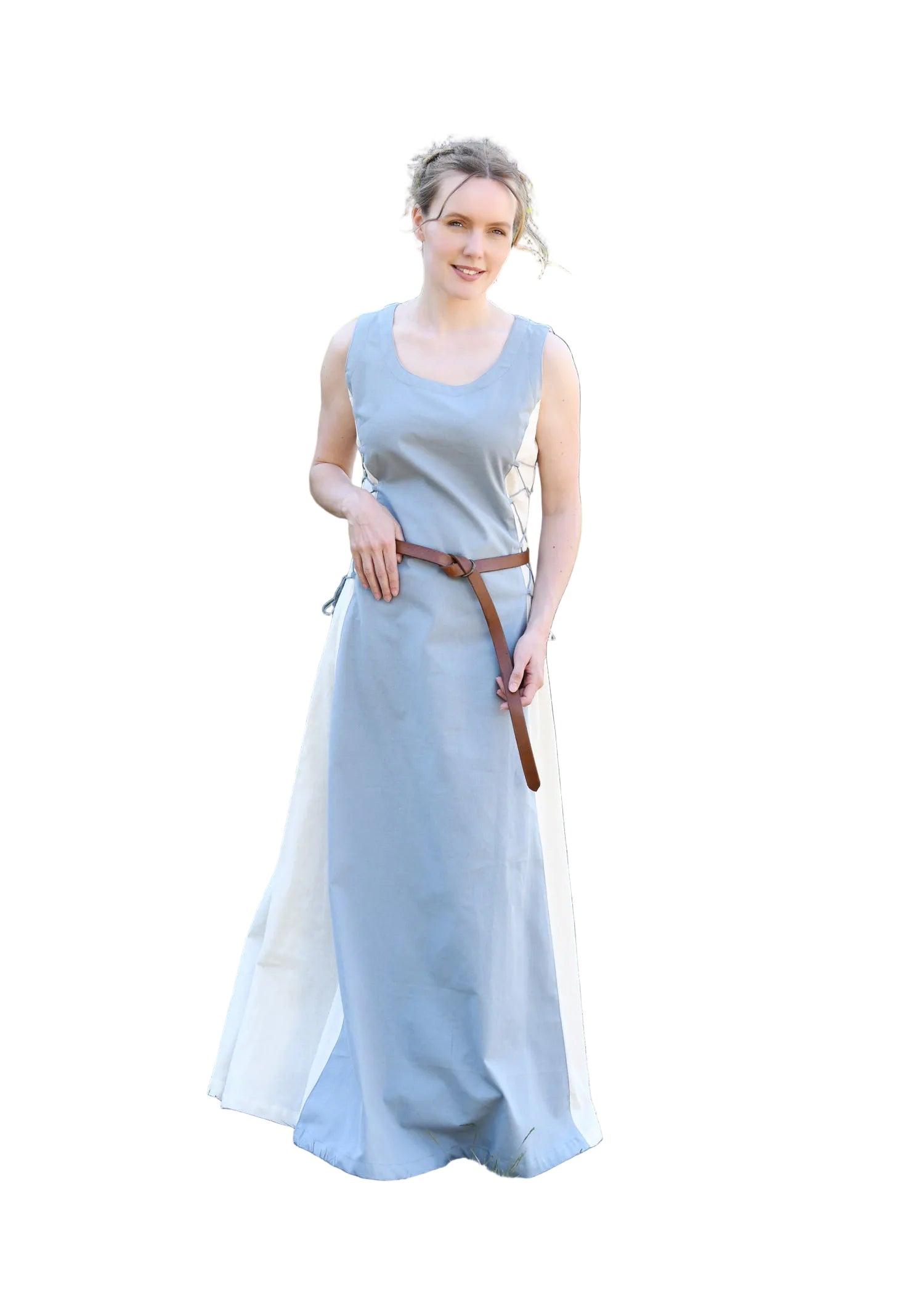
The adjustable lacing system not only serves a practical function but is also part of the visual design of the dress.
It allows the garment to adapt to the body, respecting its shape without imposing a rigid structure, something characteristic of fitted medieval dresses.
This balance between fit and fluidity makes the dress not only visually appealing but also consistent with the type of movement expected in historical events, medieval recreations, or Live Action Role-Playing (LARP) experiences.
A presence that defines the environment
This type of dress does not go unnoticed.
Its hood, sleeves, and structure create a recognizable silhouette that adds character to any scene.
At medieval-themed events, historical weddings, or LARP gatherings, among others, its presence helps reinforce the atmosphere without the need for additional elements.
Elegant medieval dresses like the Eleanor function as pieces that organize the visual space through their own form, providing coherence and aesthetic continuity to the environment, becoming not just a wardrobe item, but a clear visual reference within the historical imagination they represent.
In this sense, the Eleanor hooded medieval dress falls into the category of period dresses, medieval gothic dresses, and clothing inspired by historical nobility, not as an isolated piece, but as part of a style that is recognizable and valued today.
Its design, structure, and balance between form and movement generate an experience that goes beyond the functional, situating itself within a visual language that connects directly with history.