


The Visigoths in Hispania
The Visigoths played a decisive role in the early formation of medieval Hispania and left a legacy that endures in multiple areas of Spanish culture. Although they are often associated with the conversion to Christianity and the Kingdom of Toledo, their roots predate that conversion and date back to pre-Christian beliefs and social structures characteristic of the East Germanic peoples. This informative article explores their origins, their evolution before Christianity, and the traces they left on the Iberian Peninsula.

Origins and pre-Christian context
The Visigoths were a branch of the Gothic people, an East Germanic group who, according to chronicles, originated from territories around the Baltic Sea and migrated south and east during the great waves of peoples in Late Antiquity. Before their contact with the Roman Empire, they practiced Germanic polytheistic religions, worshipping deities associated with war, fertility, and natural cycles. These beliefs were transmitted primarily orally, through myths, rituals, and traditions shared among clans and families.
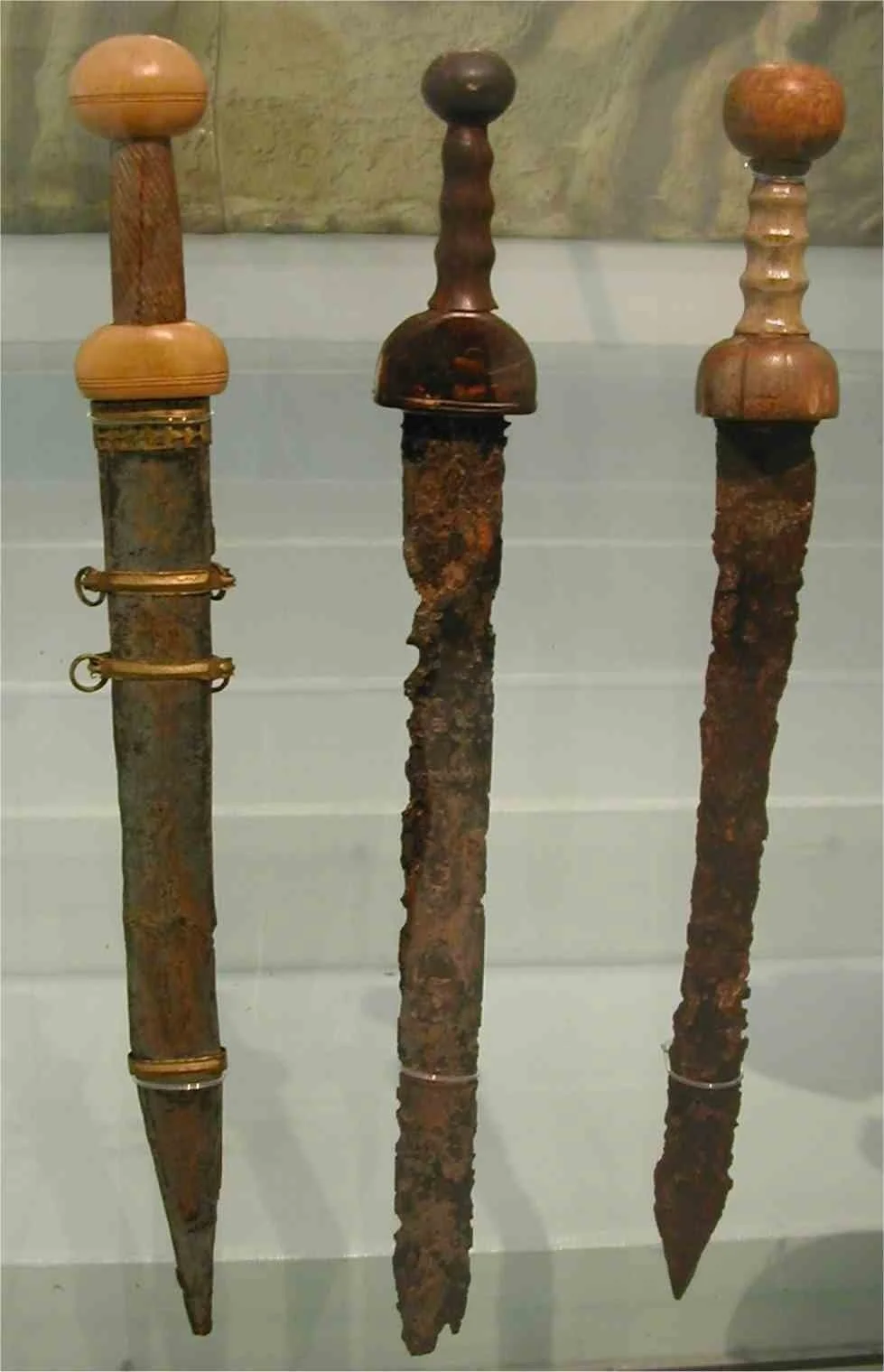
This Germanic Sword is awesome!
Germanic culture and social organization prior to Christianity
In the pre-Christian phase, Visigothic society revolved around a warrior aristocracy and assemblies of chiefs or lineage elders. The leader (king or chieftain) was recognized for his military and leadership ability in these assemblies, and the loyalty of followers was cemented on personal and patronage ties. The Gothic language, a member of the Germanic family, was the vehicle of their identity, although contact with Latin populations gradually introduced Vulgar Latin. Geometric motifs and animal representations stood out in their art and crafts, with a characteristic Germanic style that, as contact with the Roman world progressed, incorporated external influences.
Don't miss this Germanic Helmet!
Migrations and settlements in the Roman Empire
Beginning in the 4th century, Gothic groups made inroads into the Roman Empire. Under leaders such as Alaric I, they carried out notable events, such as the sack of Rome in 410, and later settled in Roman territories as the Federati. Over time, they entered the Iberian Peninsula, taking advantage of the weakening of imperial power. During this period, they maintained many of their structures and beliefs, but at the same time began to coexist with Hispano-Roman populations, initially separated by religious differences (because the Visigoths now largely followed Arianism and the majority of Hispano-Romans followed Nicene Christianity) and by distinct customs.
Check out this Bronze Vegvisir!
Process of Christianization
The Visigoths arrived in Hispania as Arians, a branch of Christianity considered heretical by the Council of Nicaea. At the end of the 6th century, under the reign of Reccared I, the official conversion to Nicene Christianity took place. This allowed for religious unification with the majority of the Hispano-Roman population and facilitated the construction of a more integrated state. The Councils of Toledo became key forums where the ecclesiastical hierarchy and royal power collaborated on religious and political decisions, consolidating a common Christian identity in the kingdom.
The Visigothic kingdom in the Iberian Peninsula
After the defeat at Vouillé (507) and the loss of Septimania, the Visigothic kingdom focused on Hispania, where it consolidated its power until the end of the 7th century. The monarchy was elective among the nobility, coexisting with bodies such as the Aula Regia and ecclesiastical councils. The territorial administration took advantage of the provincial division inherited from Rome, reassuming tax and judicial functions under the duces and comites. Throughout this period, there were frequent succession tensions, but at the same time, the construction of churches, the dissemination of Latin culture, and the drafting of a unified legal framework were promoted.
Check out this Thor's Hammer, Mjolnir!
Legal legacy
One of the most lasting contributions was the code known as the Lex Visigothorum or Fuero Juzgo (completed in the 7th century), which established common laws for Visigoths and Hispano-Romans, eliminating many previous legal distinctions. This text combined Germanic and Roman traditions and served as the basis for medieval Iberian law for centuries, serving as a reference in the Late Middle Ages and beyond.
Art and architecture
Visigothic art in Hispania reflected a blend of Roman, Byzantine, and Germanic influences. In goldsmithing, pieces such as votive crowns and crosses stand out, demonstrating technical skill and emerging Christian symbolism. In architecture, there are basilica-plan churches with arches that foreshadow the future horseshoe arch, ornate capitals, and geometric decoration. Representative examples include buildings such as San Juan de Baños (Palencia), Santa María de Melque (Toledo), and Santa Lucía del Trampal (Cáceres). Although many have been restored, their study reveals a transitional style between late antiquity and the later medieval aesthetic.
Linguistic and toponymic influence
Gothic did not survive as a spoken language, but it left traces in Hispanic Vulgar Latin and in numerous place names and proper names. Germanisms are found in everyday vocabulary and in names of Germanic origin, a result of cultural interaction and the influence of the Visigothic elites on the Latin spoken on the peninsula.
Memory and historical identity
The Visigothic kingdom of Toledo became a mythical symbol in later times, especially during the Reconquista, seen as a precedent for Christian unity on the peninsula. After the Muslim invasion of 711, its kingdom collapsed, but its memory was revered in medieval and modern historiography as a symbol of Christian continuity and historical legitimacy for subsequent kingdoms.
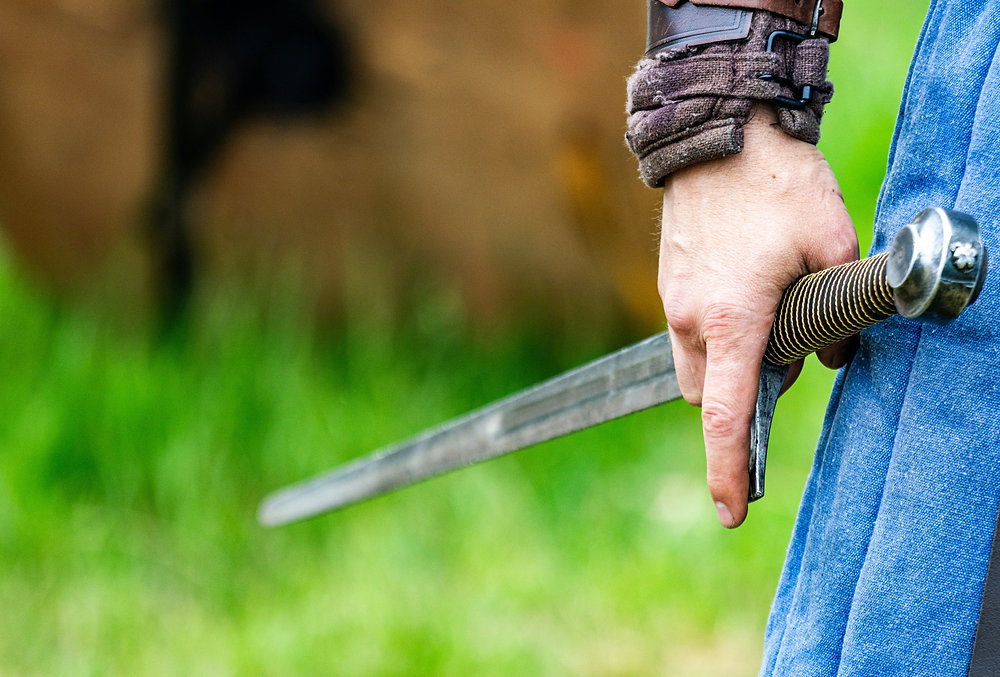
This Norman Sword is very cool!
The Visigothic legacy in Spain is manifold: legal, artistic, architectural, linguistic, and religious contributions that endured throughout the Middle Ages and left their mark on Iberian culture. Its pre-Christian origins are reflected in a Germanic culture that, when combined with the Roman tradition of Hispania (of previously Iberian and Celtic origins) and after the conversion to Nicene Christianity, gave rise to a political and cultural project that profoundly marked the history of our country.