Dark Mysteries of the Middle Ages
The Middle Ages were filled with legends surrounding the supernatural, where magic, vengeance, and punishment were part of the popular imagination.
Witches, sorcerers, and cursed heroic knights coexisted in tales that served as warnings about respecting morality, justice, and the power of the invisible.
These myths show how medieval society interpreted reality and the unknown, using objects, places, and people as protagonists in stories that combined the historical with the magical.
Below, we present some of the most characteristic figures that brought medieval legends to life.

Witches and sorcerers: pacts with demons
Witches and sorcerers were central figures in medieval superstition. It was believed that they could make pacts with demons, cast spells on animals and people, and manipulate the fate of their victims.
From continental Europe to the British Isles, legends described how these figures used potions, incantations, and rituals to gain power or take revenge on their enemies.
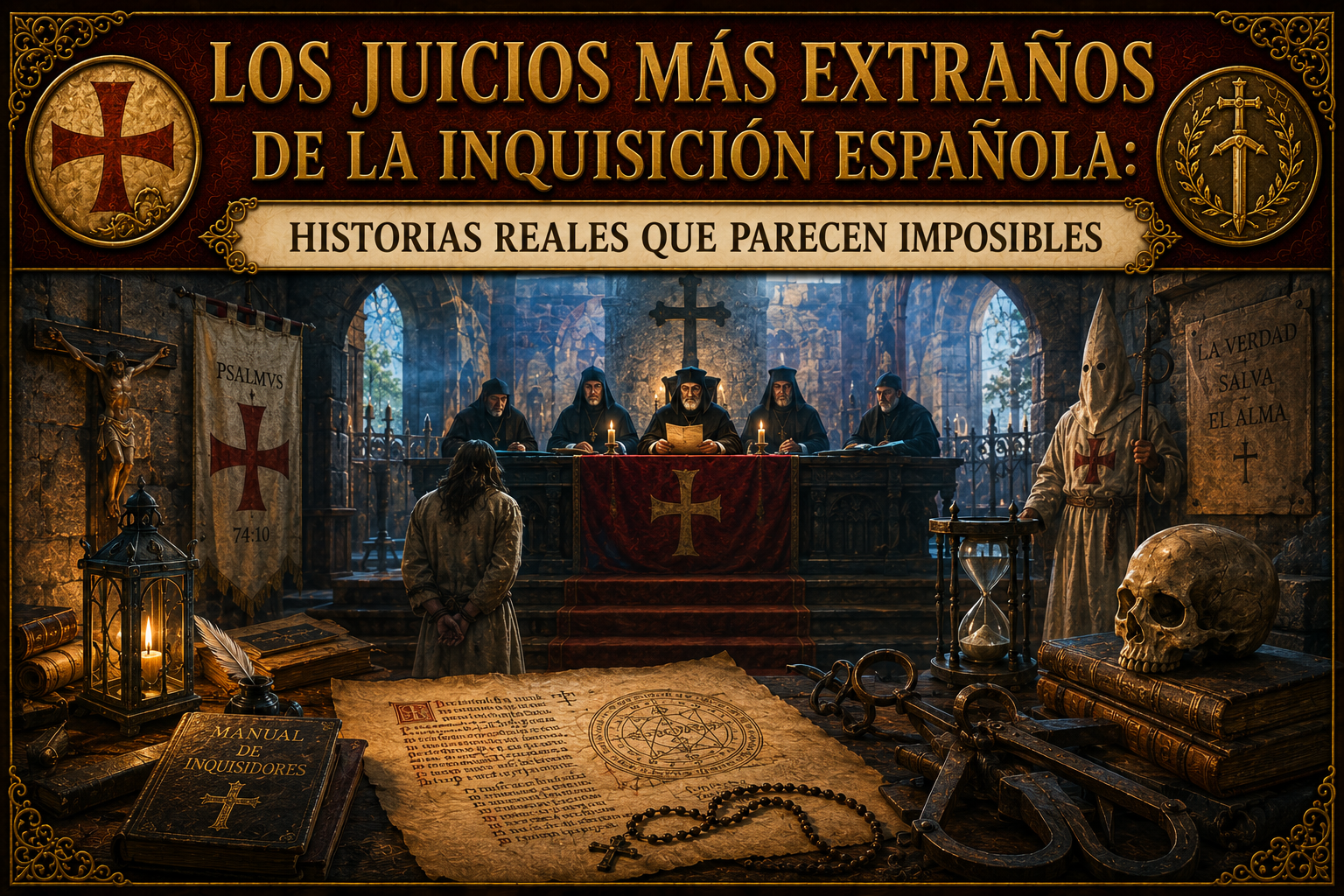
The fear of black magic was so intense that many trials and executions of witches were based on the suspicion of contact with dark forces, leaving an indelible mark on European history and folklore.
Heroic knights with curses
Heroic knights were not always blessed by fortune. According to legend, those who broke oaths, betrayed their king, or committed impure acts could be condemned by curses.
These stories combined heroism, honor, and supernatural punishment, showing that even the bravest warriors could be victims of invisible forces.
Some tales suggest that these cursed knights wandered eternally through castles and battlefields, reminding everyone of the importance of loyalty and justice.

The Black King and the Black Knight: vengeful ghosts
The Black King or Phantom King was the spirit of a monarch who returned to his castle or battlefield after death, seeking vengeance or justice.
Similarly, the legend of the Black Knight describes a spirit that roamed medieval castles and lands, dressed entirely in black.
His appearance was an omen of misfortune for those who had committed dishonorable acts.
These figures combine the symbology of nobility and the warrior with supernatural mystery, and became recurring myths in medieval literature and folklore.
Enchanted maidens: beauty and divine punishment
Enchanted maidens were women transformed by divine punishment or by dragons in the medieval imagination.
Their stories served as a warning about obedience, purity, and the consequences of challenging the moral or religious order.
In some tales, the maidens could only be freed by a brave hero, symbolizing the union of virtue, heroism, and redemption.

Nocturnal creatures and werewolves
Among the darkest tales are the nocturnal creatures, specters that attacked those who ventured into cemeteries, forests, or forbidden places.
Werewolves, humans transformed into beasts by a curse, were also feared in villages and forests.
These stories reflect the fear of the night, of the unknown, and of human fragility in the face of forces that escaped medieval understanding.
Shadows and presences in silent castles
According to legend, spending the night in certain castles could be dangerous, as they harbored supernatural presences.
Something ancient and watchful would awaken in the walls, producing inexplicable noises, footsteps in empty hallways, or echoes of former occupants.
These stories show that castles were spaces charged with history, power, and invisible presences, and that the memory of their inhabitants could live on beyond death.

Cursed towers and dungeons
Cursed towers and dungeons were places where prisoners left a trail of dark energy, according to medieval tales.
Many died there under extreme conditions, and it was said that their lamentations remained trapped in the walls, creating an aura of fear and mystery.
These legends reinforced the perception of castles as spaces where history and the supernatural coexisted, and where every hallway could hide secrets of the past.
Mysteries that still fascinate: the fear of the unknown
Although they lack scientific evidence, legends about witches, cursed knights, ghosts, and werewolves continue to fascinate historians, writers, and folklore scholars.
These medieval tales show how society combined morality, superstition, and fear to explain the inexplicable.
To this day, castles, forests, and dungeons continue to evoke these stories, leaving a halo of mystery that invites us to imagine how medieval life was full of magic, danger, and secrets that endure centuries later.