










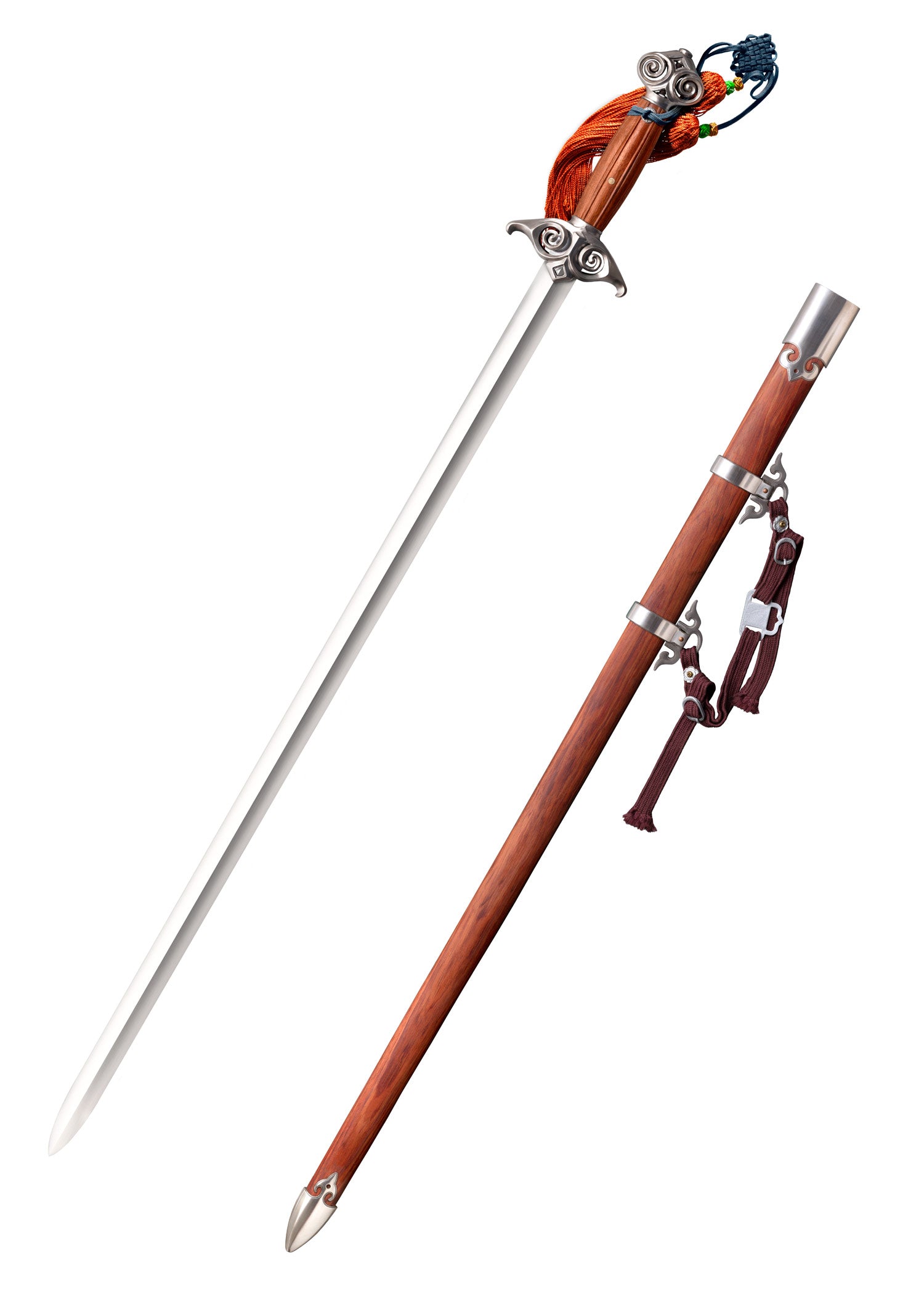
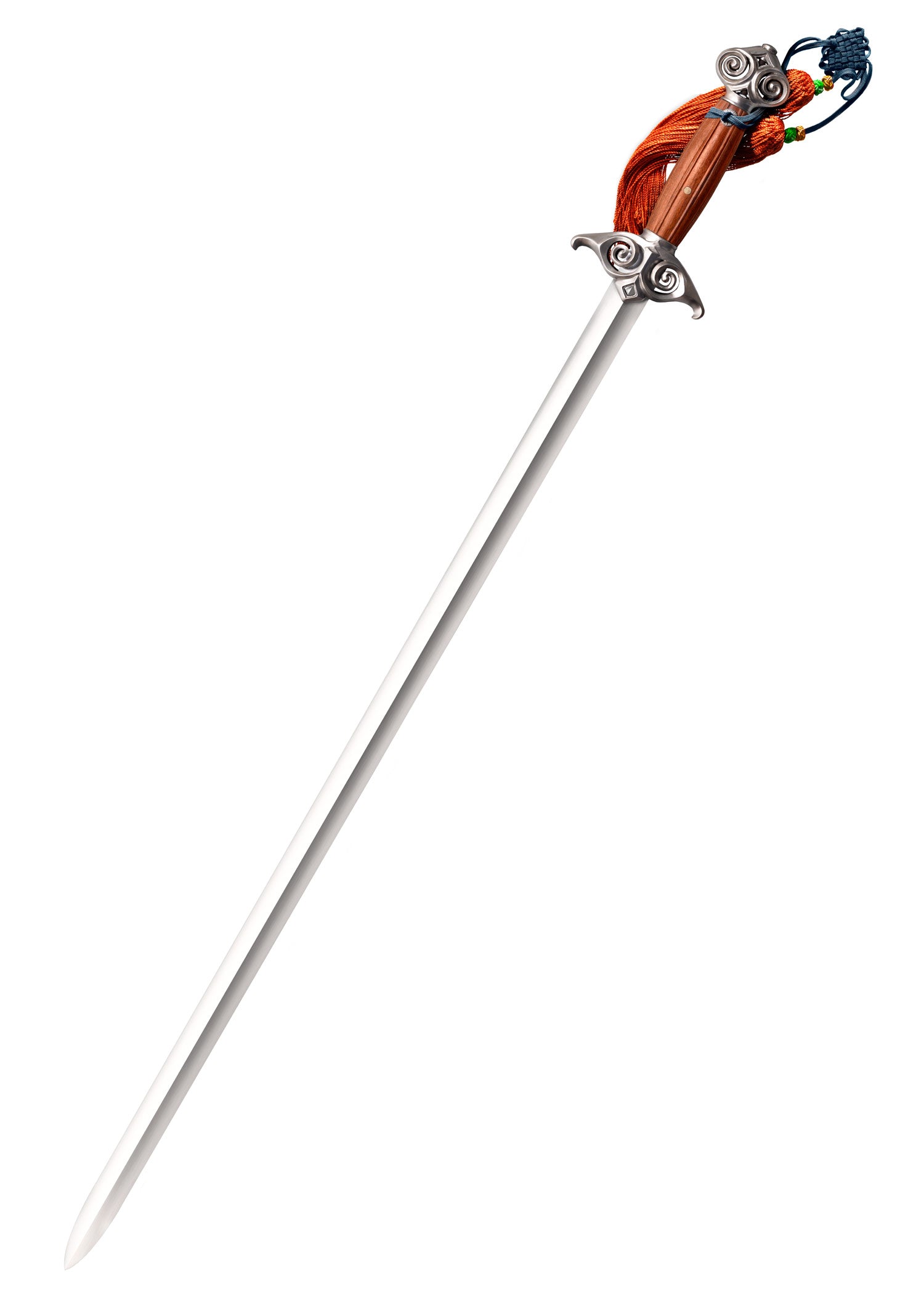

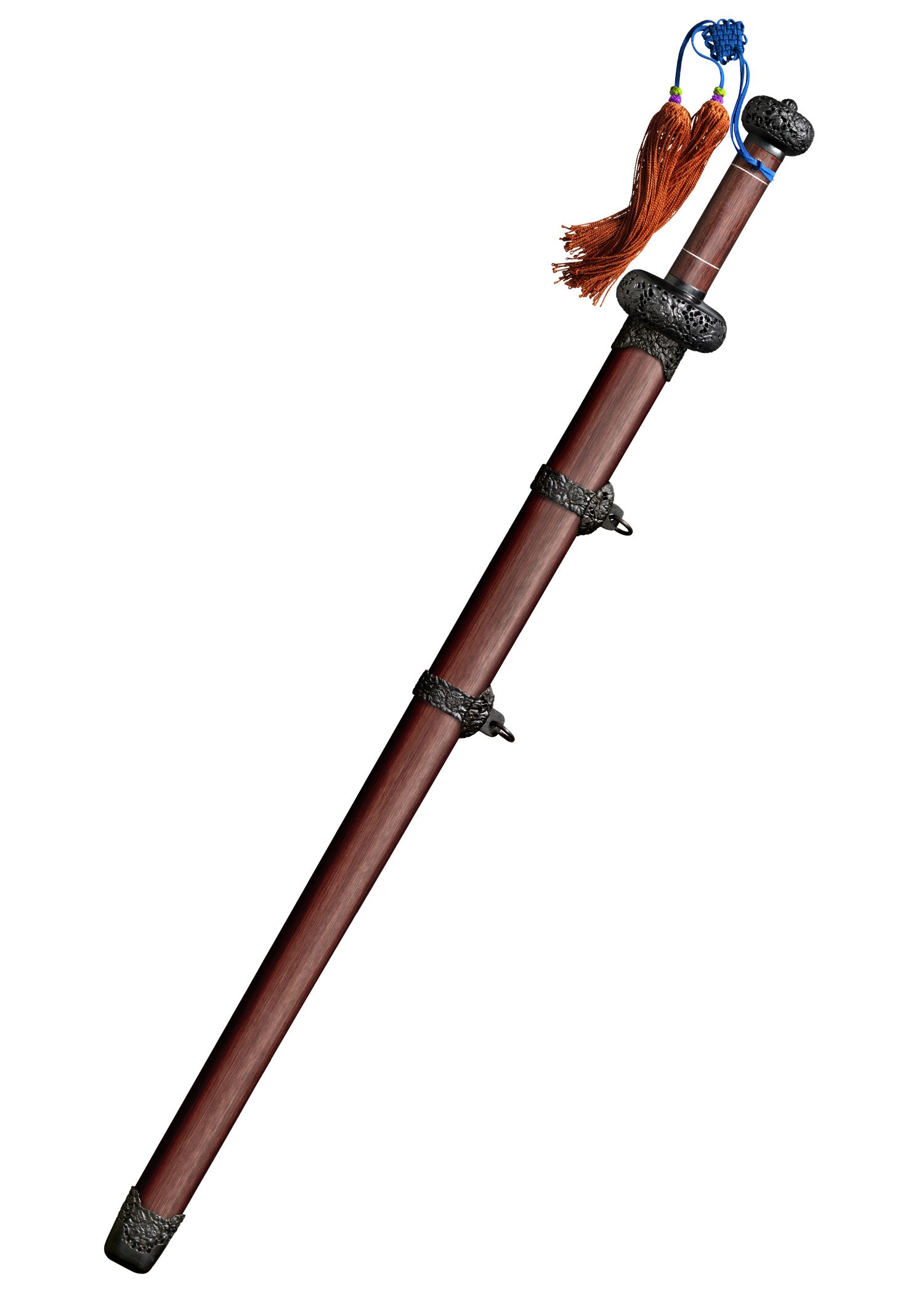
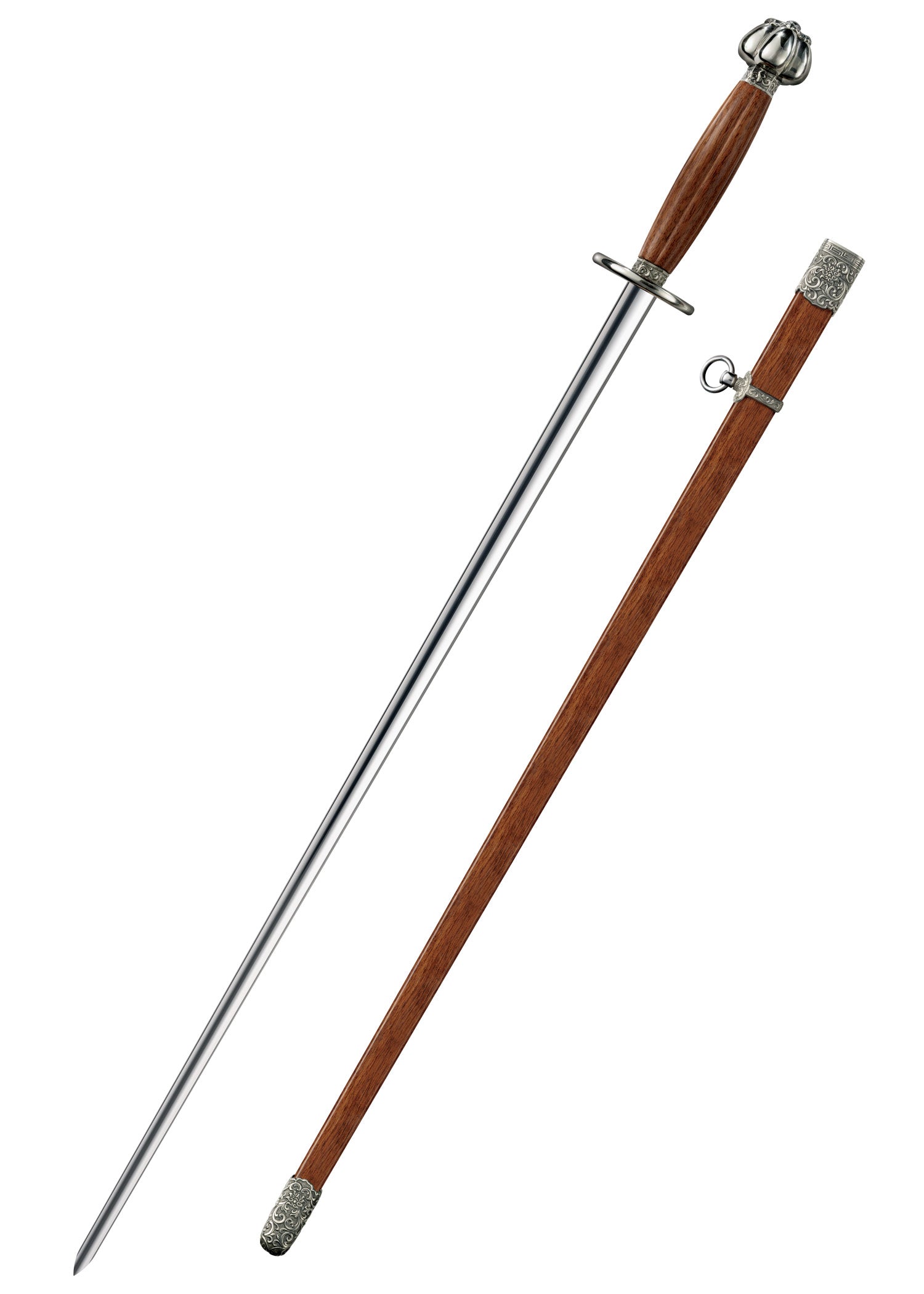


Appearance of the sword in ancient China
The Chinese war sword emerged in the context of the early civilizations of the Yellow River valley.
During the Shang dynasty (c. 1600–1046 BC), edged weapons were primarily made of bronze, and the first Chinese swords had both ritual and military uses.
With the Zhou dynasty, metallurgical development allowed for improvements in the strength and functionality of the sword as a real combat weapon within Chinese armies.

Evolution during the Warring States period
The Warring States period (475–221 BC) marked a turning point in the history of the Chinese sword.
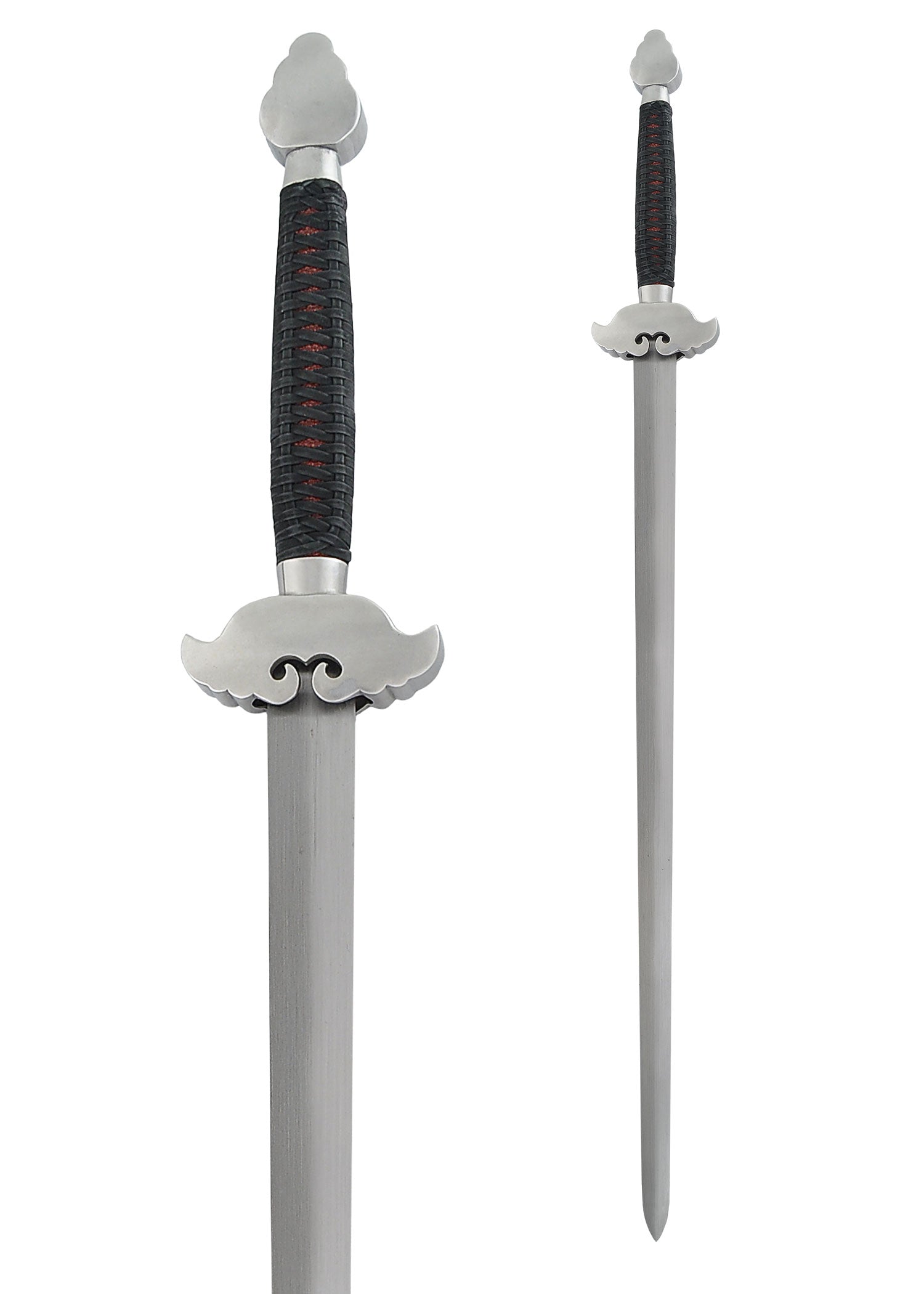
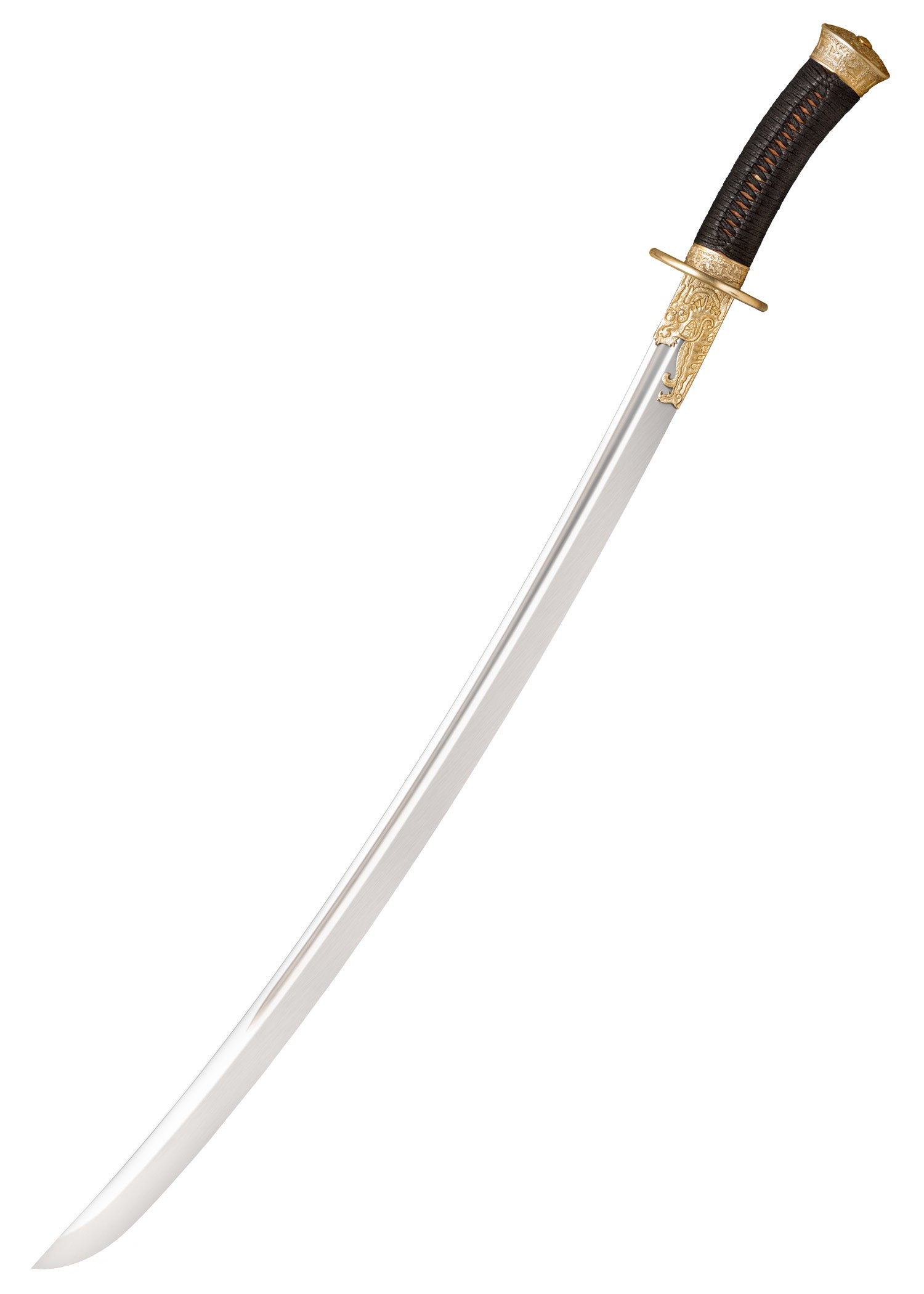
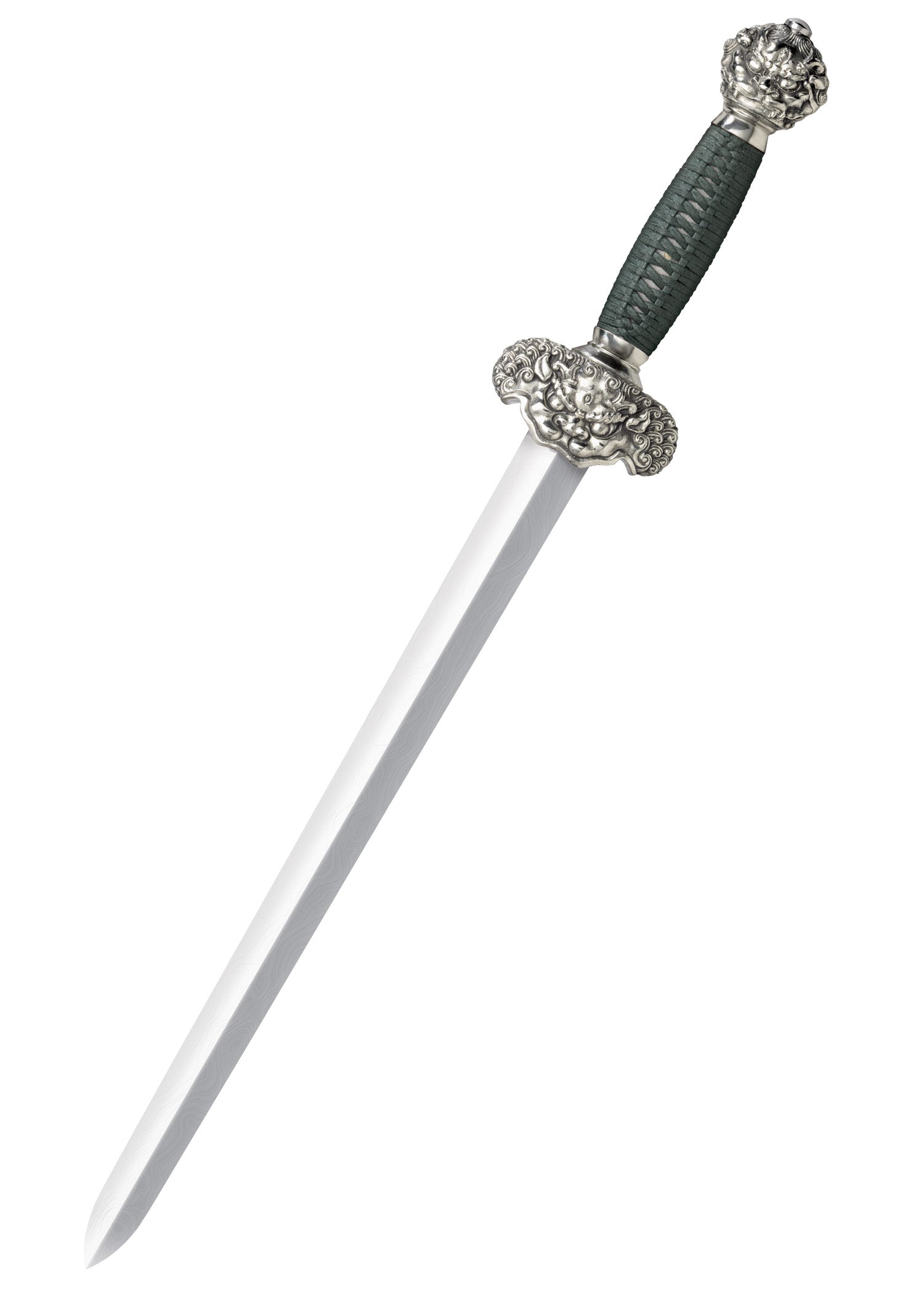
During this stage, two fundamental types were perfected: the jian, a straight, double-edged sword, and the dao, a curved, single-edged sword.
Chinese war swords became standardized weapons, manufactured in iron and later in steel, adapted to organized military tactics and professional armies.
The Jian sword as a military weapon
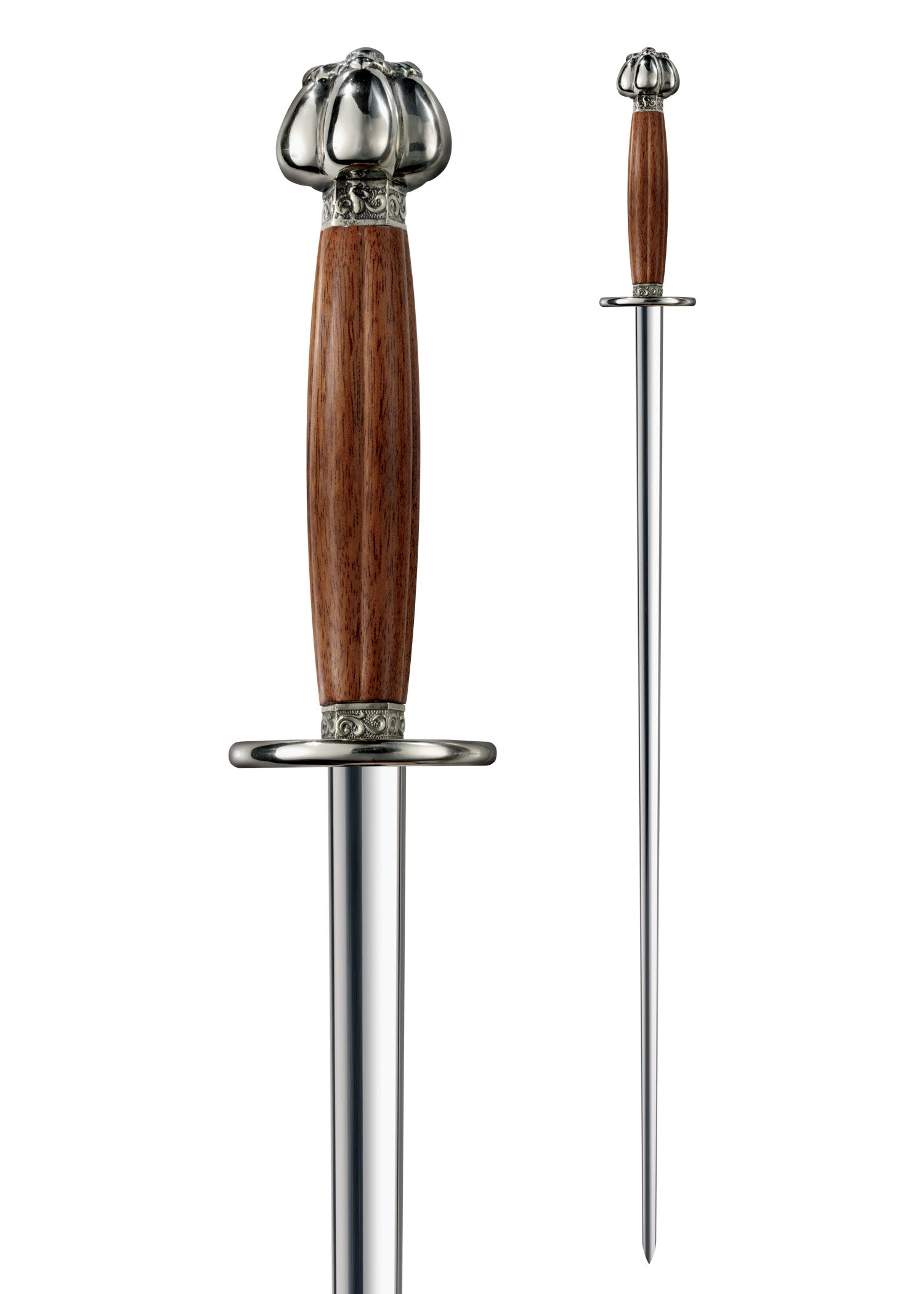
The jian was a war sword used by officers, nobles, and trained warriors.
Its straight design allowed for precise thrusts and controlled cuts, being effective in close-quarters formations.
During the Qin and Han dynasties, the jian was used in both combat and military ceremonies, representing status, discipline, and authority within the Chinese army.

The Dao and its use in real combat
The dao became the most widely used war sword by Chinese infantry starting in the Han dynasty (206 BC–220 AD).
Its curved blade facilitated powerful, rapid strikes, ideal for hand-to-hand combat.
Unlike the jian, the dao was more durable and simpler to manufacture, which allowed for its mass use by professional soldiers.
It was widely used during the Tang, Song, and Ming dynasties.
Military use of swords during imperial dynasties
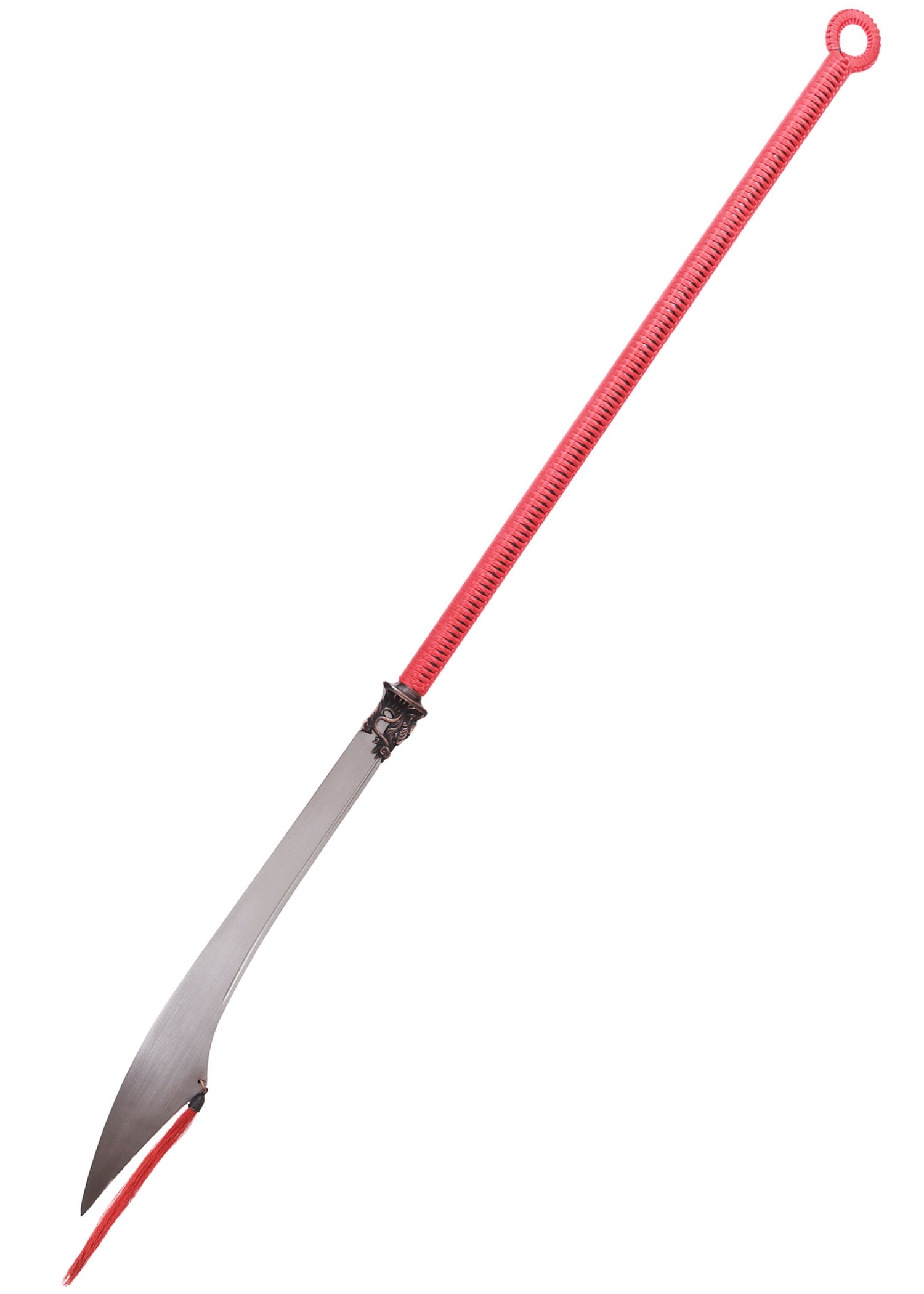
During the Tang and Song dynasties, Chinese war swords coexisted with spears, halberds, and polearms, but remained essential in close combat.
In the Ming dynasty, the military dao evolved to face pirates and invading armies, incorporating wider blades and reinforced hilts.
Military manuals such as those by Qi Jiguang document its tactical use.

Manufacturing materials and techniques
Chinese war swords were manufactured through complex steel forging techniques, including lamination and differential tempering.
Chinese blacksmiths mastered advanced processes that granted flexibility to the spine and hardness to the edge.
These techniques ensured durable weapons for long campaigns, reflecting the high technological level of Chinese metallurgy.
Who used Chinese war swords
They were used by infantry soldiers, officers, imperial guards, and generals.
They were also part of the equipment of specialized units and military escorts.
Their use was regulated by strict hierarchies as well as by the type of sword, having minimal variations according to rank, function, and historical period, always integrated into a structured military system.
Historical and cultural significance of the weapon
Beyond its warlike function, the Chinese war sword represented order, discipline, and imperial legitimacy.
Its presence in tombs, reliefs, and historical texts confirms its importance as a military weapon and a symbol of state power in the history of China.


