



The figure of Sir William Marshal, one of the most celebrated knights of the Middle Ages, is inseparably linked to his sword.
Considered "the best gentleman in the world" by his contemporaries, he stood out as a warrior, diplomat, regent and defender of the feudal nobility.
His sword has become a symbol of English chivalry, military honor, and the transformations of the medieval world.
In this article we explore the history, characteristics and cultural relevance of this legendary weapon.

William Marshal: The Perfect Gentleman
Sir William Marshal (1146–1219) was born in a turbulent period of English history, marked by disputes between kings, nobles and crusaders.
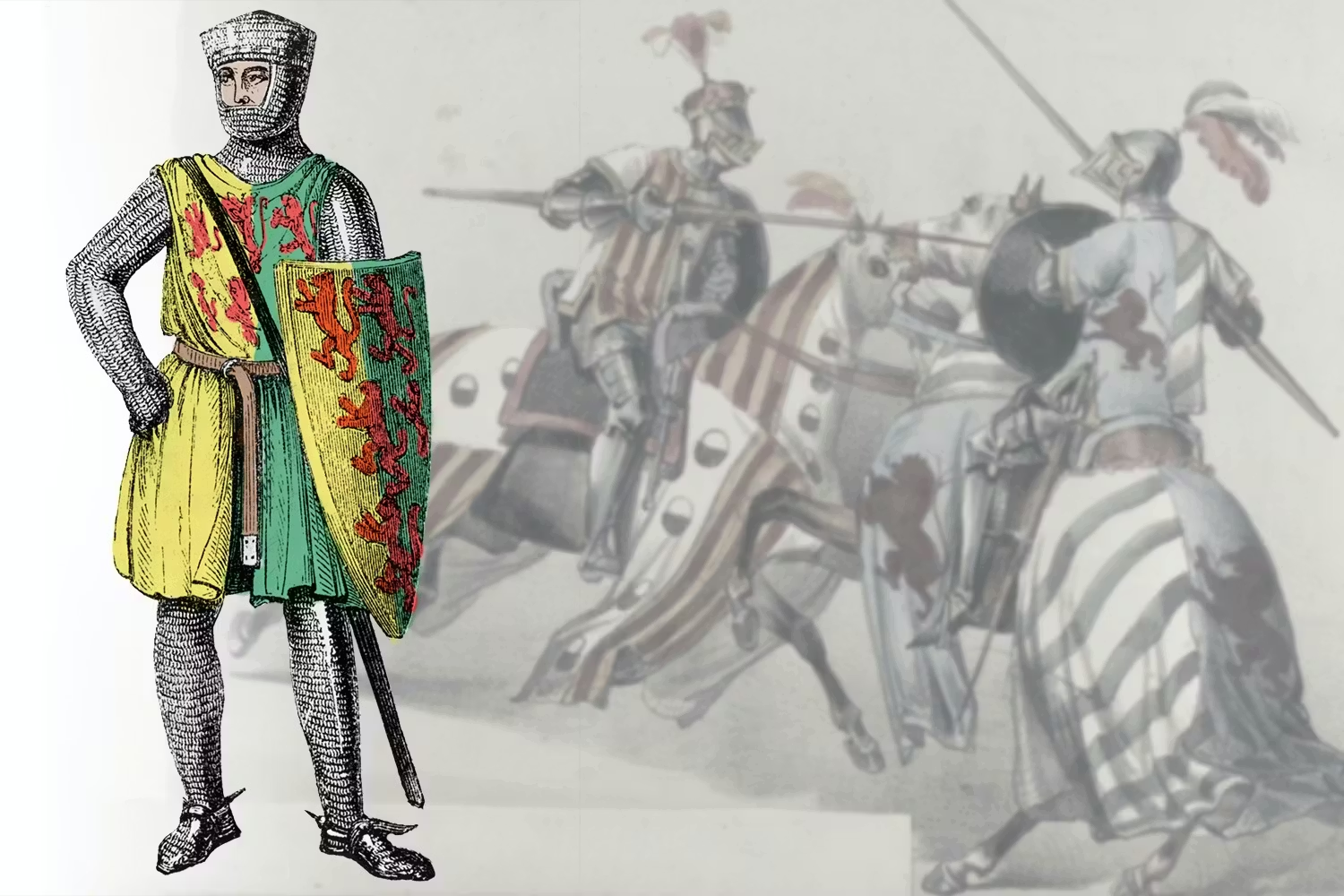
His exceptional skill in tournaments and battles led him to serve under four monarchs: Henry II, Richard the Lionheart, John Lackland, and Henry III.
His sword was his companion in dozens of jousts, tournaments and military campaigns that earned him fame throughout Europe.
Marshal embodied chivalric ideals: courage, loyalty, courtesy, and discipline.
Medieval chronicles highlight his skill with the sword, capable of unseating or disarming enemies stronger than himself. His reputation became a benchmark for later generations of knights.

Characteristics of Sir William Marshal's sword
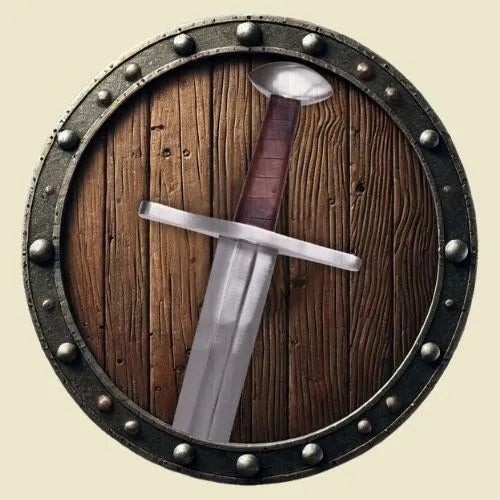
The sword attributed to William Marshal falls within the medieval type known as a hand-and-a-half sword, although some depictions show it as a traditional longsword.
This weapon was characterized by:
- Straight blade and double edge.
- Approximate length of 90 to 100 centimeters.
- Simple and robust guard.
- Knob in the shape of a disc or wheel.
Its balanced design allowed for powerful blows and precise control in close combat.
In tournaments, where Marshal was invincible, the sword functioned as an extension of his technique based on speed, precision and tactical reading of the opponent.
Although no sword certified as his has been preserved, several pieces from the period, found in England and Normandy, show the aesthetics and functionality of those he would have used.

The sword as a political and military symbol
William Marshal's life transcended the war.
After the death of John Lackland, he was appointed regent of England and protector of the young Henry III, using his sword as an emblem of authority and legitimacy.
During the Barons' War, he led the royalist army and won the decisive Battle of Lincoln (1217), consolidating the stability of the kingdom.
The sword, therefore, not only represents his martial prowess, but also his role as mediator between noble factions and guarantor of the feudal order.
His figure was enshrined in the European chivalric tradition and in the development of the medieval heroic ideal.
A legacy forged in steel
Sir William Marshal's sword symbolizes the pinnacle of medieval chivalry.
More than a weapon, it is a testament to the character, discipline, and political influence of one of the most admired warriors in European history.
His legacy lives on in museums, historical novels, medieval reenactments, and studies on the evolution of chivalric combat.
You can find a replica of this sword, and many others, in our Medieval Shop .