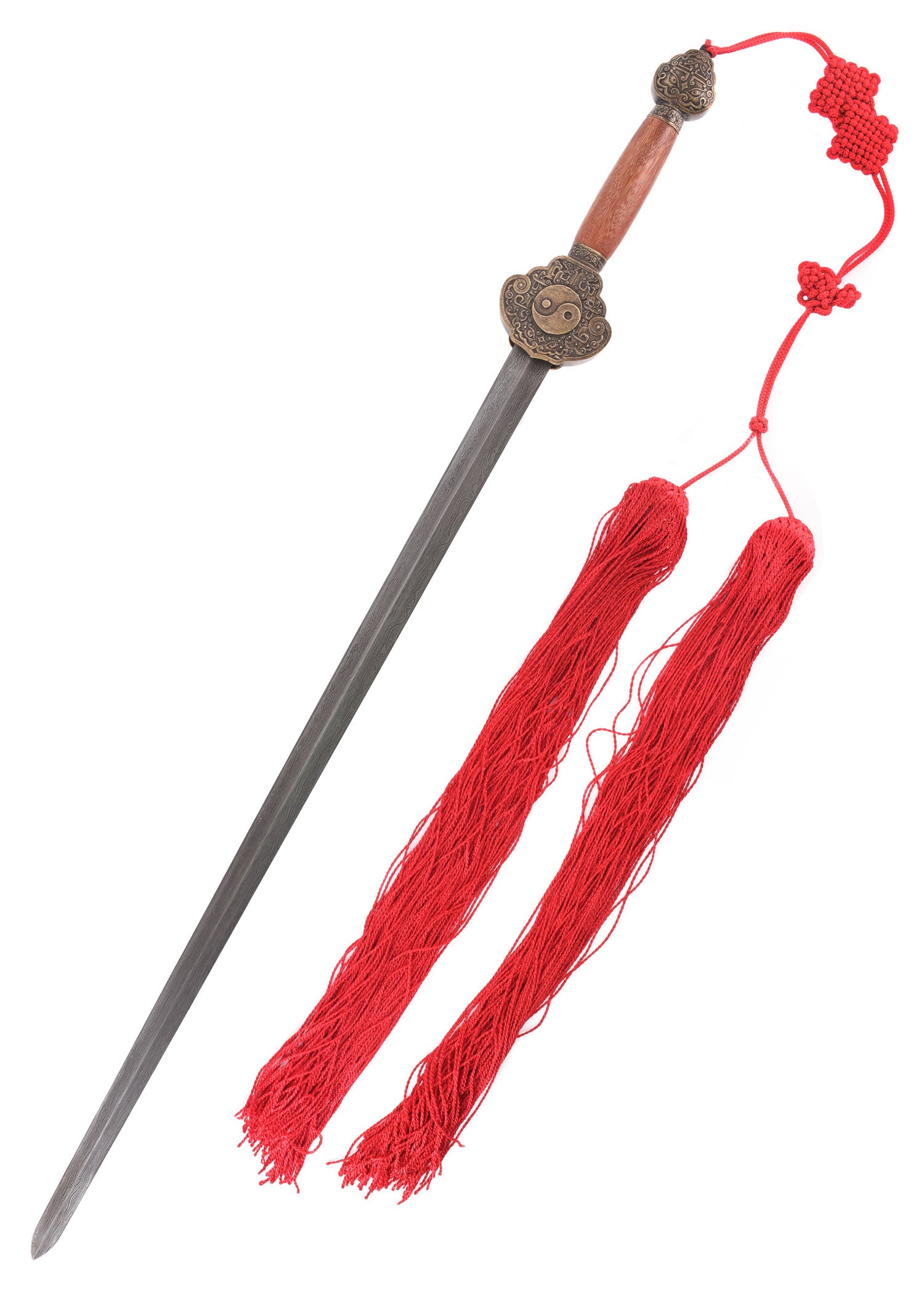
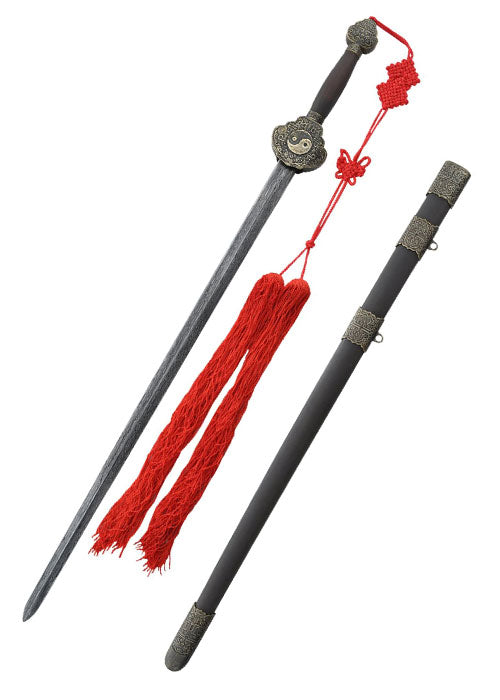

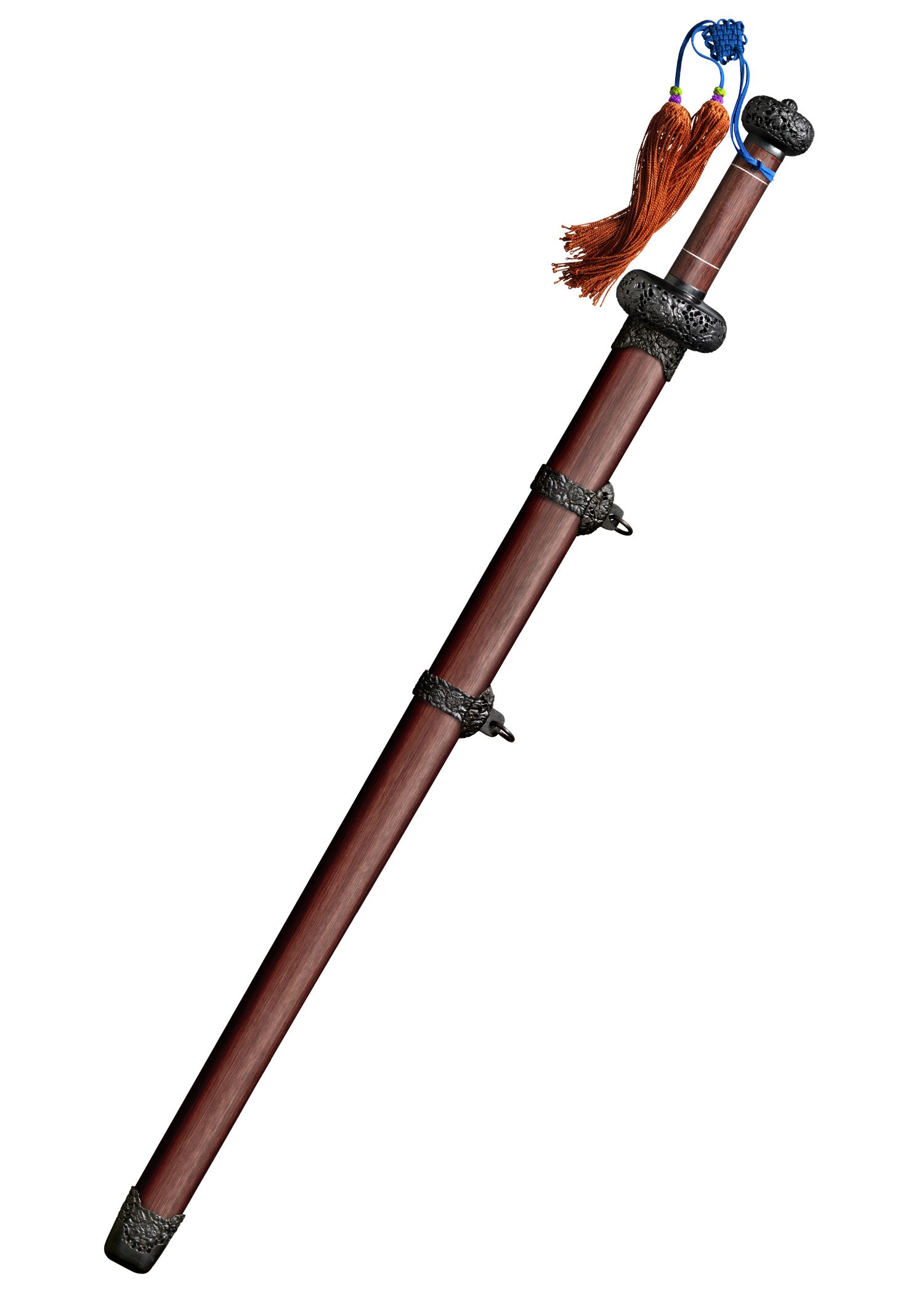

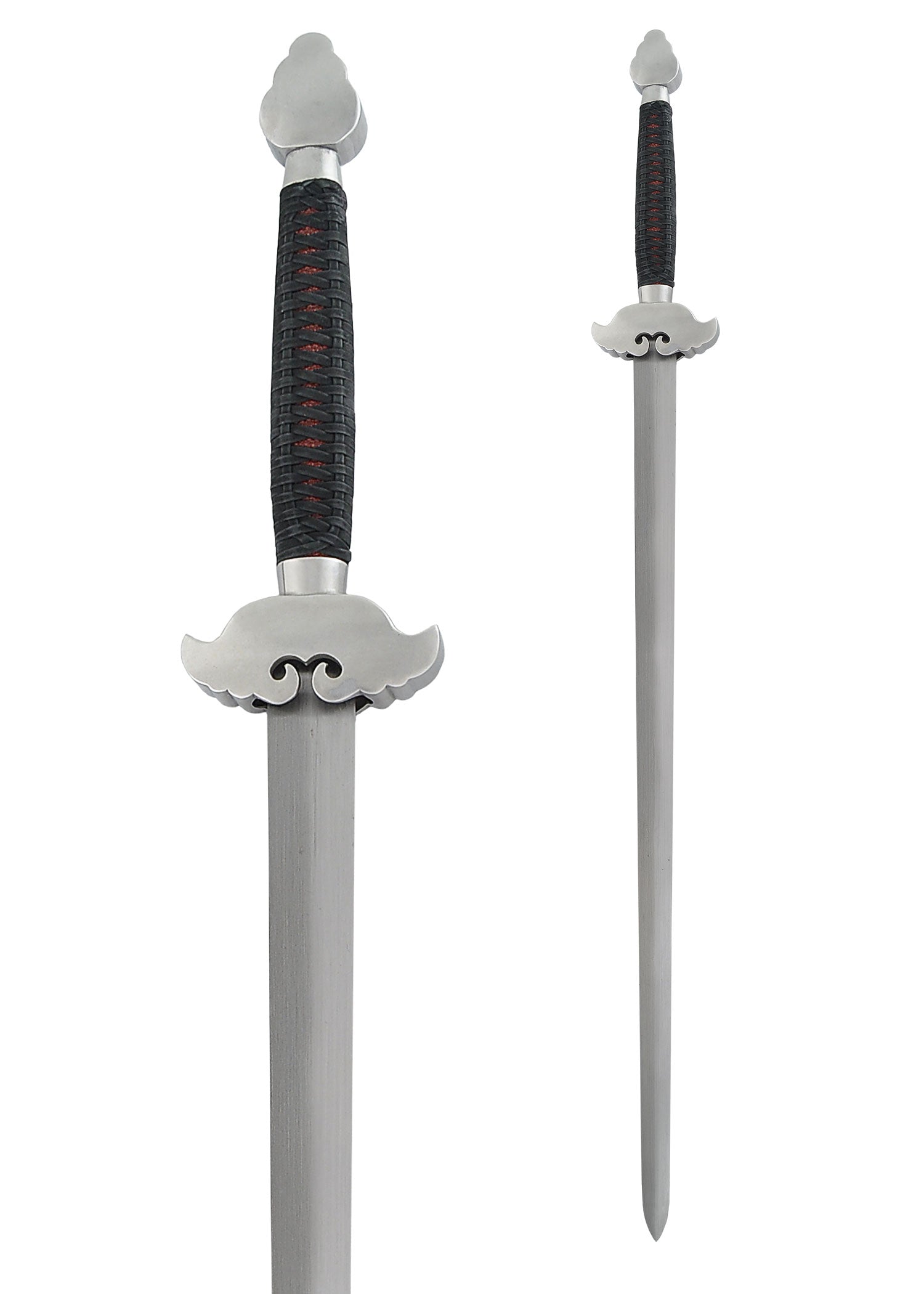
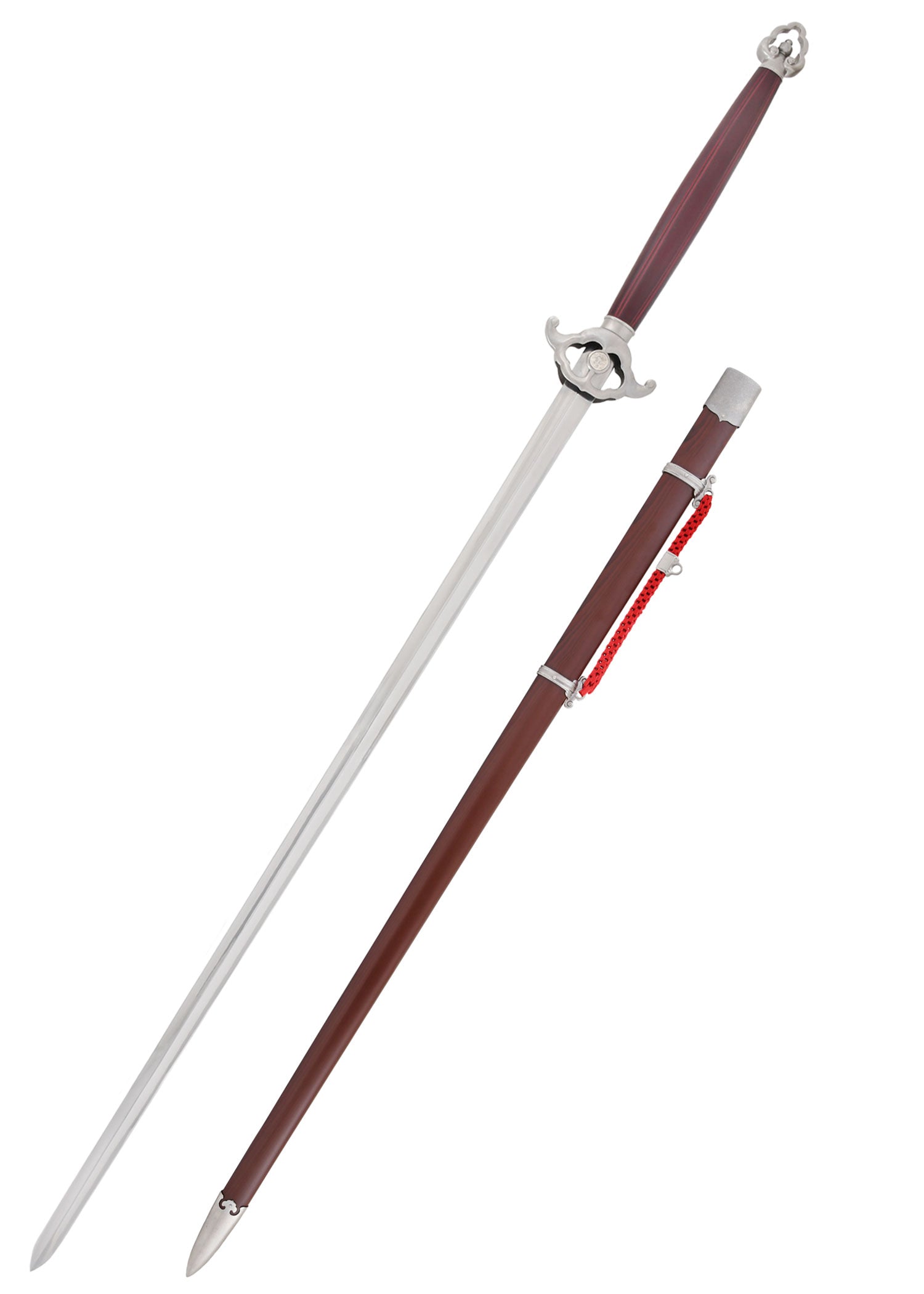
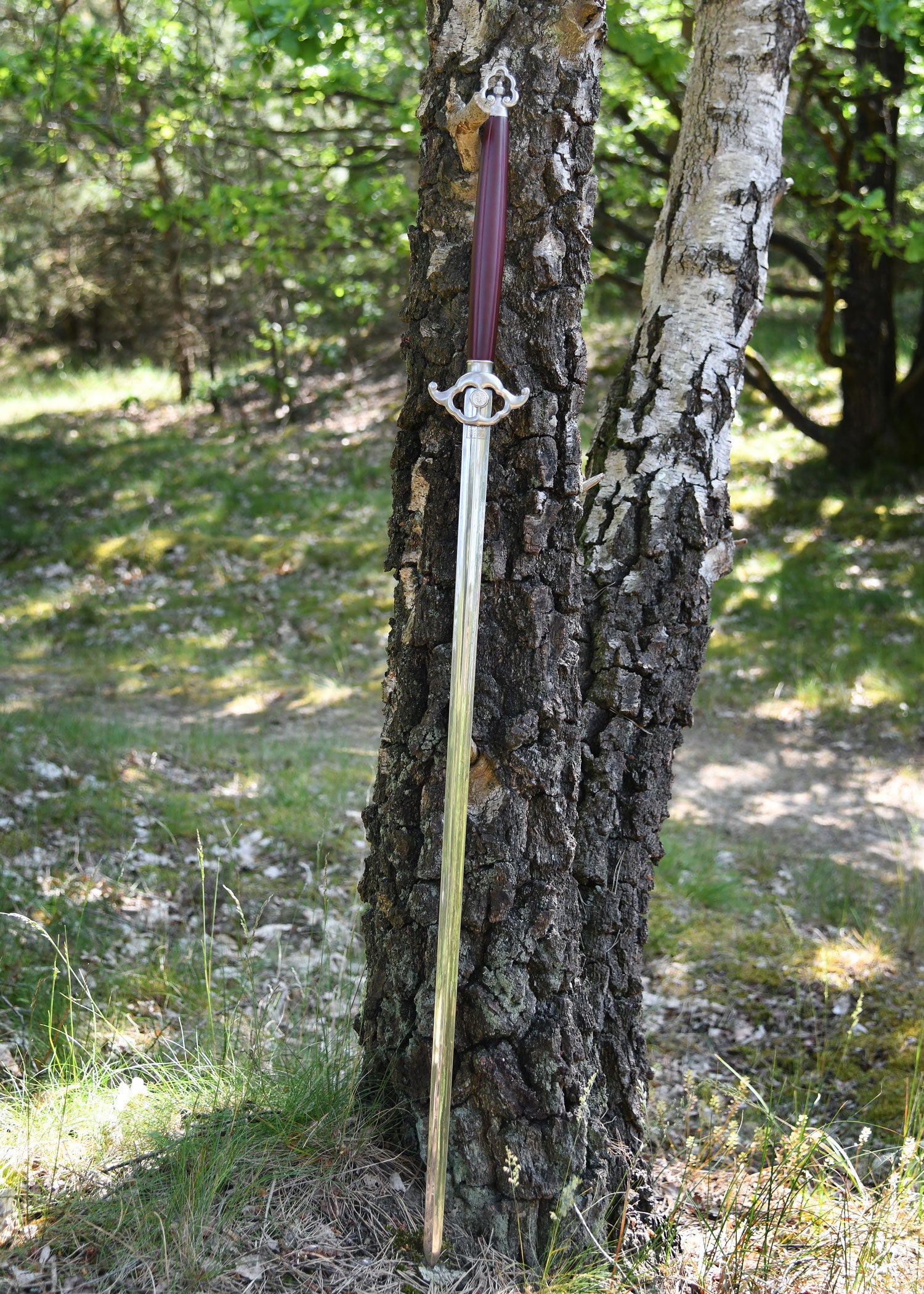
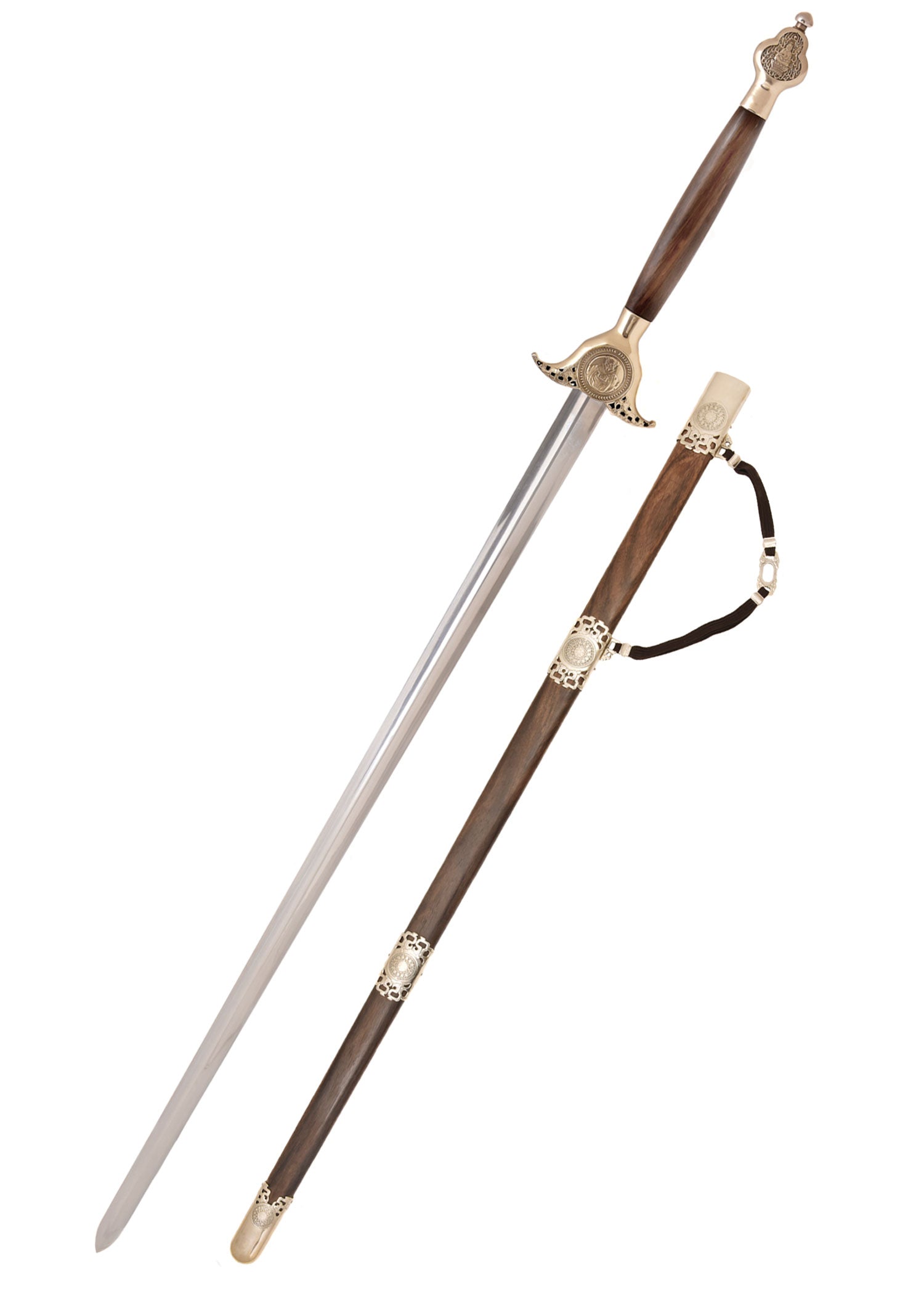
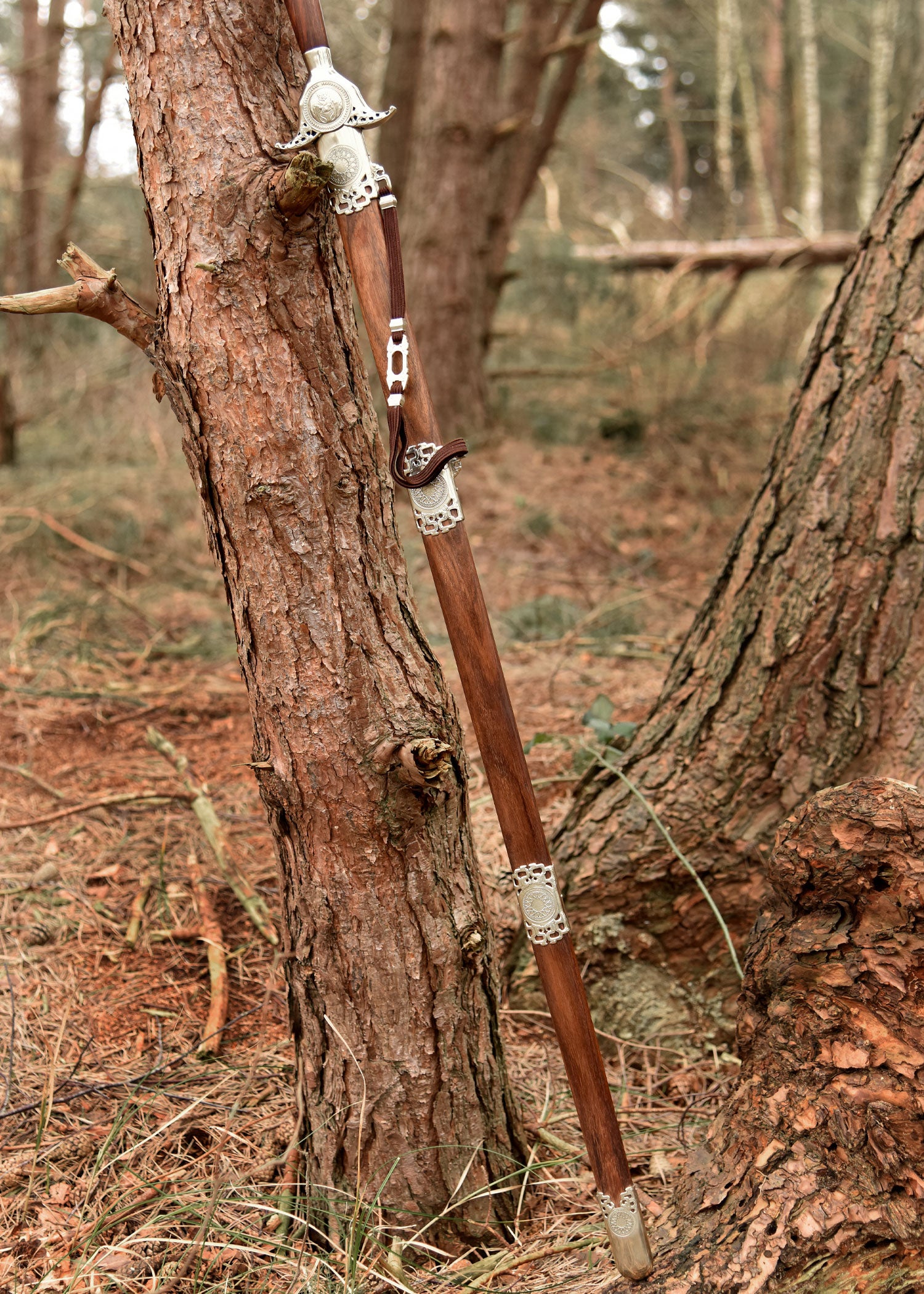
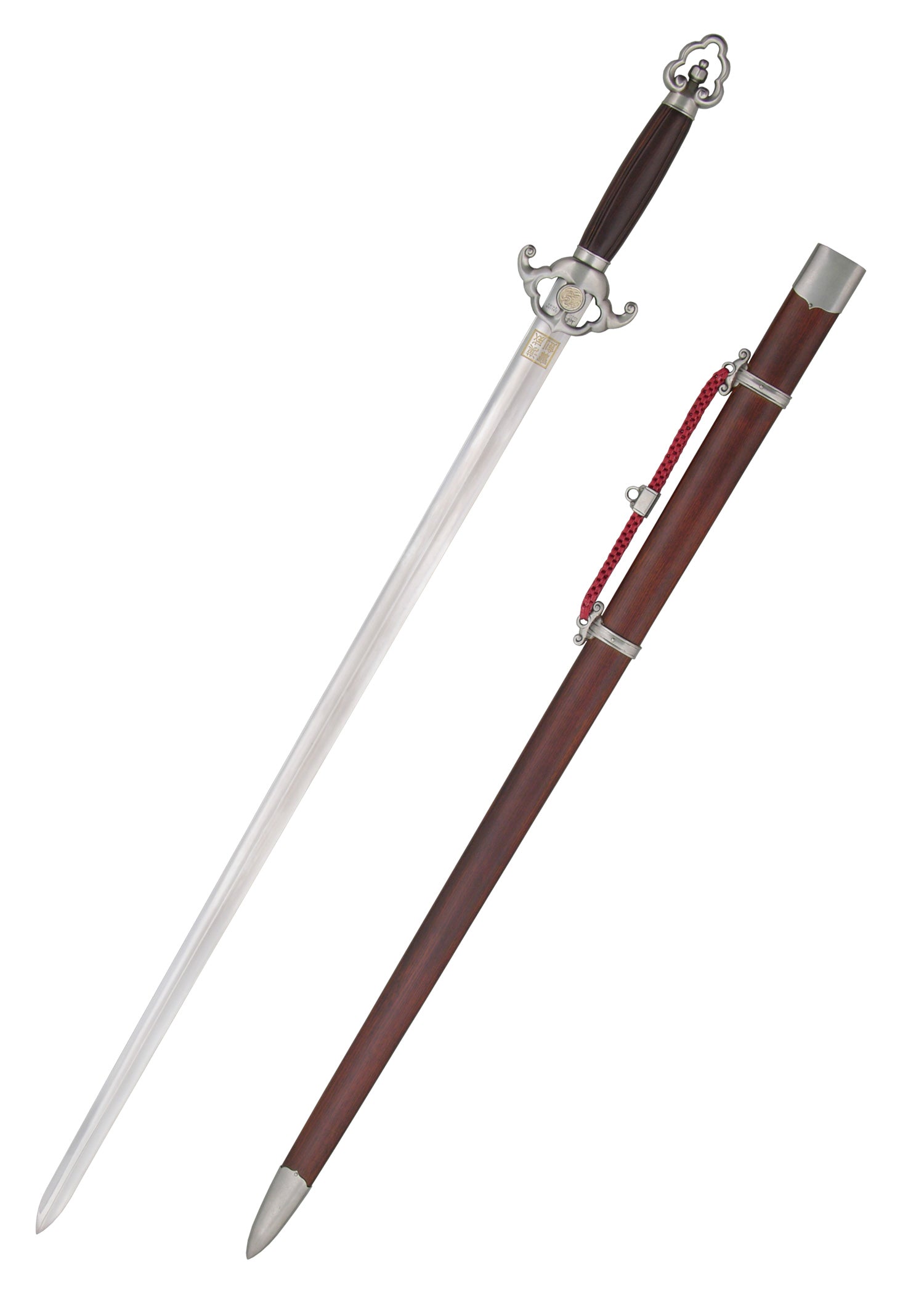
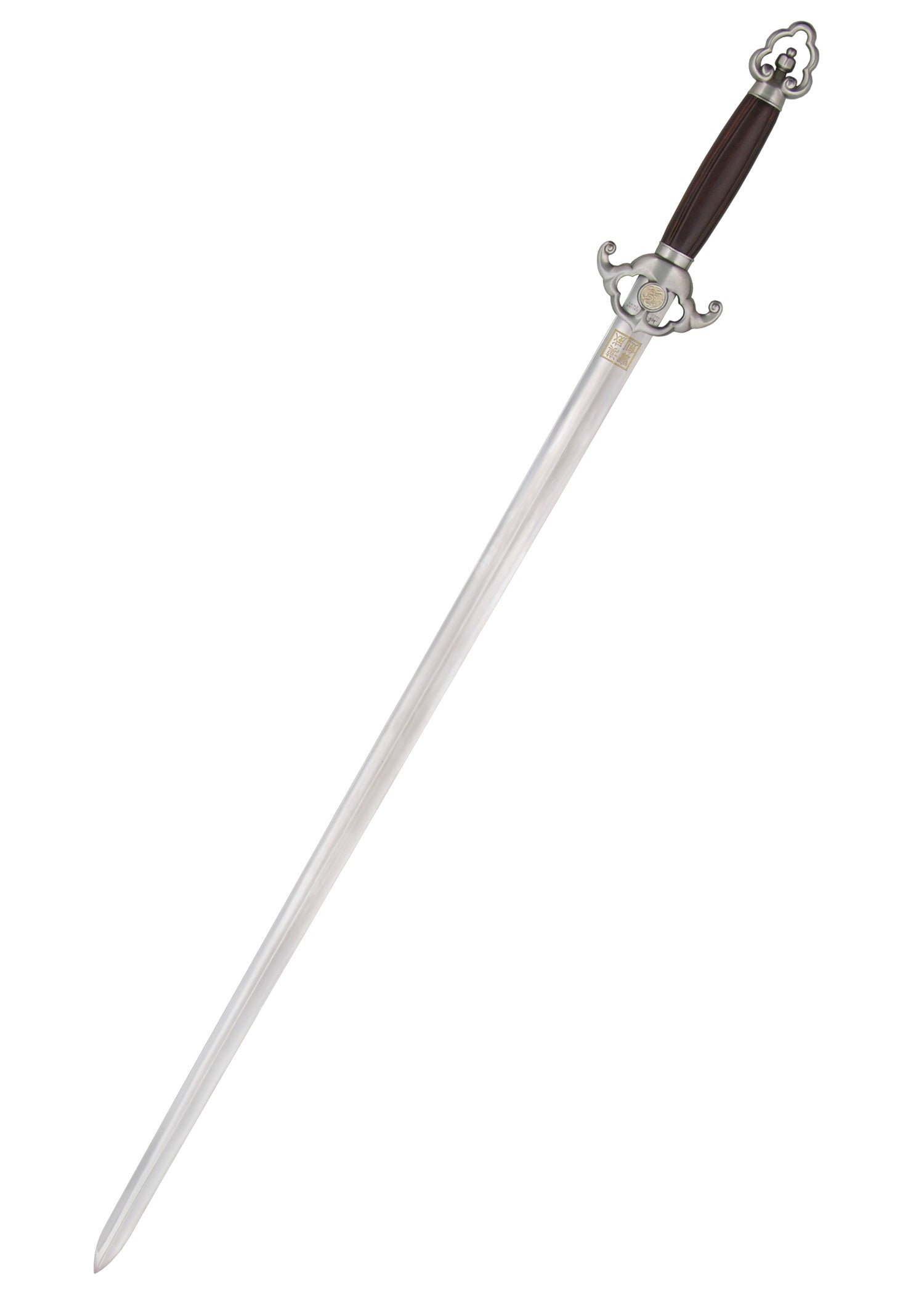
Appearance of two-handed Chinese swords
In China, there existed versions of straight, double-edged swords (jian) that could be wielded with both hands, known as shuangshou jian (雙手劍), literally “two-handed sword.”
These variants were longer versions of the traditional jian sword and are documented in historical Chinese sources and illustrated in military manuals from the Ming period (17th century).
Historically, the jian is a straight, double-edged sword used in China since at least the first millennium BC.
Its primary form was for one hand, but larger examples with wide grips for two hands were also produced, used both in combat and in martial arts.
Characteristics and techniques of the shuangshou jian
The shuangshou jian is distinguished by being longer and heavier than the standard version of the jian. Some historical examples reached lengths of up to 1.6 m, which required the use of both hands to improve control and the power of cuts or thrusts.
Unlike one-handed swords, the hilt of these long jian was extensive enough to accommodate two hands and, in some cases, could serve as a lever for defensive or blocking maneuvers.

The evidence of its existence that endures
The main evidence regarding long two-handed swords within the context of the jian comes from Chinese military sources, especially compendiums and treatises from the Ming dynasty and later periods.
Among them, the Wubei Zhi (《武備志》) by Mao Yuanyi, a military encyclopedia from 1628, stands out, as it contains illustrations of large-sized weapons and their use in martial exercises. It even includes detailed step-by-step illustrations on how to forge, hold, and fight with the shuangshou jian.
These documents not only describe the weapon itself but also methods of training and techniques associated with its use, indicating that such variants were known within the martial culture of the time.
Although the term shuangshou jian is later, since the Han dynasty (202 BC to 220 AD) archaeological evidence has been found of swords with similar characteristics, weapons with grips between 30 and 40 cm and lengths that could reach 1.2 to 1.4 meters in total; and although their iron versions have been corroded by time, there are still ceremonial replicas in lacquer or wood found in tombs from this period, as well as stone engravings of warriors wielding them. Due to this, it is considered that this was a boom period for this type of sword.
Subsequently, by the Ming and Qing Dynasties (14th to 20th centuries), they had fallen into disuse on the battlefield, but original pieces from these eras are preserved in specialized museums in China, such as the China Knives, Scissors and Swords Museum complex in Hangzhou, and collections of historical fencing. These carbon steel swords retain the solid guards, long tangs, and heavy double-edged blades.
Thus, we can say that, although the two-handed versions existed, there is no conclusive evidence that the shuangshou jian was a standard or widely distributed weapon in regular Chinese armies.
Its presence appears more clearly in illustrations and manuals of martial arts and in late treatises, such as the 17th-century Wubei Zhi, where techniques associated with the handling of long swords are shown.
This suggests that, while the use of long two-handed swords was known and taught, they were less common weapons compared to others more widespread, such as spears (qiang) or sabers (dao), which dominated Chinese armies for most of their military history.

Differences between the shuangshou jian and other Chinese weapons
The jian sword—including its two-handed variants—differs from the dao (saber) mainly in that it is double-edged and generally straight, while the dao is single-edged and frequently curved.
In the military context, spears (qiang) and sabers (dao) were much more common and practiced weapons, due to their versatility in formations and, above all, in response to the combat tactics most common on the battlefield.
The shuangshou jian, for its part, appears more in texts linked to martial arts and specialized training, but seems to be much less common in combat, even, than other versions of the Jian.
This may be because, due to its size, it was heavier than other long-range weapons, such as the qiang (spears), and less versatile in close-quarters combat than the jian or the dao, which made it less practical as standard equipment and also required different training for its proper use and benefit.
It occupied an intermediate position in terms of reach, between the sword and polearms: compared to the qiang it offered less reach, while compared to the traditional jian or the dao it was longer and more demanding to handle, although in return the use of both hands could provide greater power in cuts and thrusts.
Legacy and presence in traditional martial arts
Over time, and especially from the last centuries of the Ming dynasty onwards, the shuangshou jian became increasingly associated with martial practice and the study of classical techniques, rather than actual warfare.
In traditional Chinese martial arts (wushu), long swords continue to be studied as part of the historical legacy of weapons combat.
Today these variants are recognized within Chinese martial culture as examples of the technical and artistic diversity of historical weapons.