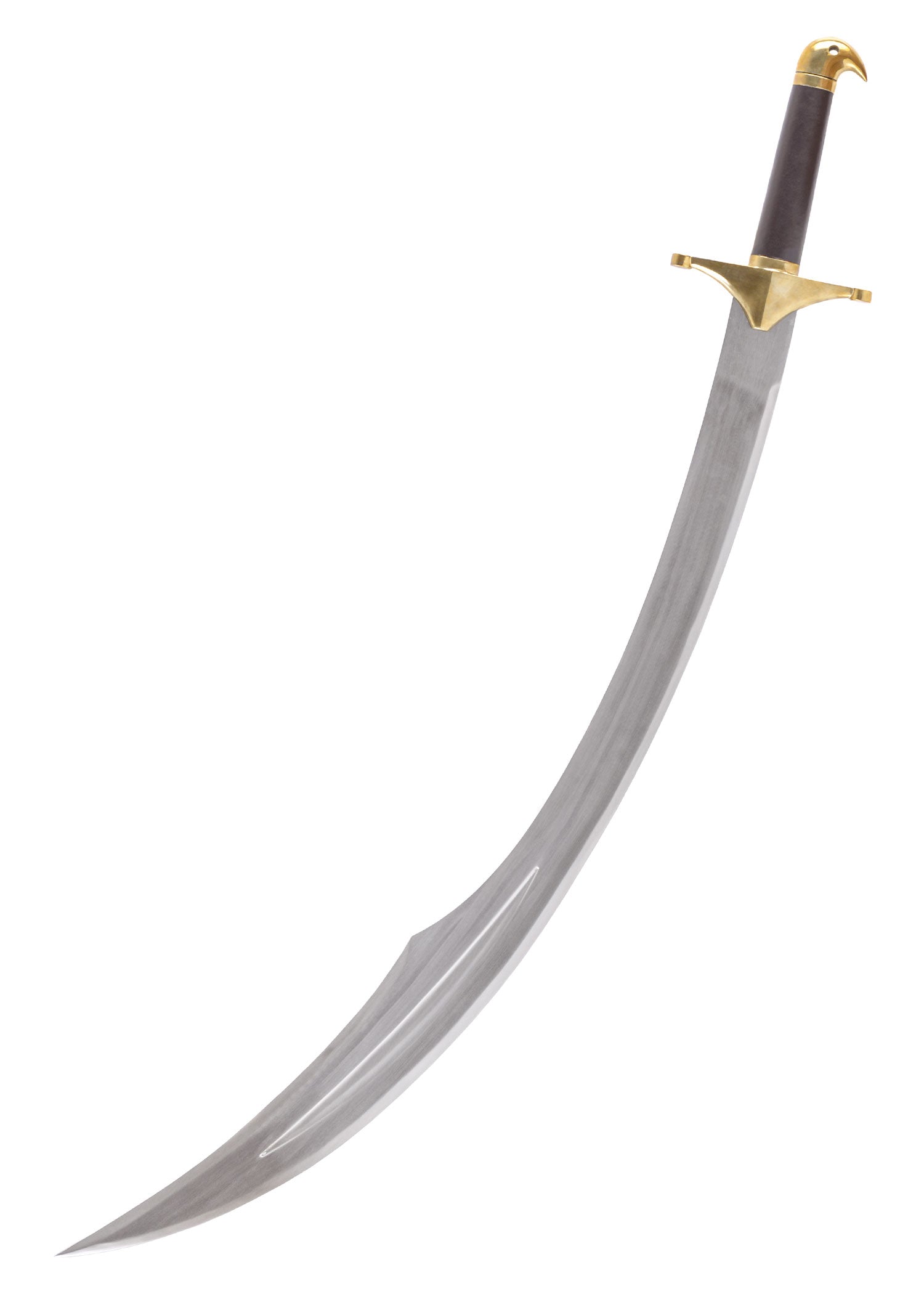
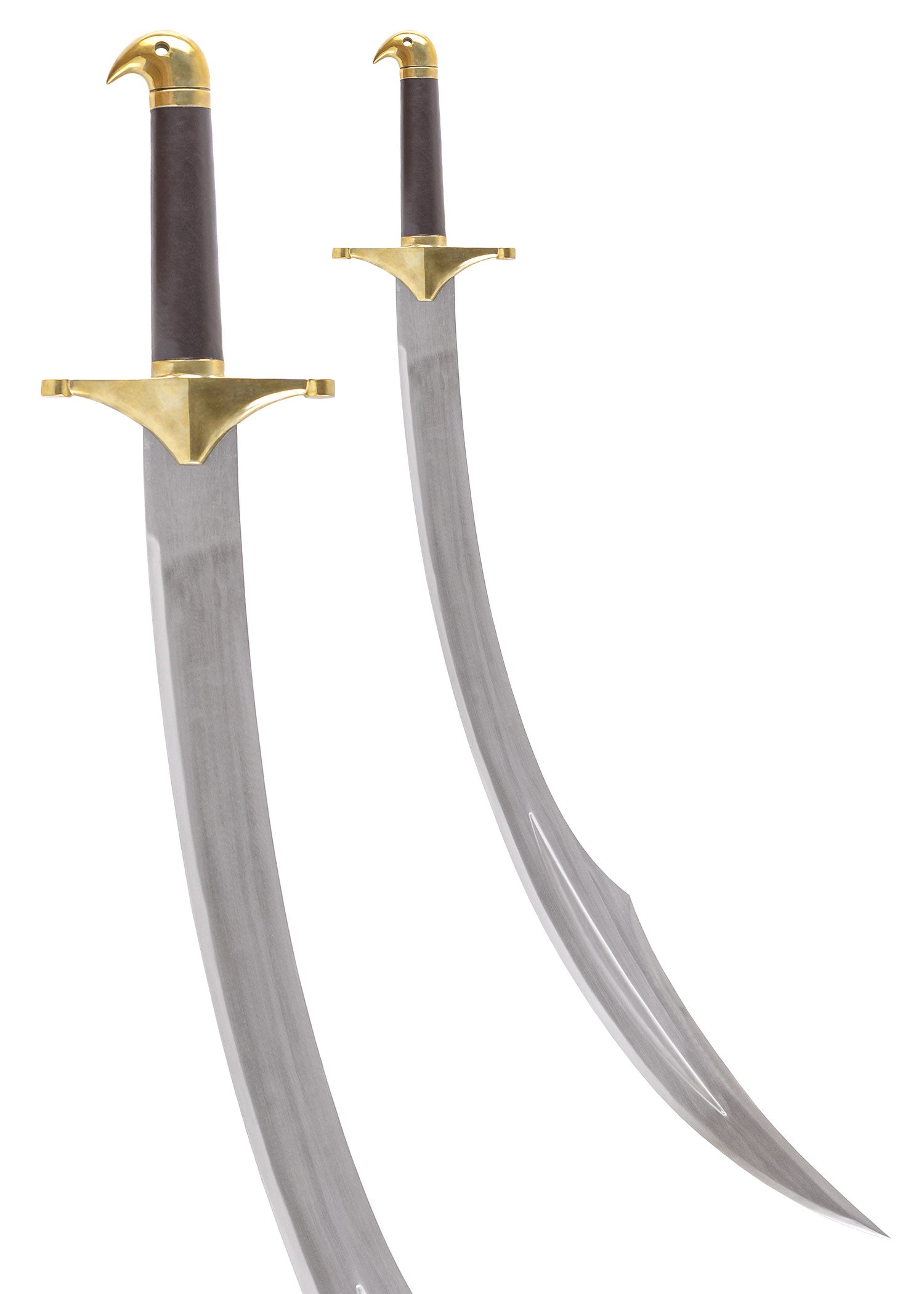


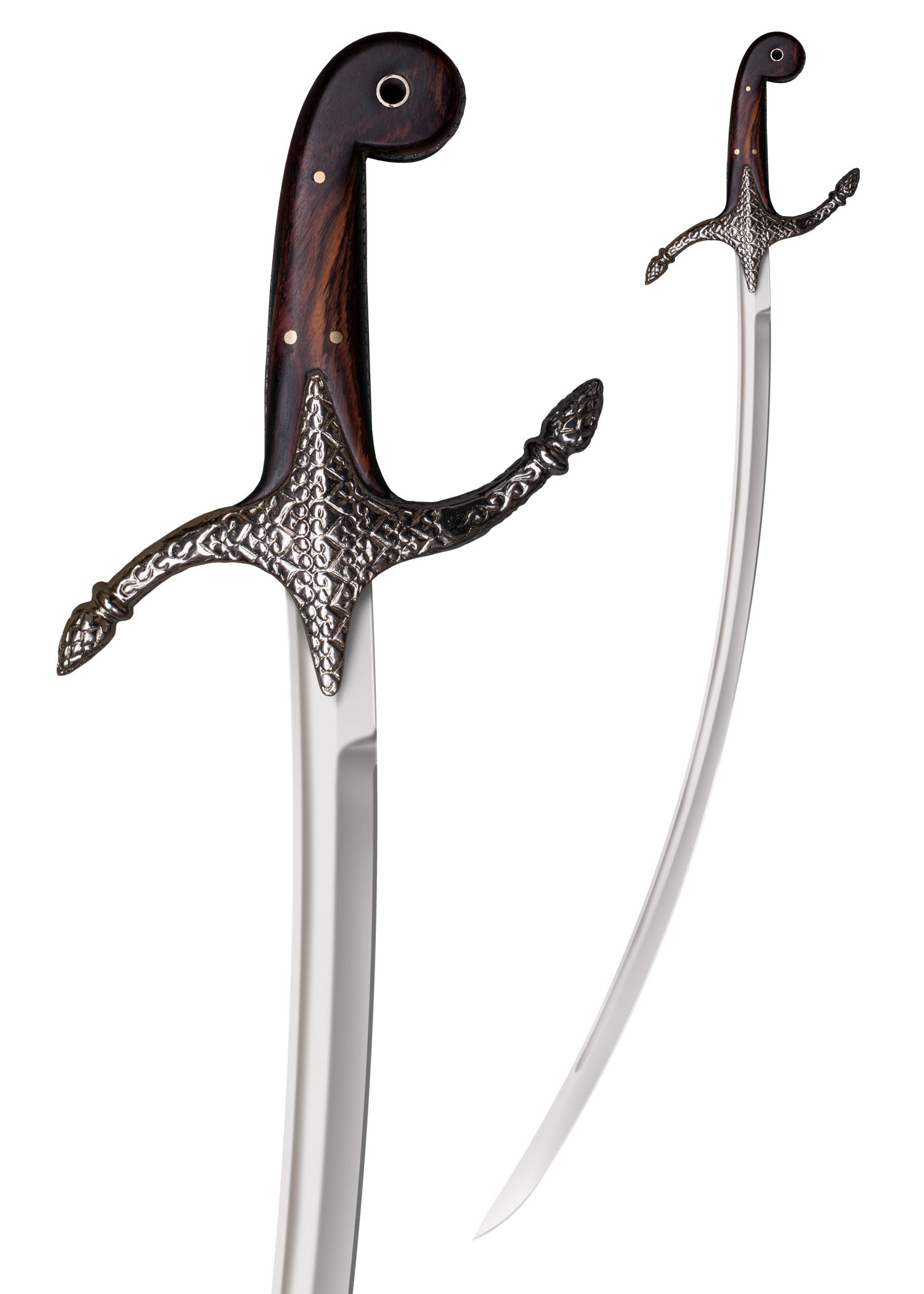
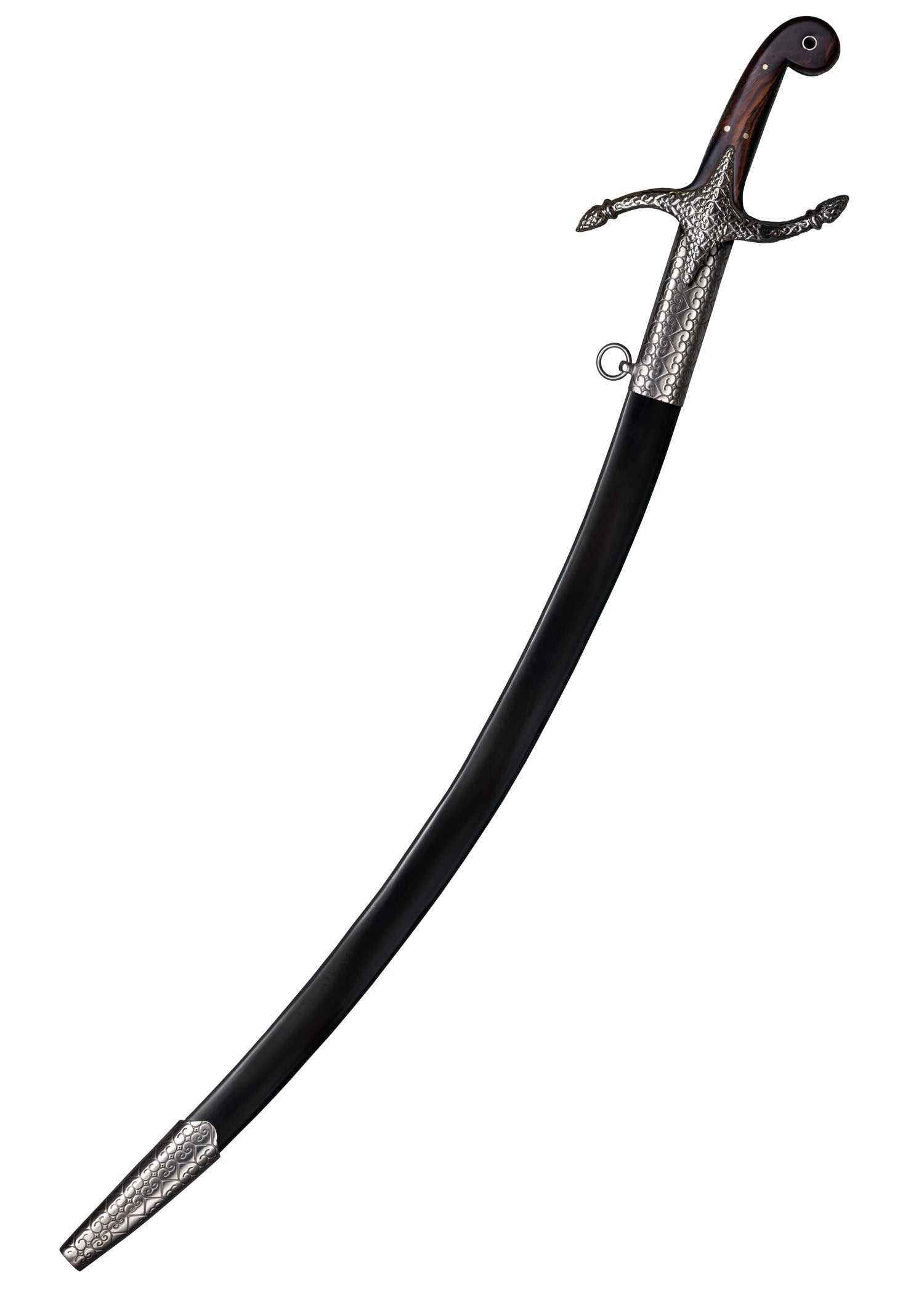
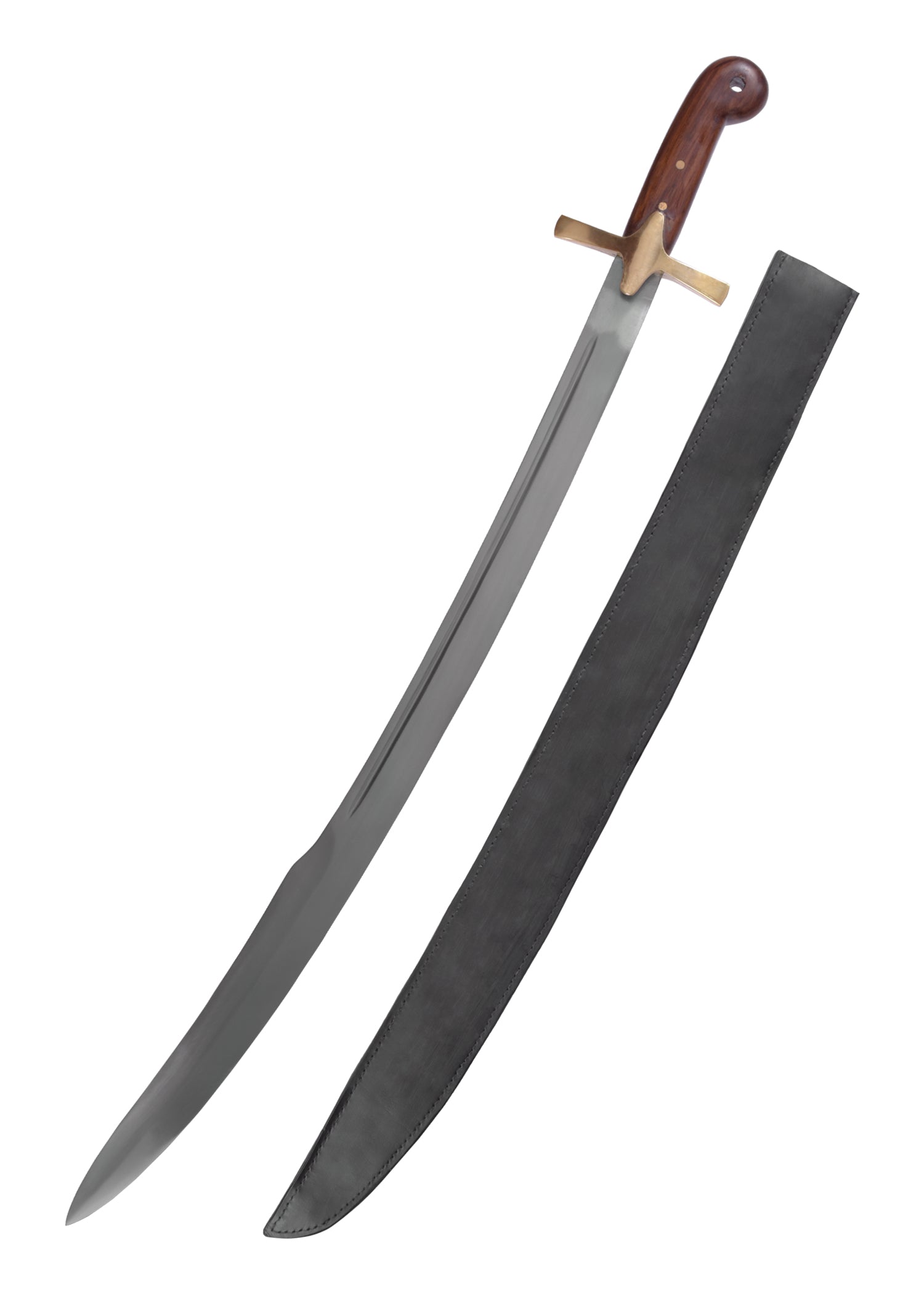
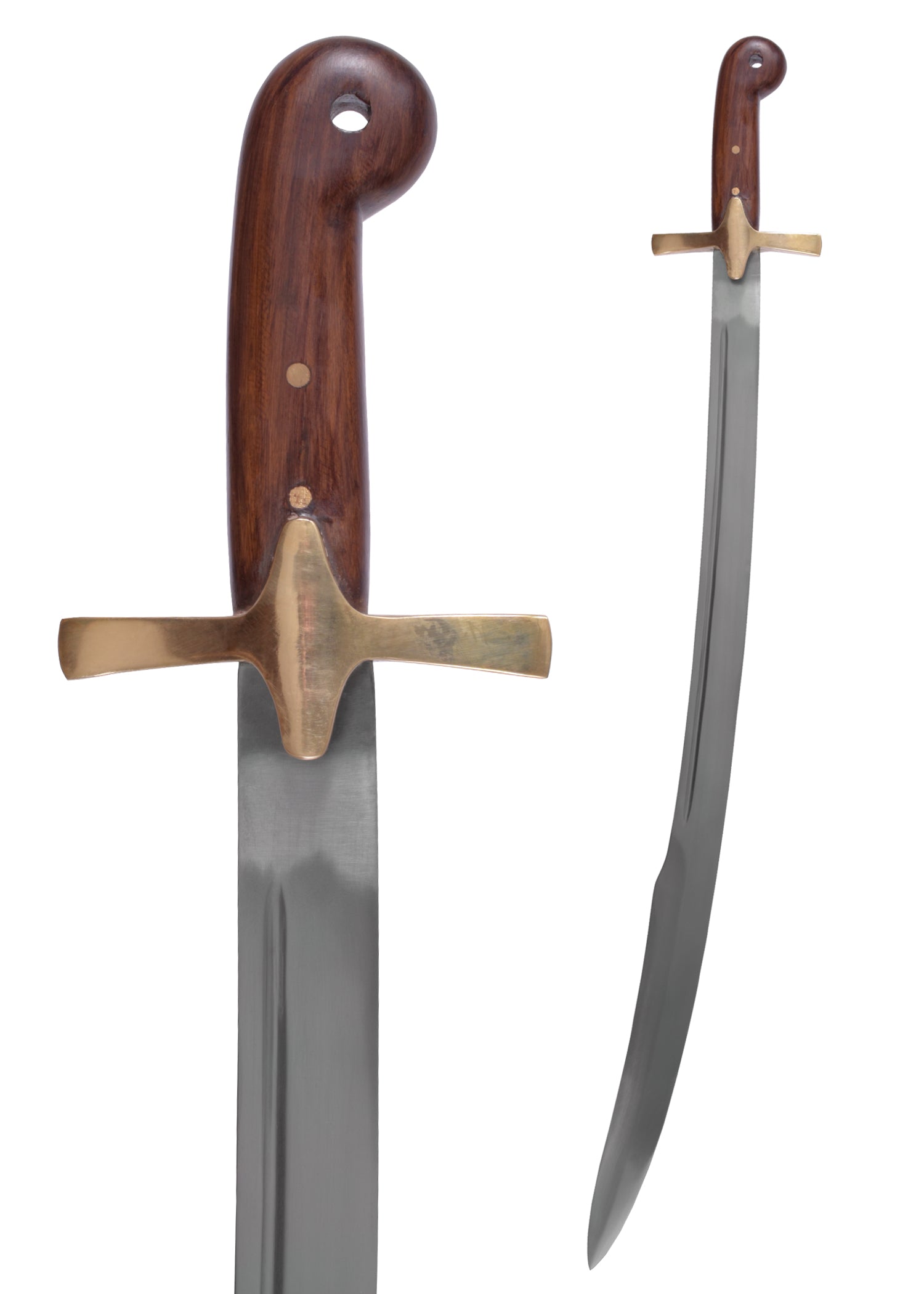
The scimitar, with its elegant curved blade, has become one of the most iconic symbols of the medieval Islamic world.
Its image evokes desert horsemen, sultans, and warriors who dominated vast regions of Asia, Africa, and Europe.
Far from fiction, this sword has a documented history dating back to the 9th century, and its evolution shaped the combat style and military culture of empires such as the Ottoman, Persian, and Mughal.

Origins and historical evolution
The term "scimitar" is a Western word that encompasses various curved swords of Islamic and Central Asian origin, including the Persian shamshir, the Turkish kilij, and the Indian talwar.
Its origin is linked to the needs of the nomadic peoples of the Eurasian steppes, who used curved-blade swords to facilitate swift and deep cuts while mounted on horseback.
During the rise of the Abbasid Caliphate (8th to 13th centuries), these swords began to spread widely throughout the Middle East and North Africa. Later, in the Ottoman Empire, the kilij achieved immense popularity and became a symbol of the military elite, especially among the Janissaries.
In Persia, the shamshir was considered a weapon of nobility and honor, distinguished by its sleek and lightweight design.
The scimitar also reached India through Islamic invasions, transforming into the talwar, which combined the curved blade with hilts adapted to local tradition.
Each of these variants shares a common root, although they evolved to respond to different cultural and tactical contexts.

Types and uses of the scimitar
Although scimitars share a characteristic curved design, there are significant variations depending on the region:
- Shamshir (Persia): This Persian sword has an extremely curved blade, ideal for long, fluid cuts. Lightweight and fast, it was used by the elite cavalry.
- Kilij (Ottoman Empire): This Ottoman sword has a wide blade near the tip (yalman), which increases cutting power. A symbol of status and a ceremonial weapon.
- Talwar (India): This Indian sword is heavier, featuring a disc-shaped hilt. Used by both infantry and cavalry.
- Saif (Arab world): This Arab sword, in some cases less curved, was used in Arab armies during the Islamic conquests.
In general, its main use was for combat on horseback, but they were also employed in hand-to-hand combat and ceremonies.
Furthermore, these weapons had a strong symbolic component, representing power, honor, and social status.

Presence in museums and famous owners
Today, authentic examples of historical scimitars are preserved in prestigious museums around the world.
The Victoria and Albert Museum in London houses several 17th-century Persian shamshirs decorated with Quranic inscriptions and precious stones.
The Topkapi Palace Museum in Istanbul exhibits kilij belonging to Ottoman sultans such as Selim I and Suleiman the Magnificent, many of them with gold and emerald details.
There are also pieces at the Metropolitan Museum of Art in New York and the Museum of Islamic Art in Doha, which document the artistic and military development of the scimitar over the centuries.
Historical figures such as Nader Shah of Persia, Sultan Mehmed II, and Tipu Sultan of Mysore were known for wielding personal scimitars forged by master craftsmen.
These swords, in many cases, were passed down from generation to generation as family treasures or symbols of royal lineage.

Art and design on the edge of a blade
The scimitar is not just a weapon: it is a manifestation of the art, tactics, and culture of the Islamic and Oriental world. From the Persian steppes to Ottoman palaces, this curved sword became synonymous with prestige, efficiency, and tradition.
Its legacy endures not only in museums but also in the collective cultural imagination as one of the most elegant and lethal swords in human history.
Do you want a scimitar replica?
At Todo Medieval you will find decorative and functional scimitars and oriental sabers, made of real steel and with shipping throughout Spain.
See swords and sabers