








Few names evoke the essence of the Scandinavian warrior like Ragnar Lothbrok, a key figure of the Viking Age.
Although his exact existence remains debated, medieval sources present him as a warrior who led raids in England, France, and other European regions.
His legend, chronicled in Norse sagas such as the Ragnarssaga Loðbrókar and the Gesta Danorum, has profoundly influenced the modern perception of Vikings.
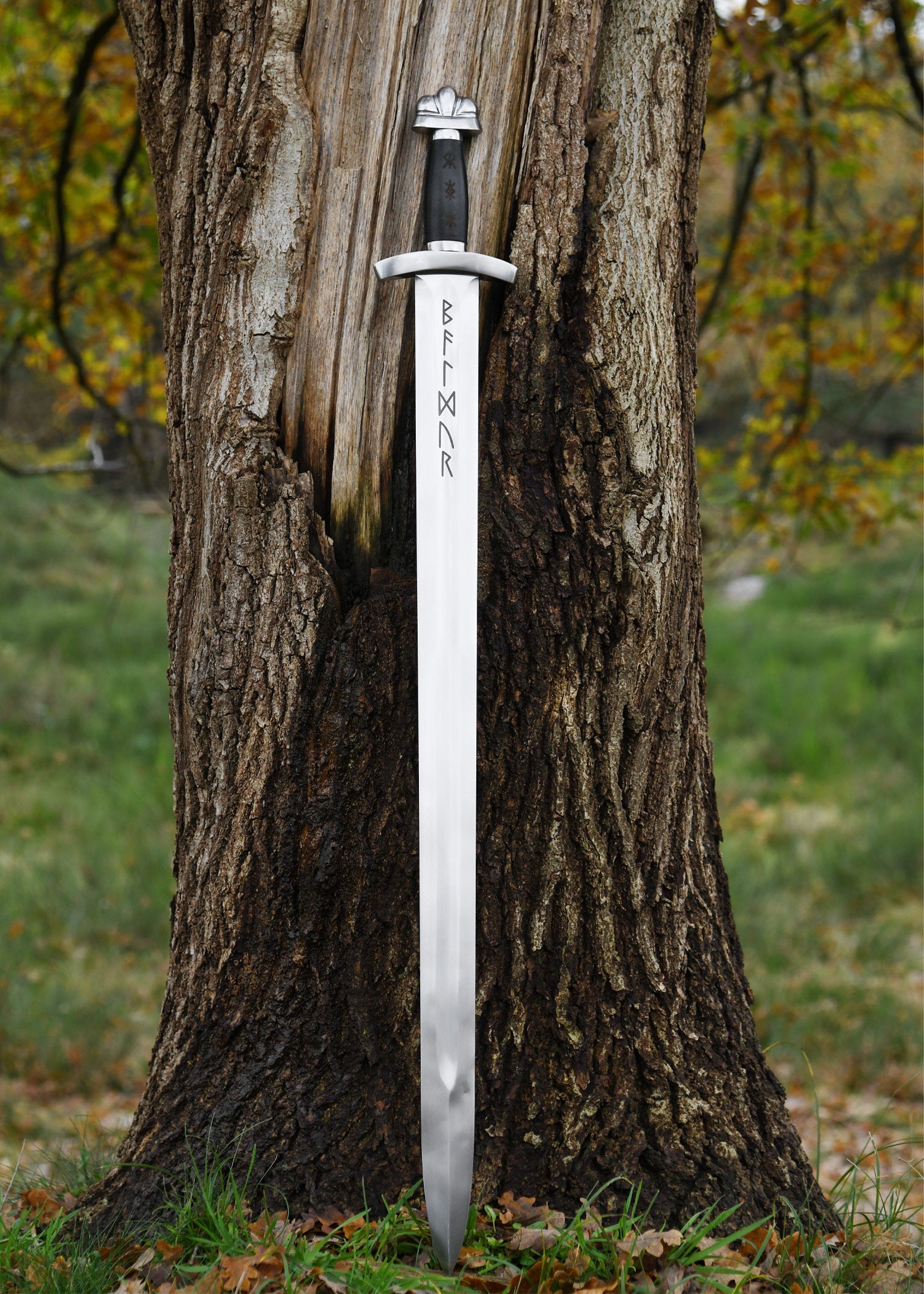
Two weapons accompany him in every tale: his Viking axe and his sword, symbols of Scandinavian power and warrior culture.

Who was Ragnar Lothbrok?
Ragnar Lothbrok (also spelled Lodbrok) was a Scandinavian warrior who, according to written Norse accounts, lived in the 9th century.
Although his historical existence is debated, medieval texts place him as a king of Denmark and Sweden, famous for his raids in England, France, and even the Iberian Peninsula.
He is credited as the father of equally legendary warriors such as Bjorn Ironside, Ivar the Boneless, Sigurd Snake-in-the-Eye, and Ubbe.
The sources that mention him, such as the Gesta Danorum or written Icelandic sagas, describe him as a charismatic leader, relentless in battle, and devoted to the Norse gods. But what distinguishes him from other Vikings is his tragic fate: captured by King Ælla of Northumbria, he was executed by being thrown into a pit of snakes, where he uttered his final words with pride: "How the little piglets would grunt if they knew how the old boar suffers!"

Ragnar's Viking axe:
the extension of his warrior soul
In the Viking context, the battle axe was more than a weapon: it represented the warrior's identity. Ragnar Lothbrok's purported axe would be based on historical models like the bearded axe, with a curved edge, steel-hardened iron blade, and an ash or oak handle engraved with runes.
The Viking forging process began with iron extracted from Scandinavian peat bogs. Blacksmiths used bellows and rudimentary furnaces to reach the necessary temperatures.
Some axes included pattern-welded steel, which improved durability and created a wavy pattern on the blade.
Axes were not simple offensive tools. They were believed to be imbued with spiritual power, consecrated to divinities like Odin or Tyr, and their proper forging was essential for the balance between death and glory; therefore, given the devotion to the Norse gods with which Lothbrok is described, his axe was likely no exception...
Furthermore, Ragnar's would have been used in documented raids, such as the attacks on Lindisfarne or Paris.

Ragnar's sword: elegance and death
The Viking sword was a symbol of nobility. Its possession was reserved for leaders, jarls, and kings.
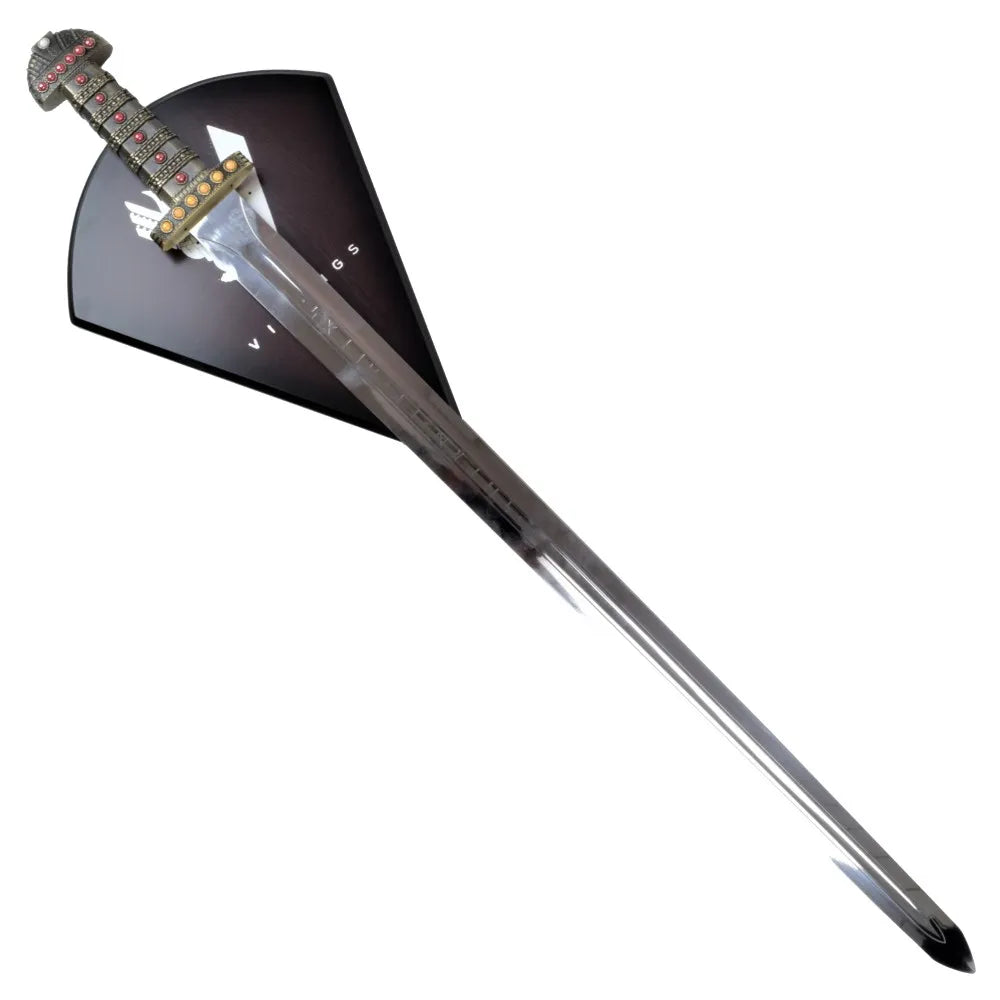
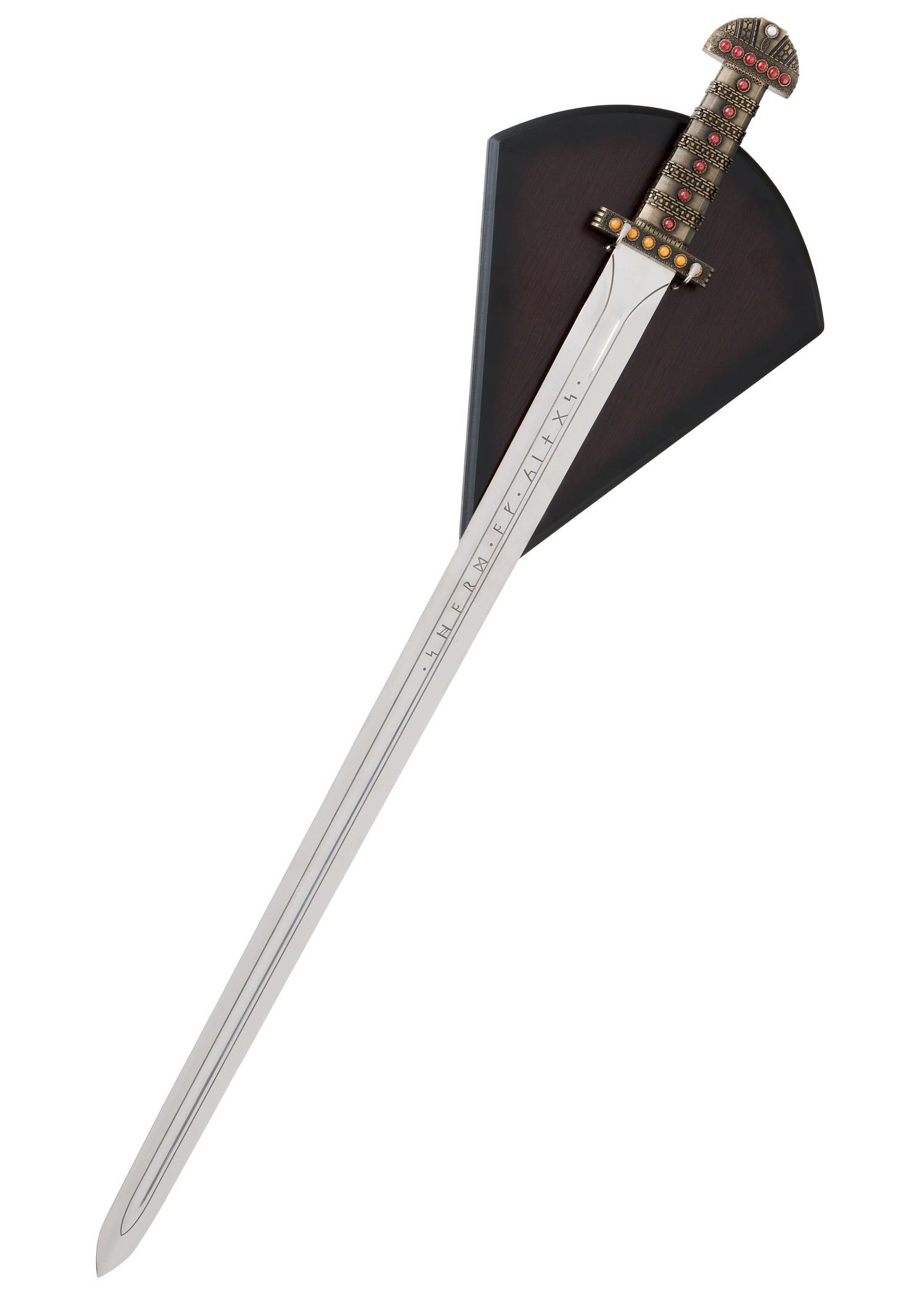
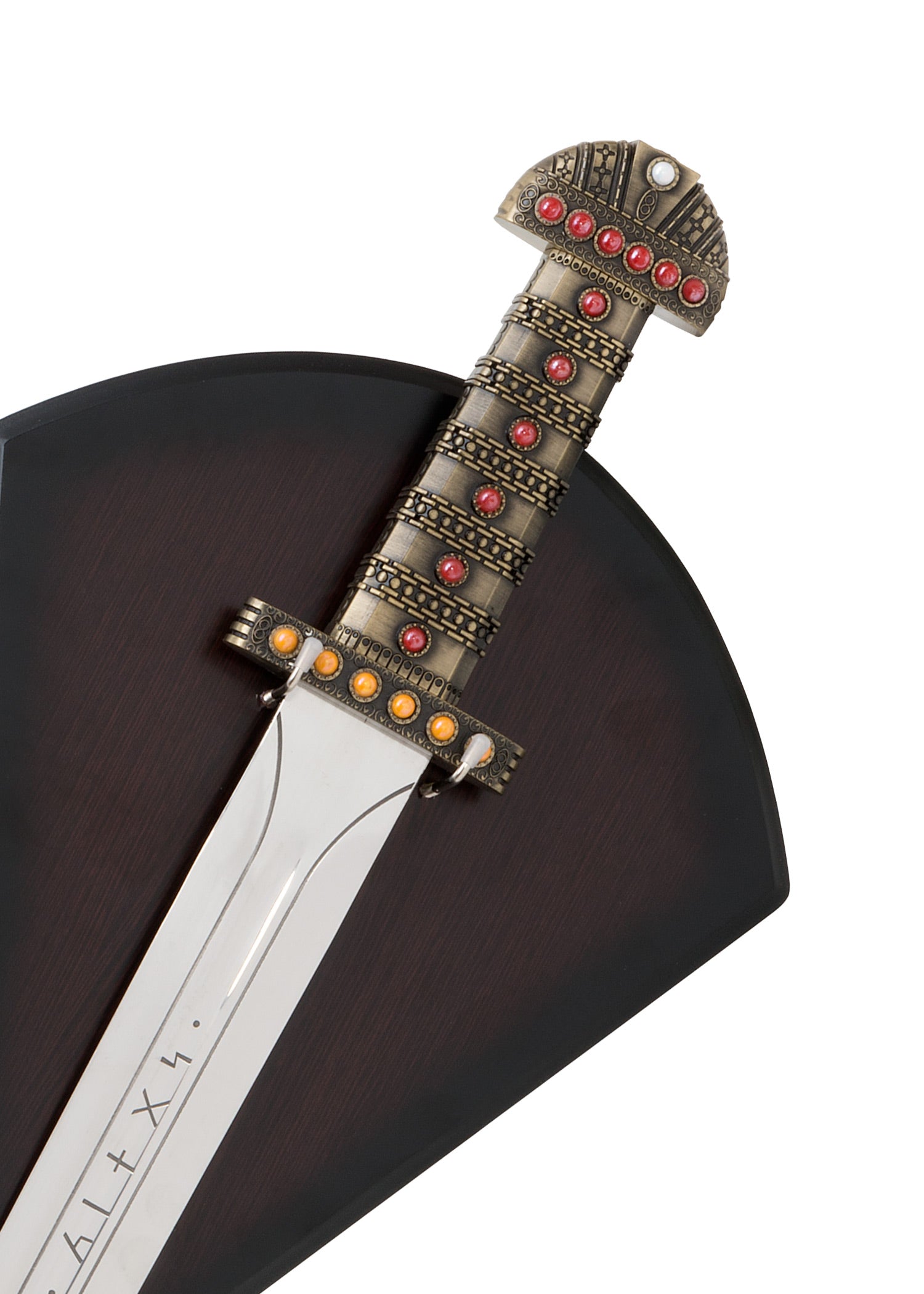
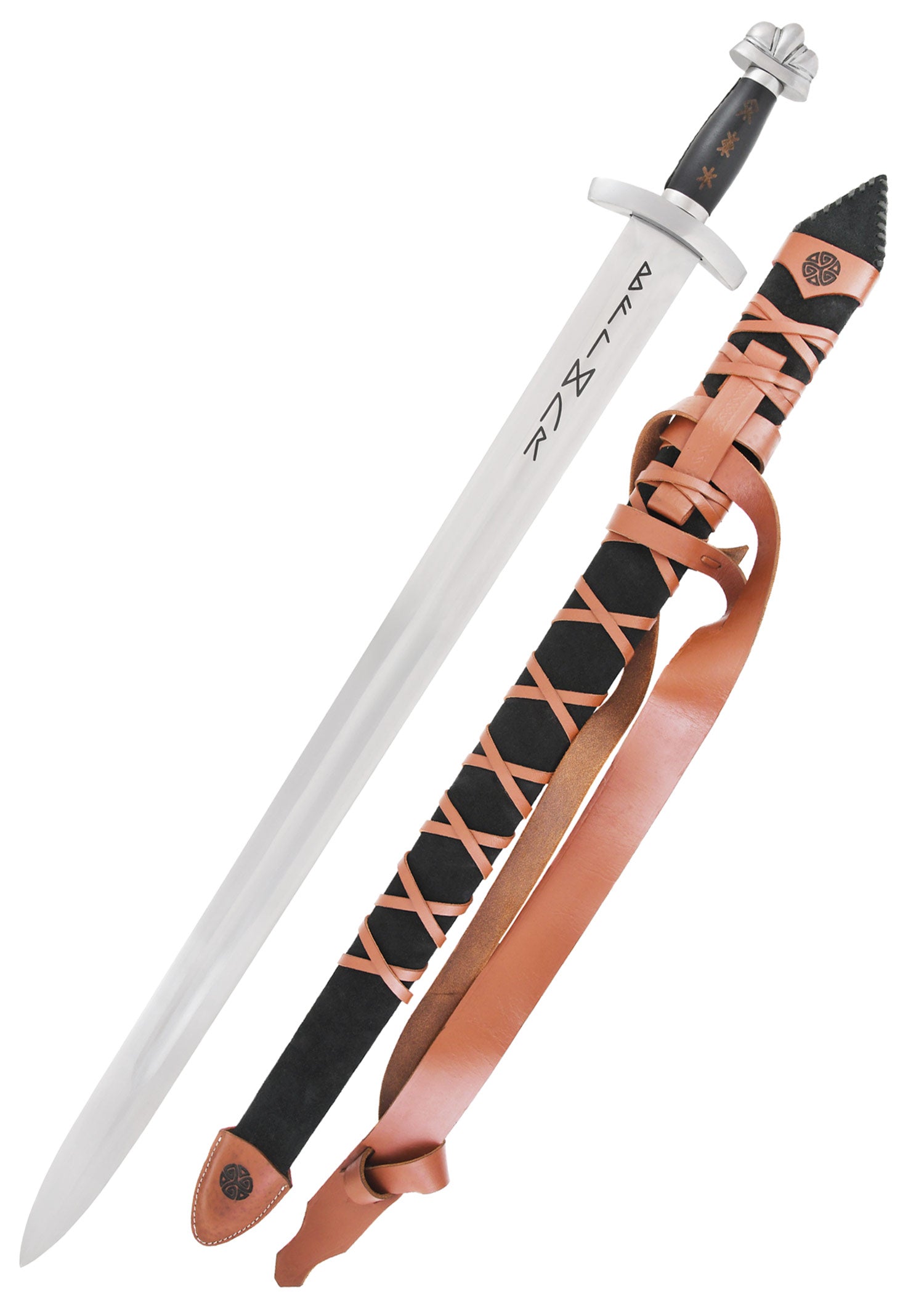
9th-century swords, such as the one attributed to Ragnar, were double-edged, with a straight blade, short crossguard, and ornate pommel. These were weapons inspired by Carolingian designs, very common in Western Europe during that period.
Forging these swords required a precise alloy and techniques such as pattern welding. Each specimen could take months to complete.
The best Viking swords were imported or looted in Frankish territories, then melted down and customized.
It is likely that Ragnar's sword contained runic inscriptions and that the hilt was wrapped in tanned leather, bone, or silver. Its design provided an advantage in close-quarters combat and was effective both in frontal charges and individual duels.
Do you want a Viking sword?
At Todo Medieval you will find swords, axes, clothing, shields, and many other Viking items to start your collection, with shipping throughout Spain.
View Viking collectionCultural influence and legacy
Ragnar Lothbrok has been the subject of multiple reinterpretations.
He appears in medieval texts, Christian chronicles, and modern adaptations such as the Vikings series.
His figure has popularized interest in Viking weaponry, medieval forging, Norse religion, and Scandinavian warrior traditions.
Today, replicas of his sword and axe are manufactured using traditional techniques. Their makers reconstruct these weapons as part of the study of the Viking legacy.
Ragnar has become a symbol of resistance, strategy, and leadership.
There are museums in Oslo, Copenhagen, and Reykjavík that exhibit authentic Viking weaponry very similar to those attributed to him.


