





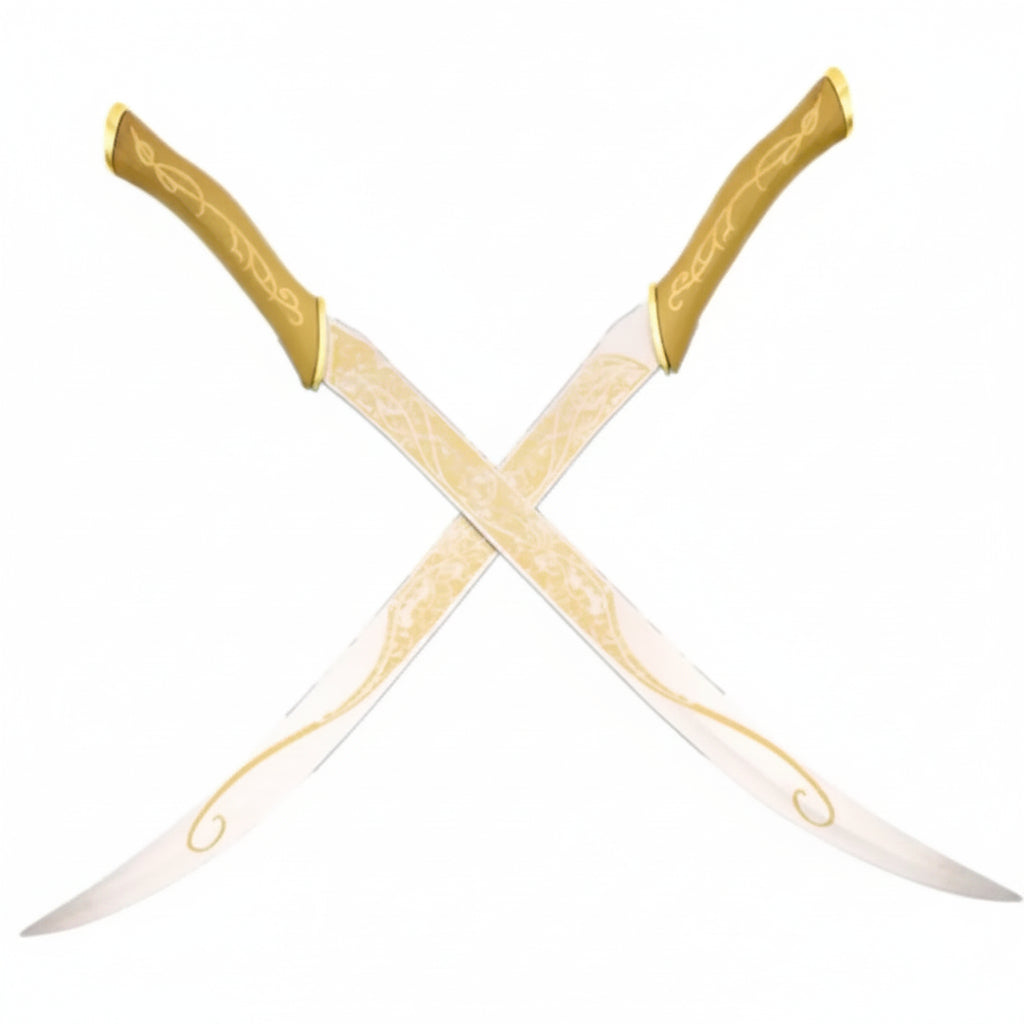




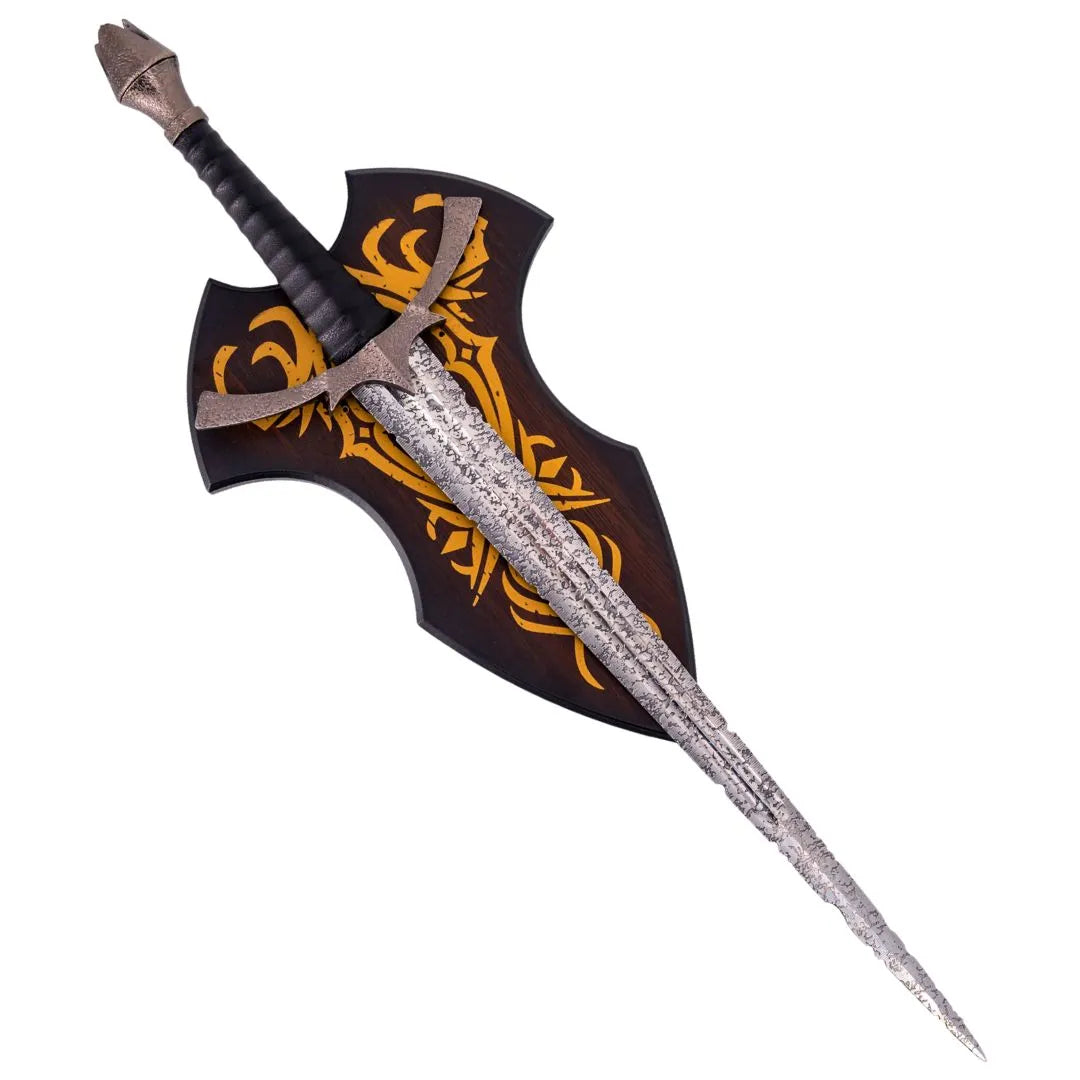


The realism and consistency of The Lord of the Rings universe are not a matter of chance.
J. R. R. Tolkien, who was a philologist, medievalist, and one of the 20th century's leading experts on Anglo-Saxon literature, possessed a deep knowledge of European history, Norse sagas, and Germanic epic poetry, which directly influenced the creation of Middle-earth.
This is clearly reflected in the weapons of Tolkien's universe, which are not the result of arbitrary fantasy, but rather a conscious reinterpretation of actual historical weapons.
The swords, axes, daggers, bows, and armor that appear in his works are inspired by authentic models from the Early European Middle Ages, especially between the 6th and 11th centuries.
Tolkien did not seek to reproduce exact pieces, but to endow his world with a historical verisimilitude that would reinforce his mythology.

Swords inspired by Viking and Anglo-Saxon weapons (9th–11th centuries)
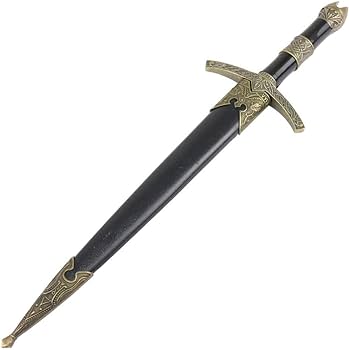
The swords in The Lord of the Rings clearly evoke Viking and Anglo-Saxon blades.
Models like Andúril, Narsil, Glamdring, or Orcrist share traits with actual historical weapons: straight double-edged blade, short crossguard, and solid pommel.
These features were common in medieval swords of Northern Europe.
Furthermore, Tolkien revives a real tradition from Norse mythology: named swords.
In Germanic sagas, weapons such as Gram or Tyrfing possessed identity and symbolism, a device that Tolkien applies masterfully in Middle-earth.
Seax-style daggers and Norse poniards in Middle-earth
The dagger Sting, used by Bilbo and Frodo, is clearly reminiscent of the Anglo-Saxon seax.
These daggers or long knives were common in Early Medieval Europe and served both as a tool and a weapon.
Their size, functionality, and simple design fit perfectly with Hobbit culture, which is far removed from the chivalric ideal and closer to a rural and practical tradition.

Norse and Germanic axes in Dwarven culture
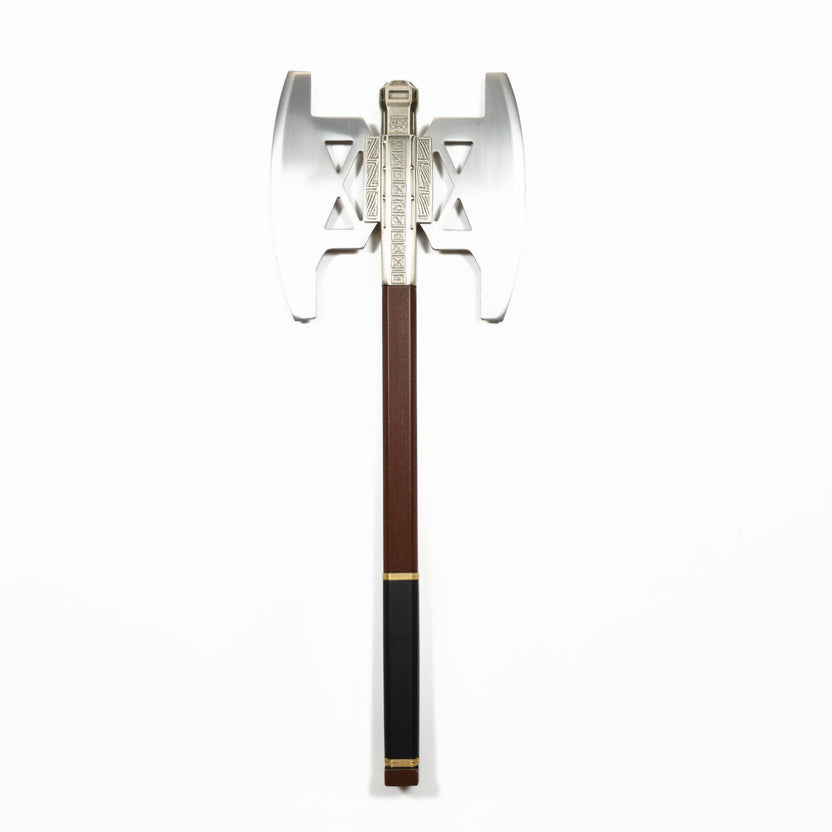
The axes in Tolkien's universe, especially those wielded by dwarves like Gimli, are inspired by Norse and Germanic axes.
Long handles, wide blades, and functional designs reflect actual war weapons used by Scandinavian and Germanic peoples.
This choice reinforces the image of dwarves as a culture tied to stone, metal, and ancestral warrior tradition.
Simple longbows: a choice consistent with Europe
The bows in Tolkien's works, such as Legolas's, resemble simple wooden longbows, without complex mechanisms or composite systems.
This type of bow was common in Germanic and Celtic cultures.
Tolkien deliberately avoids Oriental influences, maintaining total consistency with the European inspiration of his mythology.

Historically inspired armor: sobriety and functionality
Armor in Middle-earth is dominated by chainmail, simple helmets, and functional protection.
Elements such as the Rohan helmet are reminiscent of the famous Sutton Hoo helmet.
There is no full plate armor or designs typical of the Renaissance, which reinforces the Early Medieval setting.
Is there a dominant historical era that inspires Tolkien?
To conclude, we could ask ourselves this question, and the undoubted answer is: Yes.
Tolkien's main source of inspiration is the Early European Middle Ages, especially the Anglo-Saxon, Norse, and Celtic cultures.
This historical period provides the aesthetic, symbolic, and cultural foundation for Tolkien's weapons.

Why do we say they are inspired and not copies?
But, having come this far, you might wonder if I could have described copies, or what the difference is when we refer to these as inspiration...
Although his world is inspired by the Early Middle Ages, he does not simply replicate it by adding fantastic elements; rather, he uses it as a foundation to bring consistency to a completely new universe.
Tolkien does not reproduce exact historical weapons; he reinterprets them, adapts them to his mythology, and grants them symbolic and narrative value.
The result is weapons that are believable, coherent, and deeply integrated into the narrative.
The symbolic value of weapons in Tolkien's work
In Middle-earth, weapons are not just tools of war.
They represent lineage, destiny, and memory.
This conception comes directly from the European epic traditions that Tolkien knew in depth; however, it takes on a unique and personal value in his elaborate work.


