












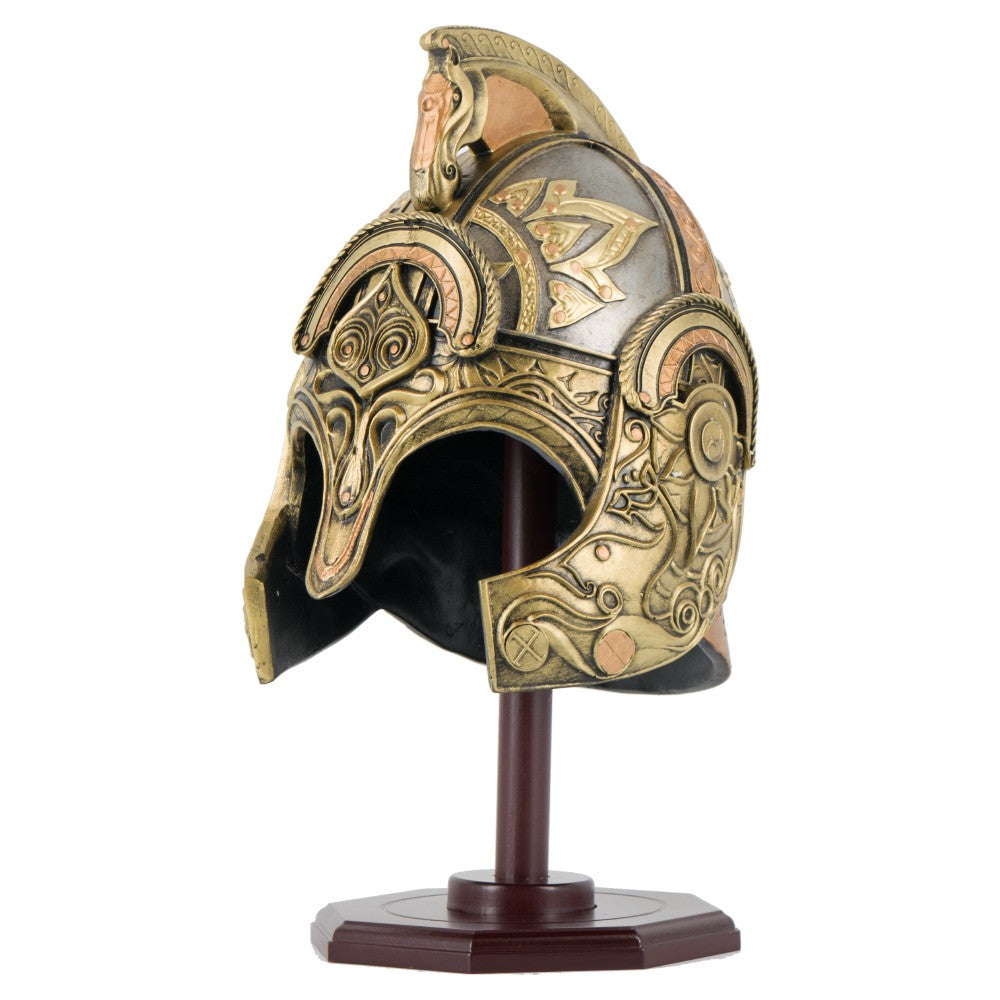
The king subjected in his own hall
Théoden ruled Rohan from Meduseld, the great royal hall of Edoras, but during the final years of his reign, the monarch had been subjected to the spell and influence of Saruman, who acted through Gríma Wormtongue; consequently, while the old man appeared aged and weakened, his counselor increasingly controlled the affairs of the court.
When Gandalf arrived in Edoras, he confronted Gríma directly and broke the hold he maintained over the sovereign, achieving an immediate change in him, for Théoden regained his strength, his will, and his capacity to decide.
Before the eyes of those present in Meduseld, the man who had been subjected to that influence returned to behaving as a ruler, and one of his first concerns was to once again dispose of his weapons and prepare for the approaching war.

The weapon hidden by Gríma
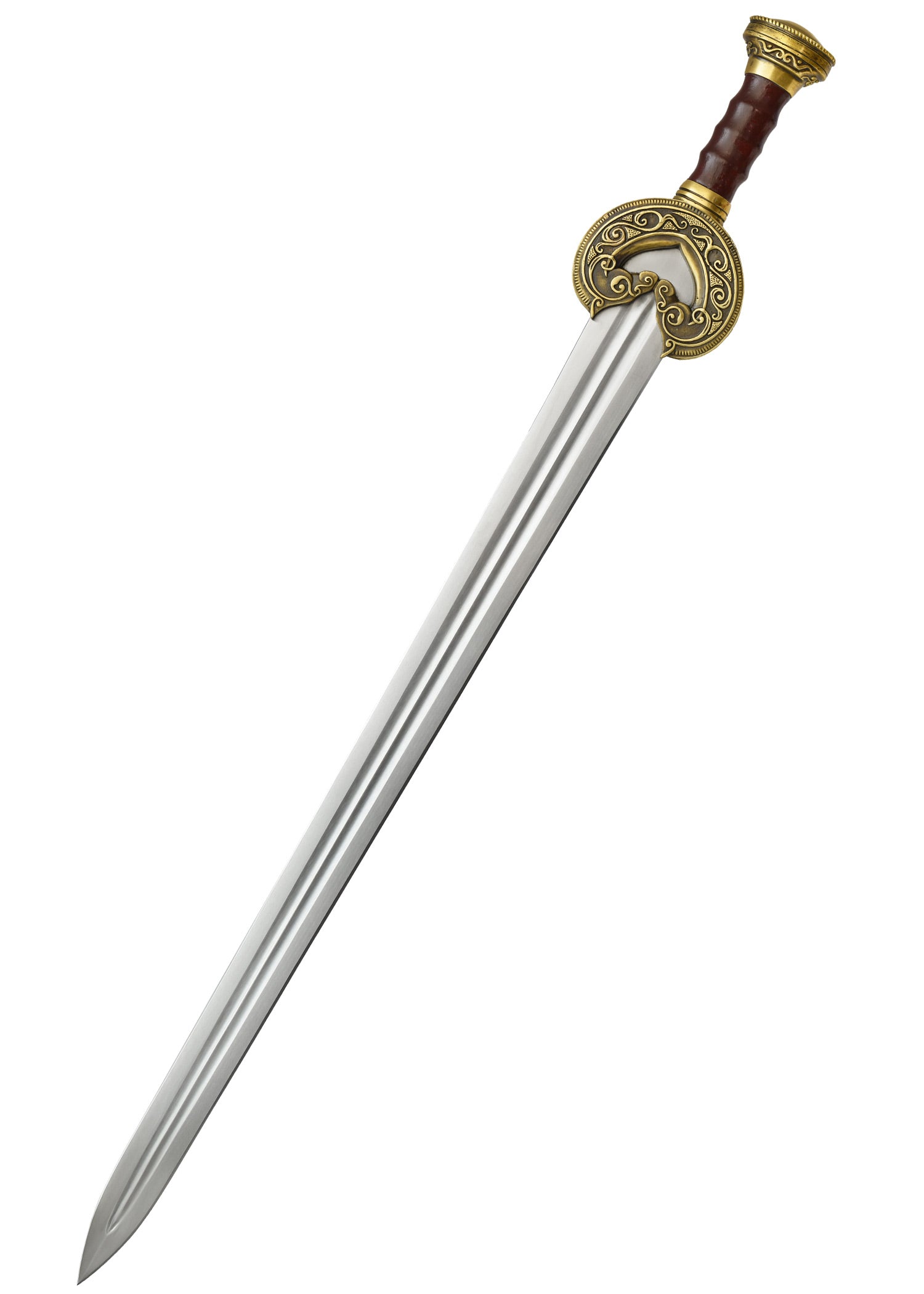
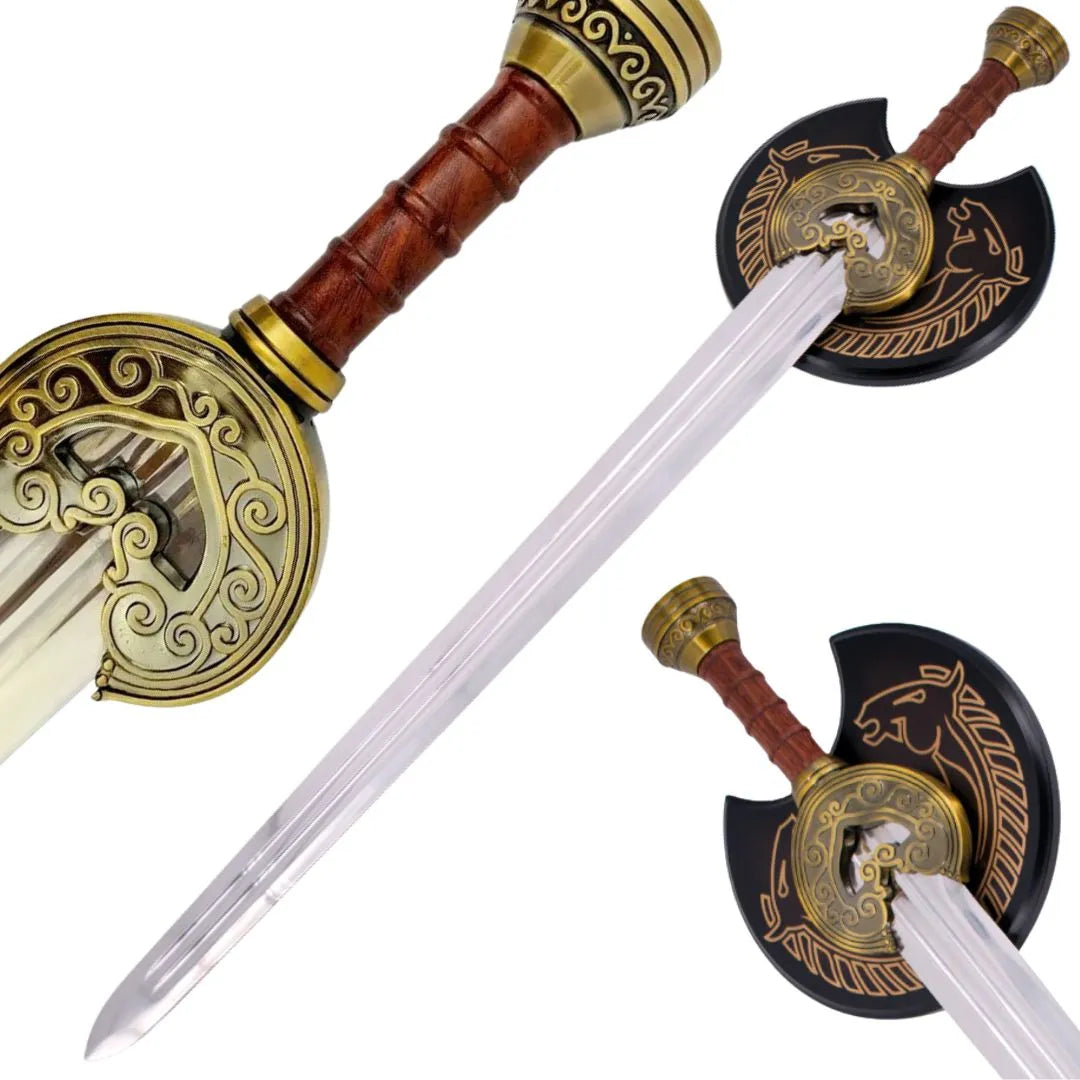
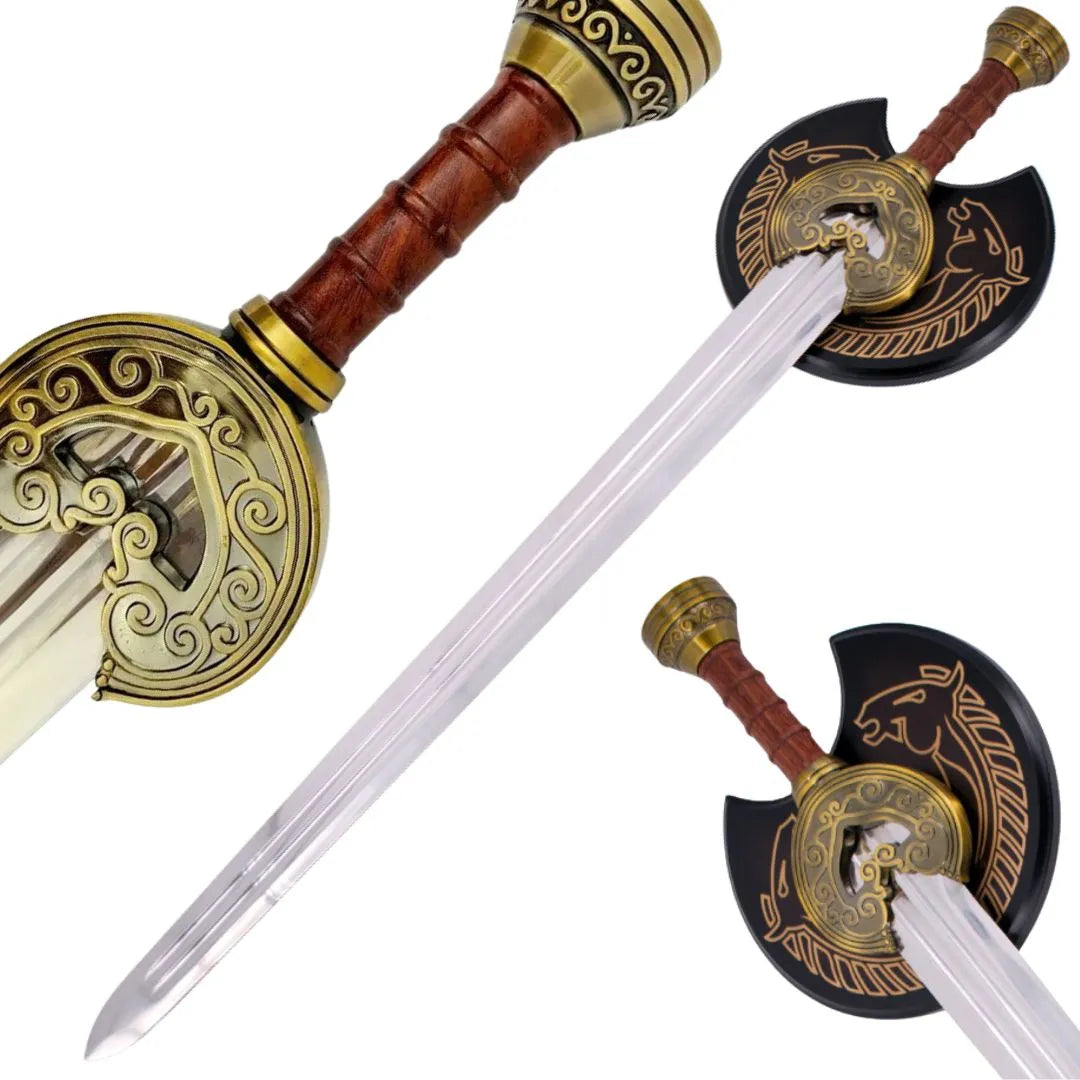
Among the monarch's belongings was Herugrim, his personal sword, which he soon discovered remained in the possession of Gríma, who had hidden it inside a chest during the period he exercised his control over the court.
Théoden ordered Háma to search for it, and he opened the hiding place and found the piece there along with other objects that had remained under the counselor's custody. This moment must have been especially significant for the sovereign who, after having remained subjected for so long, once again had before him a cherished possession that had been cast aside, the sword that had accompanied him during his reign and that symbolized the authority he exercised over the people of Rohan.
Thus, two great events followed one another: Gandalf had broken the spell and, almost immediately, Herugrim returned to its rightful owner.
A piece worthy of a king
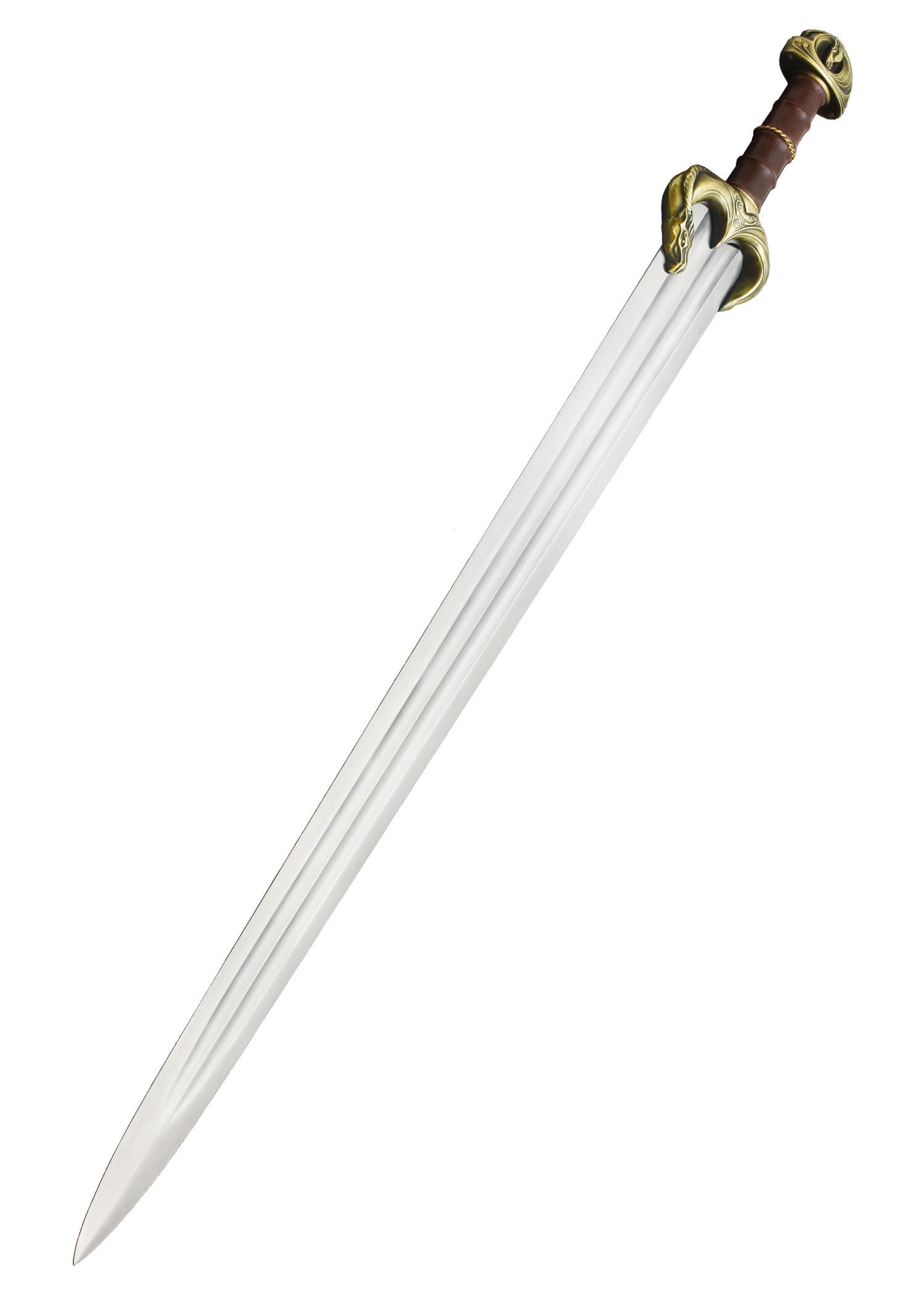
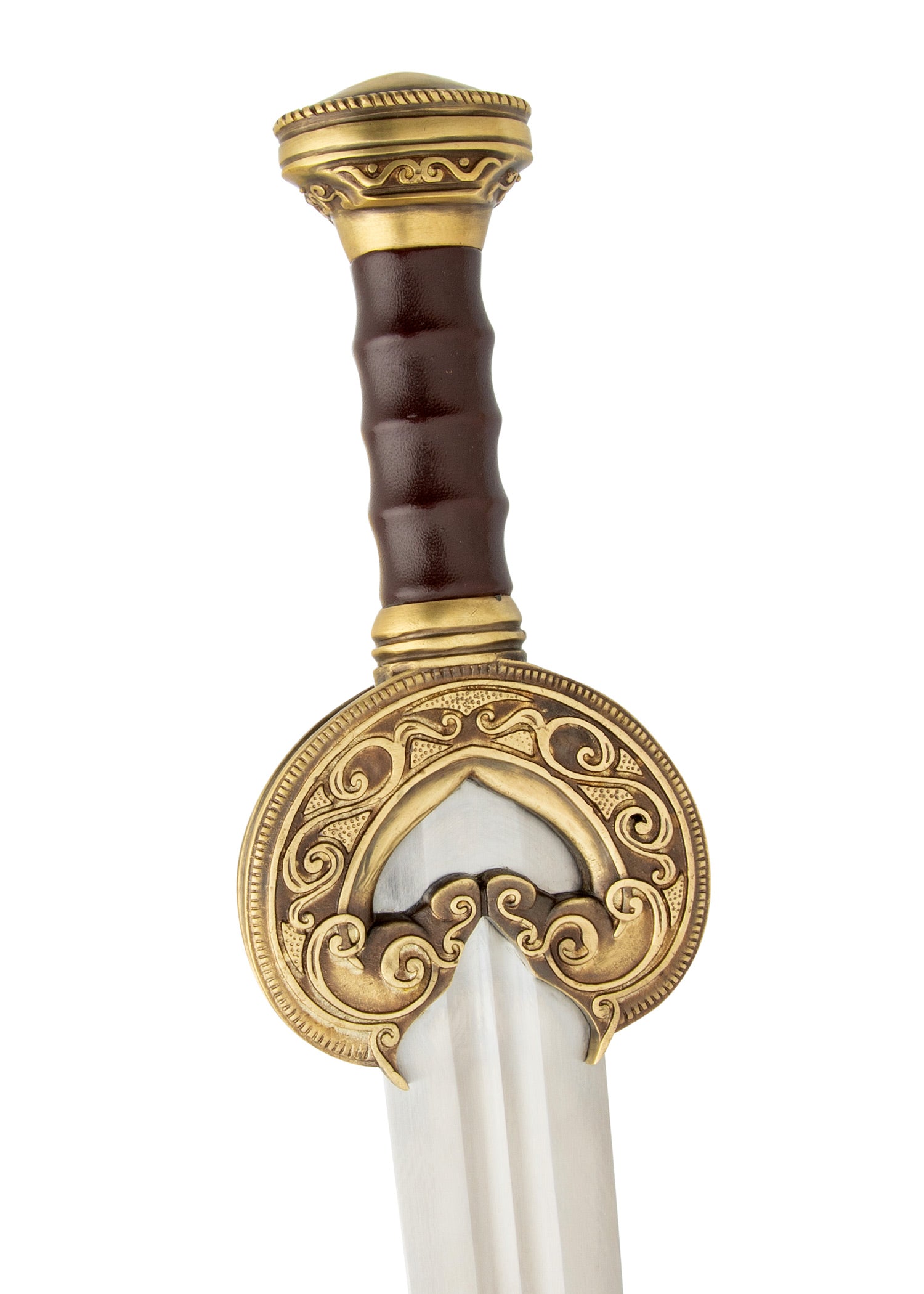
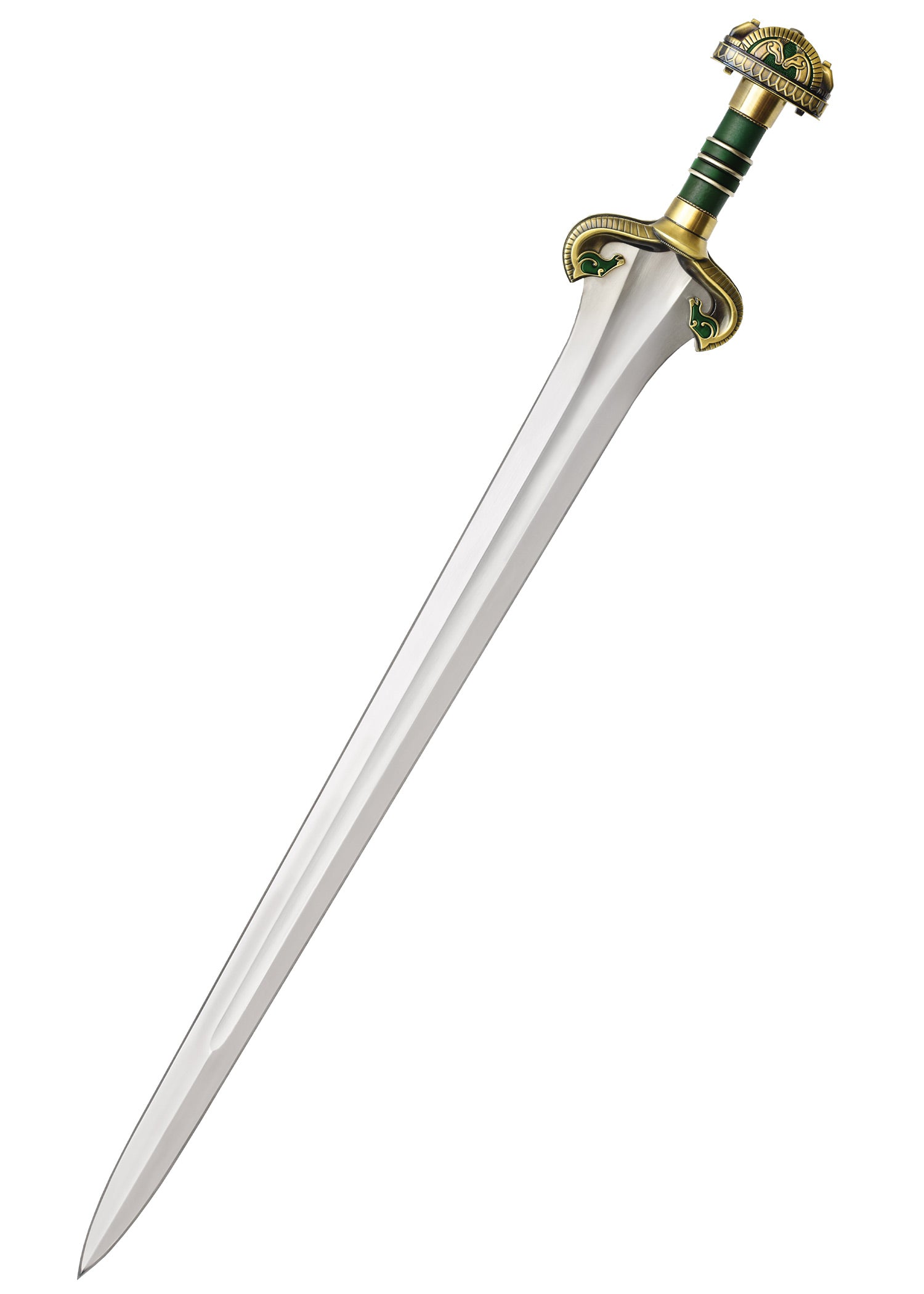
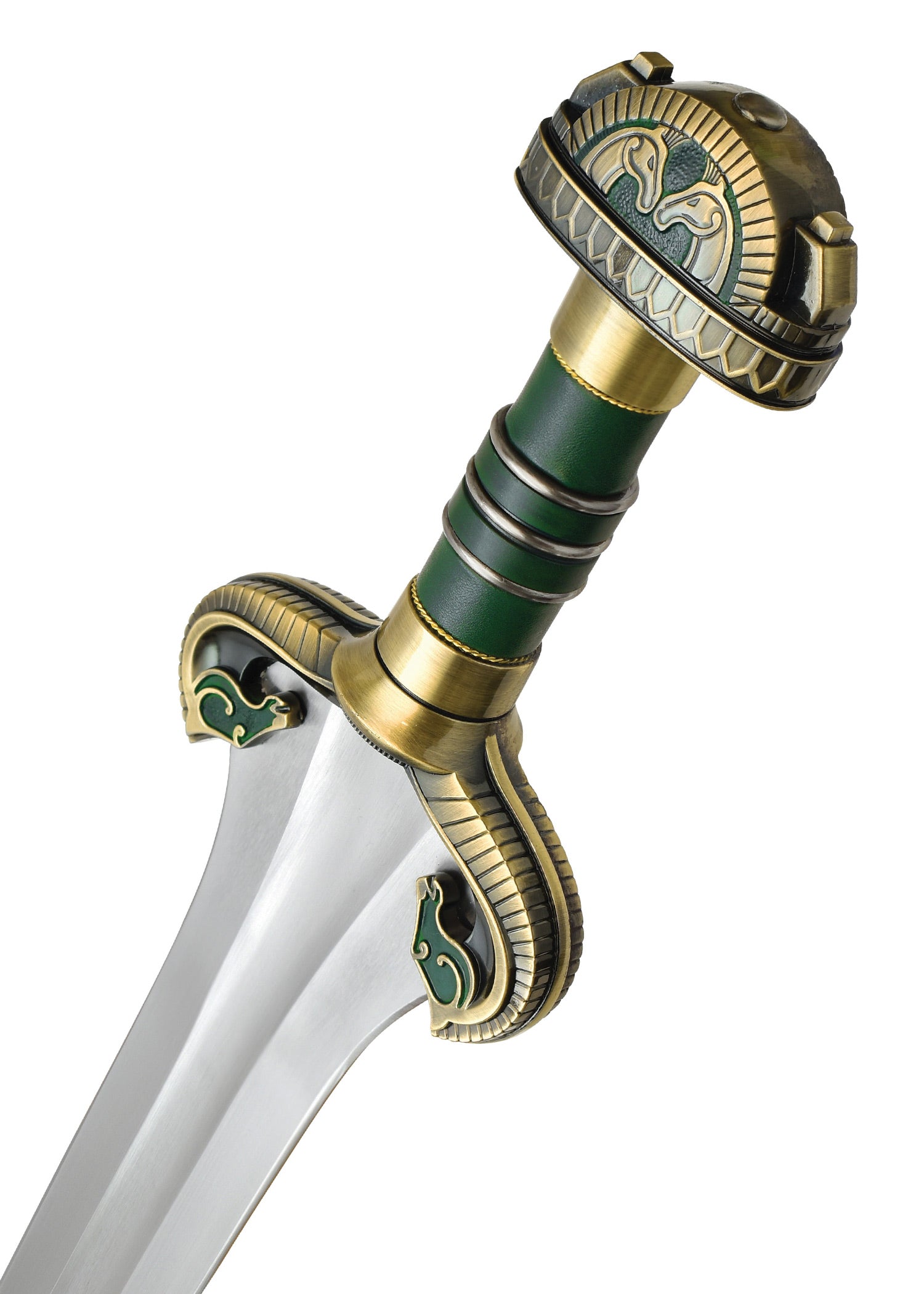
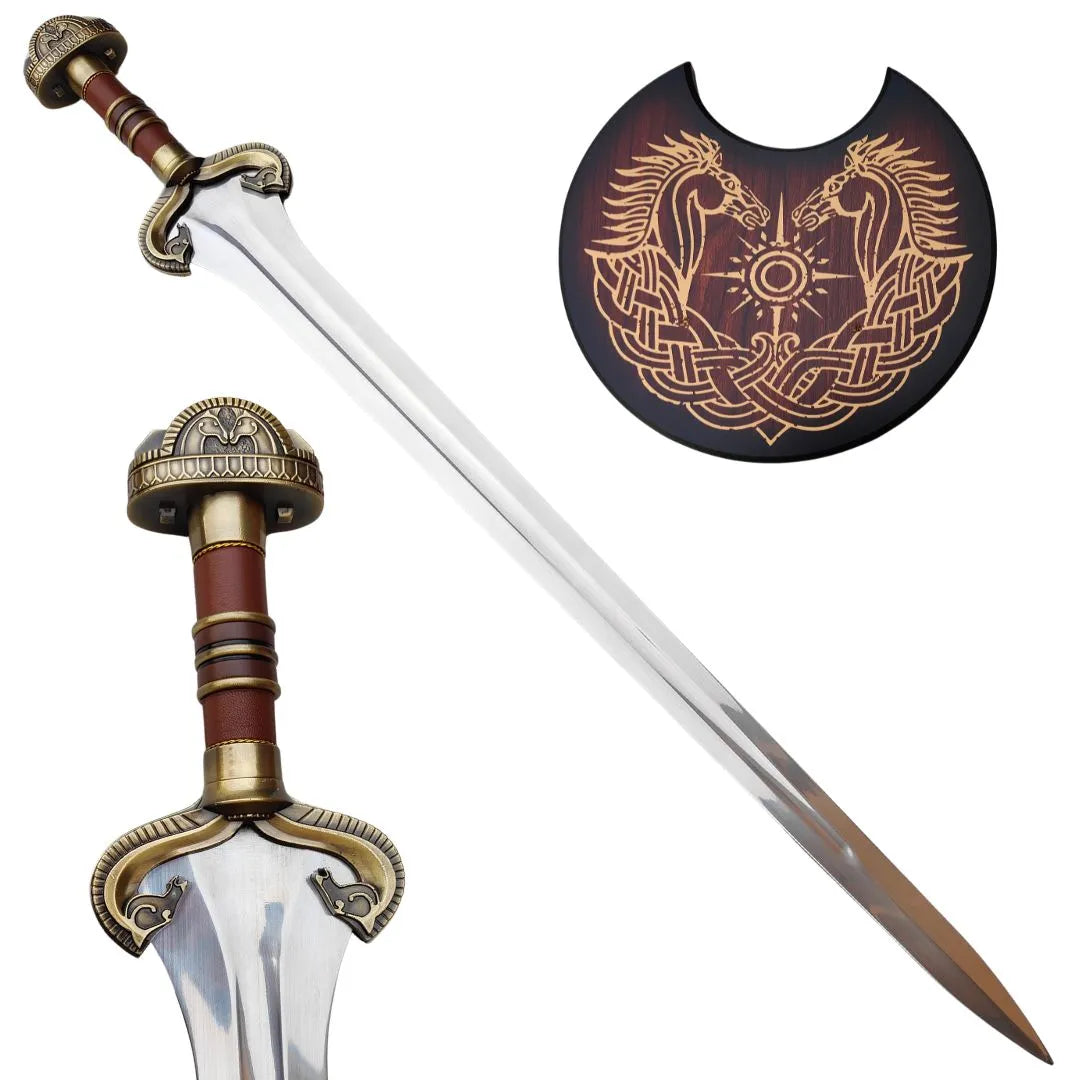
Herugrim was a long blade, kept in a scabbard adorned with gold and green stones, which provide a distinctive trace. In general, this sword possessed an appearance that corresponded to the rank of the one who bore it and fit with the warrior tradition of the monarchs of Rohan, for the ensemble united the elegance inherent to an object belonging to the royal house with the appearance of a tool prepared for combat.
The name comes from Old English and means roughly "fierce sword," a denomination that fits a weapon destined to accompany a ruler during his campaigns.

Once again with the monarch
With Herugrim back by his side, Théoden began to exercise his responsibilities. By that time, the threat of Saruman had reached Rohan and the army of Isengard was preparing to attack, so the monarch left Edoras and placed himself at the head of his men.
The sword traveled with him during the campaign that led the Rohirrim to Helm's Deep, where they defended the fortress against the forces of Isengard, and the subsequent victory allowed the struggle to continue.
Shortly thereafter, news arrived of the threat facing Gondor, and Théoden decided to go with his riders to the aid of the city. On the Pelennor Fields, the sovereign personally led the Rohirrim against the army of Mordor and struck the enemy troops with enormous force, allowing the men to advance across the battlefield.
The king fought alongside his warriors until his horse fell under the attack of a winged creature, and Théoden was mortally wounded, passing away shortly after, accompanied by Éowyn.
After the confrontation, his body was transported to Edoras, where he was laid to rest alongside the ancient monarchs of Rohan.

A history linked to the destiny of Théoden
The journey of Herugrim remained linked to the final years of Théoden's reign and remained bound to the destiny of its king, for it stayed hidden while its owner suffered under the dominion of Saruman and Gríma, returning to his power when Gandalf managed to free him; from then on, it accompanied the ruler during the war and was present in his main campaigns until the confrontation that ended his life.
Its history preserves an especially powerful detail: the return of that possession coincided with the awakening of the monarch himself when, after a long period under an external influence, Théoden returned to deciding for himself, regained his position, and marched toward war with the weapon that had belonged to the kings of his house.


