February has been a surprisingly decisive month in aerospace history.
Far from a coincidence, several of the most solid and well-documented milestones in space exploration occurred this month, marking advancements that transformed astronomy, interplanetary navigation, and the space race.
From the first satellites to human orbital flights and attempts to reach other planets, February left a deep impression on our understanding of the cosmos.
These events represent not only technological achievements but also scientific leaps that changed how humanity observes the Earth and the universe.
Explorer 1 (February 1, 1958): The first American satellite

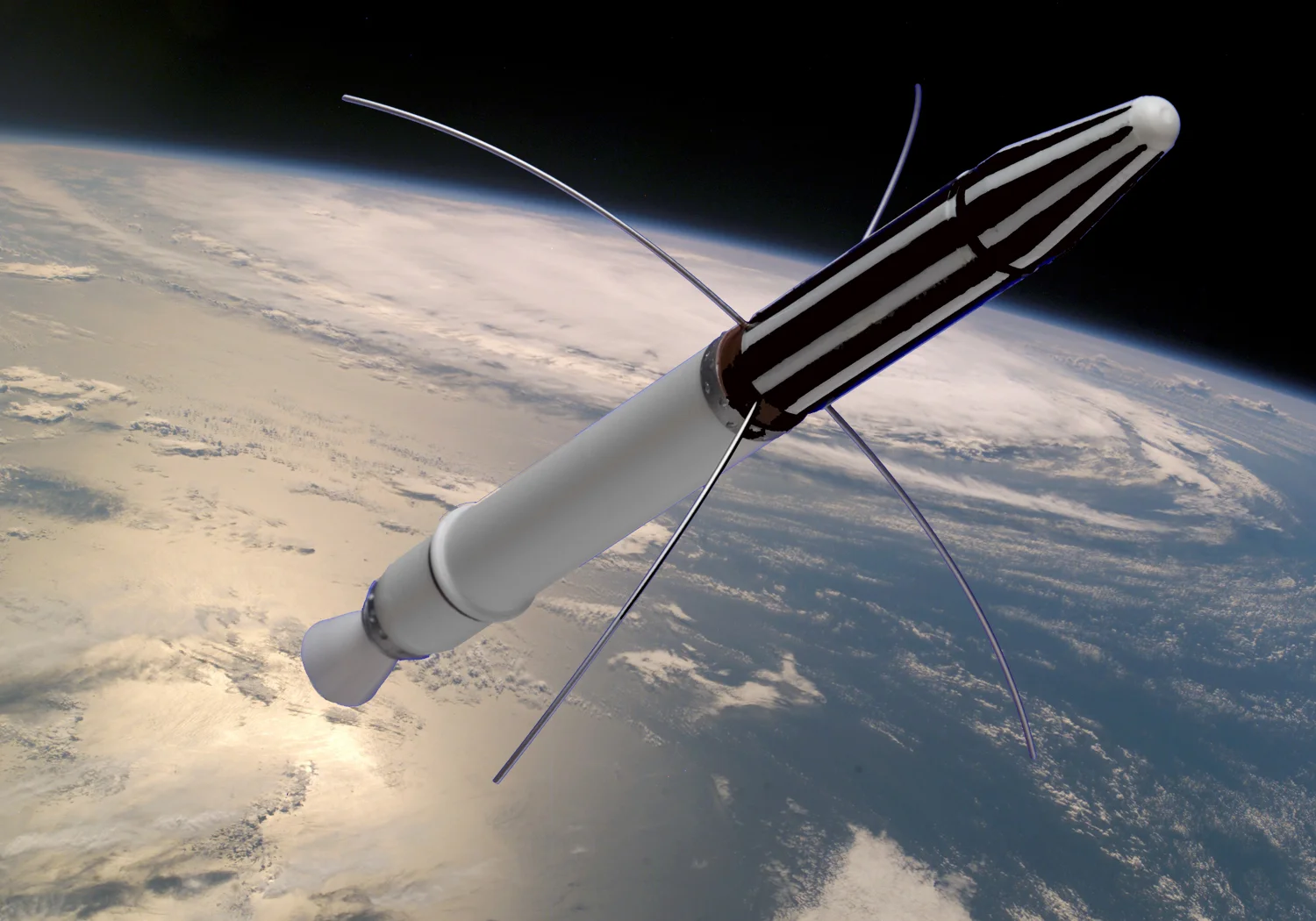
The first major event arrives with Explorer 1, the first American satellite, which entered orbit on February 1, 1958.
Launched in response to the Soviet Sputnik, Explorer 1 placed the United States in the space race and opened a new phase in scientific research outside the Earth's atmosphere.
Its most important contribution was the discovery of the Van Allen radiation belts, regions of charged particles trapped by the Earth's magnetic field.
This finding proved fundamental to the design of spacecraft, the protection of astronauts from radiation, and the birth of modern space physics.
Radar to Venus (February 10, 1958): Measuring the solar system

On February 10, 1958, another crucial breakthrough occurred: the radar experiments toward Venus.
Radio astronomers succeeded in bouncing radar waves off the planet, allowing for a much more precise calculation of the astronomical unit (AU), that is, the average distance between the Earth and the Sun.
These measurements refined the mapping of the solar system and demonstrated that radar could be used as a reliable tool for studying other planets.
This method would later become a pillar of interplanetary navigation and the planning of robotic and crewed missions.
Venera 1 (February 12, 1961): The first attempt to reach another planet

On February 12, 1961, the Soviet Union launched Venera 1, humanity's first attempt to send a craft to another planet, in this case, Venus.
Although the probe lost communication before reaching its destination, it succeeded in collecting data on solar wind and cosmic radiation during its journey.
This launch marked the real beginning of interplanetary missions, demonstrating that space exploration could go beyond Earth's orbit.
From that moment on, space ceased to be just a nearby environment and became a territory for planetary research.
John Glenn and Earth orbit (February 20, 1962)

On February 20, 1962, John Glenn became the first American to orbit the Earth aboard the Mercury-Atlas 6 (Friendship 7) capsule.
He completed three orbits and returned successfully, proving that humans could live and work in microgravity.
The mission provided essential data on radiation, communications, and life-support systems, which were key elements for the development of the Apollo program and future flights to the Moon.
It represented a turning point in the space race and solidified the human presence in space.
February and the space race during the Cold War
These four milestones —Explorer 1, the radar to Venus, Venera 1, and John Glenn's mission— show how space exploration was driven on three fundamental fronts: Earth observation, solar system study, and human orbital flights.
Furthermore, they reflect the intense relationship between science and politics during the Cold War, when the competition between powers accelerated the development of rockets, satellites, and space technology.