The month of May brings together some of the most significant events in ancient, medieval, and modern history.
These episodes reflect the evolution of civilizations through conflicts, construction, and political decisions that transformed the balance of power and shaped the development of different societies.

Battle of the Halys (Battle of the Eclipse)
Occurring on May 28, 585 BC, it is one of the oldest conflicts for which relatively reliable data is preserved.
It pitted the Lydians against the Medes for control of Anatolia.
Its most unique feature was its sudden interruption due to a solar eclipse, which both armies interpreted as a divine sign. This phenomenon led to the immediate end of the confrontation and the signing of a peace treaty that established a stable border.
This episode reflects how natural phenomena directly influenced political and military decisions in antiquity.
Inauguration of Hagia Sophia after its reconstruction
On May 7, 558, the reconstruction of Hagia Sophia in Constantinople was inaugurated following the collapse of its dome.
Promoted by Emperor Justinian I, this project became one of the greatest architectural achievements of the late ancient world.
Beyond its religious function, it symbolized the union between imperial power and spiritual authority in the Byzantine Empire. Its enormous dome represented an ideal of divine order reflected in the structure of the State.
For centuries, Hagia Sophia was a key cultural and religious center, establishing itself as one of the most influential monuments in history.

Fall of Constantinople
The fall of Constantinople occurred on May 29, 1453, at the hands of the Ottoman Empire led by Mehmed II. This event marked the end of the Byzantine Empire, the heir to Rome in the East.
The conquest profoundly altered the balance between Europe and Asia, as the city was a strategic point on trade routes. Its fall forced European powers to seek new maritime routes, fueling the Age of Discovery.
Furthermore, this event is considered one of the milestones marking the end of the Middle Ages and the beginning of the Modern Age.
First Battle of St. Albans
The first Battle of St. Albans took place on May 22, 1455, in England, considered the beginning of the Wars of the Roses.
This conflict pitted the houses of Lancaster and York against each other for control of the throne in a context of monarchical weakness. The Yorkist victory marked the start of a prolonged civil war that caused political instability for decades.
This confrontation reflected the importance of noble alliances and the fragility of the feudal system, transforming the English political model until the consolidation of the Tudor dynasty.

A sack that changed Europe
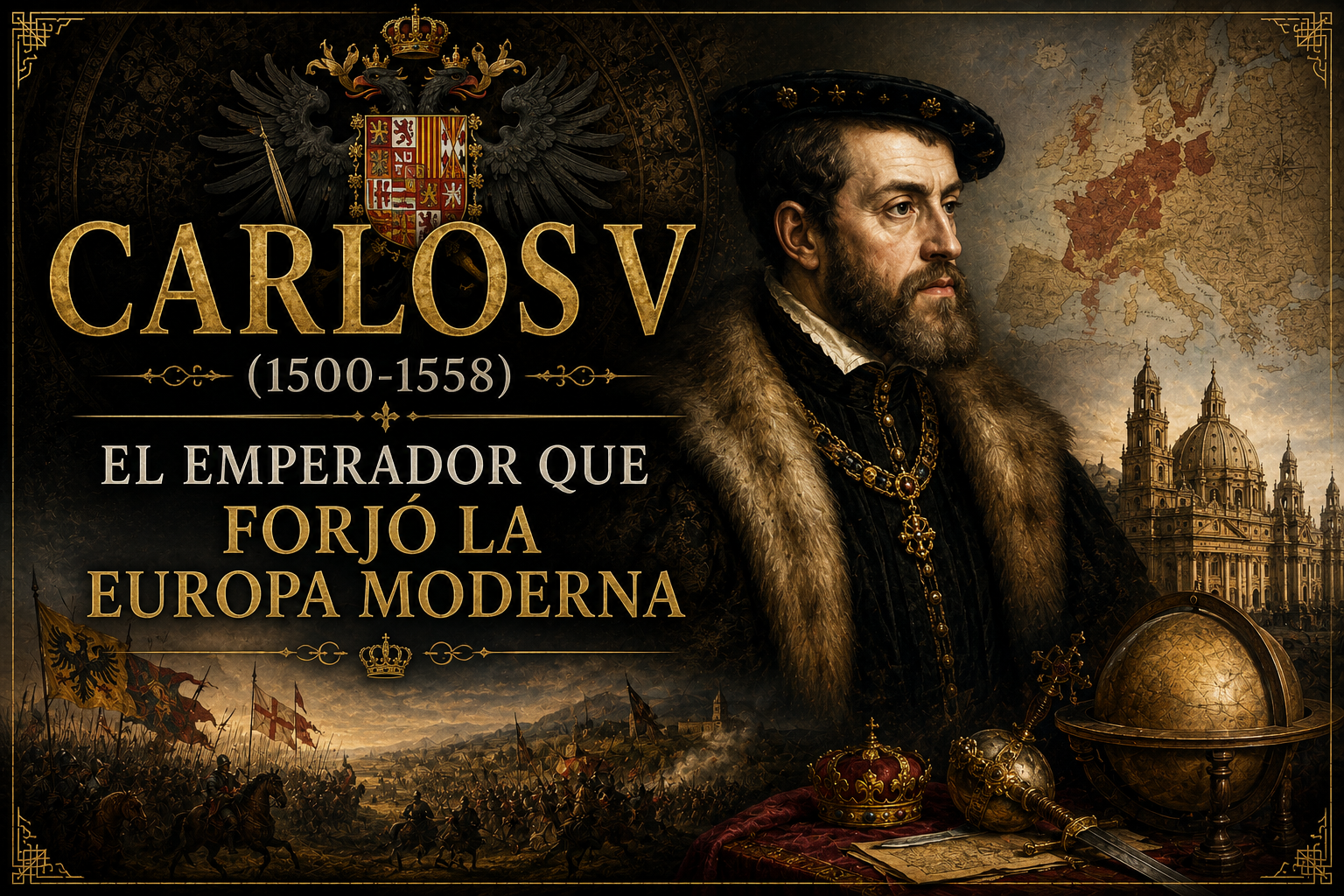
The Sack of Rome took place on May 6, 1527, by the imperial troops of Charles V.
This episode, one of the most dramatic of the Renaissance, resulted in the devastation of the city, affecting both religious and civil buildings.
Pope Clement VII had to take refuge to save his life, which demonstrated the weakness of the papacy. Beyond the material damage, the sack had a strong symbolic impact, marking the decline of pontifical power in Europe.
It also accelerated the loss of Rome's cultural prominence and the end of the High Renaissance.
Treaty of Frankfurt
The Treaty of Frankfurt was signed on May 10, 1871, ending the Franco-Prussian War.
This agreement consolidated France's defeat and the rise of Prussia as the dominant power in Europe.
The treaty confirmed the Prussian victory and consolidated the new German Empire, proclaimed months earlier under the leadership of Wilhelm I, German Emperor and Otto von Bismarck.
France had to cede Alsace and Lorraine and pay significant indemnities, which generated deep resentment.
This treaty altered the European balance and laid the foundations for future tensions that would culminate decades later in the First World War.

Robert Schuman Declaration
On May 9, 1950, Robert Schuman presented a key proposal for European integration. His plan proposed the creation of a community to jointly manage coal and steel between France and West Germany.
The goal was to avoid new conflicts through economic cooperation.
This initiative led to the European Coal and Steel Community, considered the first step toward the current European Union.
Over time, this model evolved into a broader political and economic structure, becoming one of the most significant international cooperation projects in contemporary history.