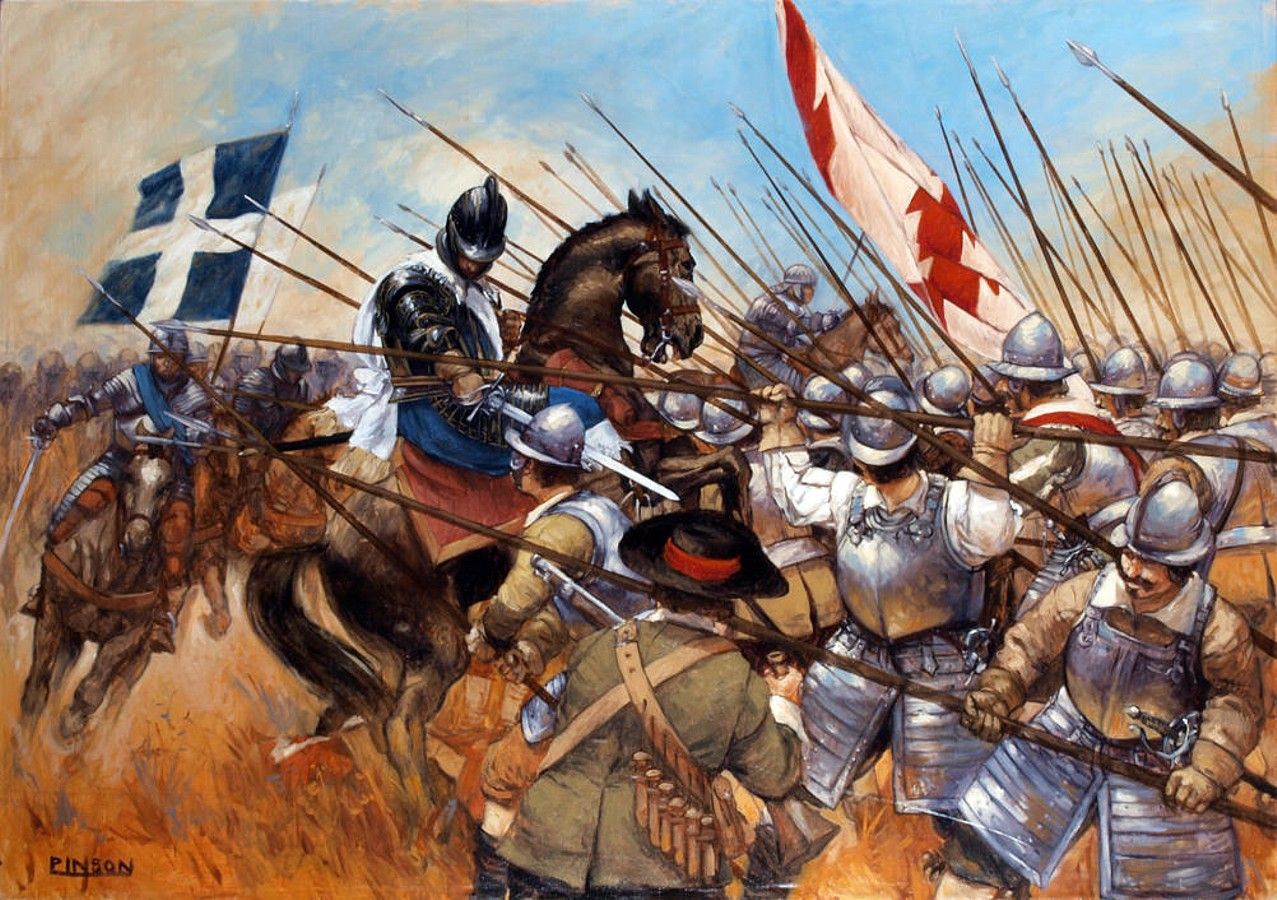
Throughout medieval history, the death of great political, religious, and intellectual figures not only marked the end of a life but also the beginning of profound transformations in Europe.
Kings, monks, and rulers left behind political, cultural, and religious structures that influenced the shaping of the continent for centuries.
The month of May gathers several significant deaths that help us understand decisive changes in medieval European history.
May 26, 735 – Death of Bede the Venerable (England)

On May 26, 735, Bede the Venerable, one of the most influential intellectuals of medieval Anglo-Saxon Europe, passed away.
A monk of the Jarrow monastery, he stood out as a historian, theologian, and scholar in an era when knowledge was limited to monastic centers.
His most important work, Historia ecclesiastica gentis Anglorum, became an essential source for understanding the formation of the Anglo-Saxon kingdoms and the Christianization of England.
Bede did not just collect facts; he applied a relatively systematic method for his time, organizing events chronologically and cross-referencing available sources, which brings him close to the beginnings of Western historical thought.
In addition to his historiographical work, he contributed to the preservation of classical Greco-Roman knowledge and the Christian tradition, in a period marked by political fragmentation after the fall of the Roman Empire.
His death meant the loss of one of the brightest minds of the early European Middle Ages.
May 31, 1252 – Death of Ferdinand III the Saint (Seville)

On May 31, 1252, Ferdinand III of Castile, known as Ferdinand III the Saint, passed away.
His figure is key in the history of the Reconquista and the consolidation of the future medieval Spain.
During his reign, he achieved the definitive union of Castile and León, strengthening Christian power on the Iberian Peninsula.
Ferdinand III led decisive military campaigns that allowed for the conquest of strategic territories such as Córdoba, Jaén, and Seville, significantly weakening Al-Andalus power.
These annexations expanded the influence of the Crown of Castile and laid the foundations for a more unified future territorial structure.
His death in Seville closed a reign of expansion and political consolidation.
He was later canonized, which reinforces his dual role as a political leader and religious figure.
His legacy directly influenced the configuration of the Kingdom of Castile and the historical process that would lead to the formation of Spain.
May 21, 1471 – Death of Henry VI of England

On May 21, 1471, Henry VI of England, one of the monarchs most representative of the Wars of the Roses—a dynastic conflict between the houses of Lancaster and York—passed away.
His reign was marked by political instability, the loss of territories in France, and episodes of mental incapacity that weakened royal authority.
His death symbolizes the definitive collapse of the Lancaster dynasty and the strengthening of the Yorkist side, although the conflict would ultimately pave the way for the rise of the Tudors.
Henry VI is remembered as a pious but politically weak king, whose figure reflects the tensions of the late English Middle Ages.