



Far from being a single people, the Celts were a group of Indo-European tribes who, between the 8th century BC and 4th century AD, spread across much of Europe: from the Iberian Peninsula to the British Isles and Anatolia.
Their culture, language, and spirituality left a profound mark, especially in regions like Ireland, Scotland, and Wales, where their legacy still endures.

Celtic society: hierarchy and role of women
Celtic society was highly hierarchical. At the top were kings or tribal chiefs, followed by warriors, druids, artisans, and peasants.
Loyalty between clans was consolidated through alliances, marriages, and the adoption of children from other tribes.
Unlike other ancient cultures, Celtic women could hold powerful roles. Some governed or led armies, such as Boudicca, queen of the Iceni, or Cartimandua, an ally of Rome and regent of the Brigantes.
Land ownership and lineage were fundamental to social organization.

Religion and spirituality: the power of the Druids
The Celtic religion was polytheistic and deeply connected to nature. Rivers, trees, and mountains were considered sacred.
Lugus (Lugh), god of the sun and skill; Cernunnos, the antlered god associated with fertility; and Epona, protector of horses, are some of their most notable deities.
The Druids held a central place as priests, judges, physicians, and scholars. Their knowledge was passed on orally, and their training could last up to 20 years.
They held rituals in forests and sacred sites, and sometimes practiced human sacrifice, according to Roman sources such as Caesar, although the veracity of these accounts remains debated.

Language and art: a lasting legacy
The Celtic languages, closely linked to tribal identity, were spoken rather than written, which has made their complete reconstruction difficult. However, they survive in vibrant form in Irish Gaelic, Scottish Gaelic, and modern Welsh.
Celtic art is characterized by geometric motifs, spirals and zoomorphic figures.
They used metals such as gold and bronze to make torcs, rigid jewelry that symbolized power and status. Their objects combined utility with a deep spiritual meaning.

A warrior culture: weapons, chariots and symbols
War was essential to the Celts, both as a daily practice and as a cultural manifestation.
They were famous for their striking and ritualized combat style. They played trumpets, carried decorated banners, and some fought naked and tattooed with blue ink, inspiring both terror and admiration among their enemies.
War chariots were common, especially in the British Isles, and were used to confuse the enemy before close combat.
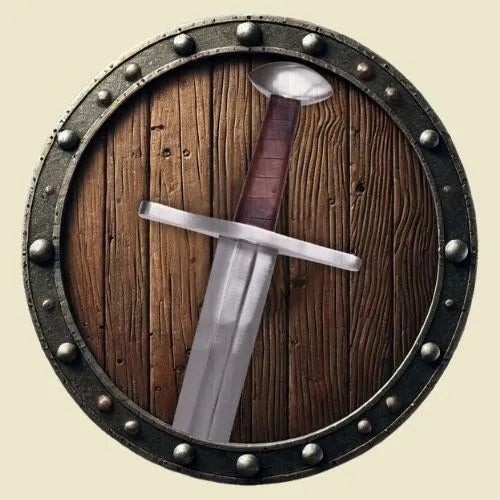
The warriors carried iron swords, spears, decorated shields and torques.

The Celtic legacy today
Although much of their tribal structure disappeared because they were assimilated by the Roman Empire, their Celtic heritage survives in rituals, languages, and symbols that are still present today.
Their mythology has influenced modern literature, art and neopaganism.
The Celts were warriors, artists, wise men, and nature lovers. Their history, shrouded in mystery and symbolism, continues to fascinate generations, proving that the Celtic soul still permeates European culture.