



A tradition with an edge: the origins
Knife throwing, as we know it today, has roots that go back to ancient times.
From the indigenous peoples of Africa and the Americas to Japanese warriors and European soldiers, the act of throwing a sharp weapon has been used as a means of hunting, defense, execution, and even as part of ritual ceremonies.
In many cultures, such as the Zulu and the Filipino, knives were specifically designed for throwing, with a geometry designed to spin and plunge precisely.
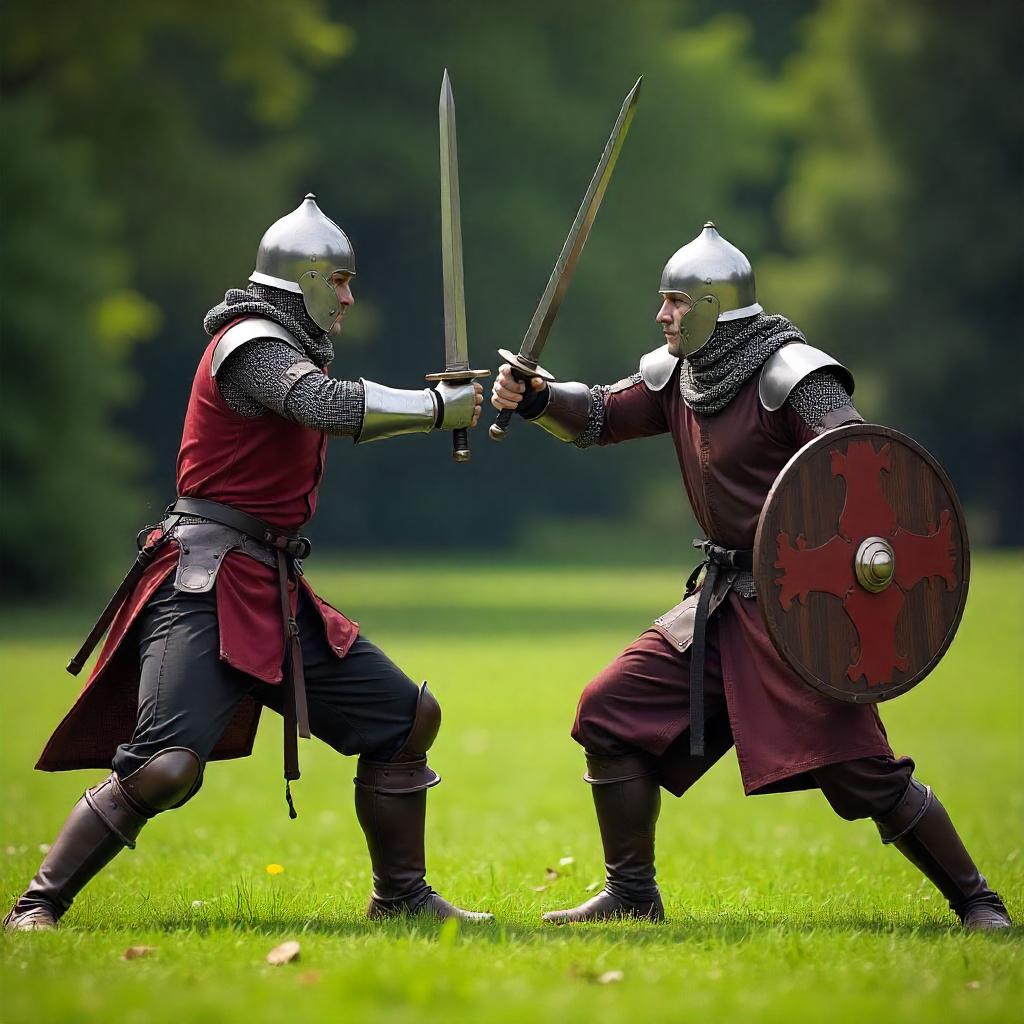
During the Middle Ages, although swords were the primary weapons, some fighters trained with small knives or daggers balanced for close-range throwing, especially in ambushes.

From the 19th century onwards, knife throwing began to acquire a recreational component.
In vaudeville shows and circuses, knife throwers demonstrated their skill by aiming at human or stationary targets with a precision that defied danger and aroused admiration.
This art, perfected by artists such as The Great Throwdini and the legendary Harry McEvoy, laid the foundations for throwing as a formal discipline.
The Target: Precision and Training Center
The knife throwing target is a fundamental part of the exercise.
Traditionally, it's made from softwood—such as pine or poplar—arranged in vertical or circular blocks. Its structure allows the blades to penetrate without dangerous rebound.
Nowadays, paper targets with concentric or human silhouette designs are also common in recreational kits, such as the one included with Kit Rae's Hellhawk.
These targets not only indicate scoring, but also help train accuracy and trajectory control.
Its recommended placement is at a height of between 1.2 and 1.5 meters from the ground, and an initial distance of 3 to 5 meters from the thrower, depending on the size of the knife and the technique used.
Kit Rae and the Reinvention of the Throwing Knife
Known worldwide for his fantasy sword and dagger designs, Kit Rae has also been a committed practitioner of knife and axe throwing. His expertise is reflected in the design of the Hellhawk throwing game, a modern, balanced, and accurate version for contemporary throwers.

Each knife is crafted from a single piece of AUS-6 stainless steel, with a double edge and a symmetrical design that allows for a stable spin in the air. The leather-wrapped handle ensures a firm grip, while its weight and shape ensure controlled flight from any reasonable distance.
The set includes three identical knives, a nylon belt sheath, and a paper target with spikes, ideal for indoor or outdoor training sessions.
This kit not only pays homage to the traditional functionality of the throwing knife, but also adapts it to the needs of the modern thrower, combining durability, aesthetics, and ergonomics.
From ancestral ritual to modern training
The history of knife throwing is a journey of transformation: from a hunting tool to an instrument of war, from a ritual act to a circus spectacle, from a martial art to a precision sport.
This discipline, which requires mental control, measured strength, and refined technique, has entered the 21st century with renewed vitality.