





For centuries, swords have been symbols of power, nobility, and conquest. Many have become legendary along with their owners, leaving an indelible mark on history.
Below you will find historical swords belonging to key figures.
1. Joyeuse or Joyosa . Charlemagne's sword

One of the most important imperial symbols in Europe. Used for centuries at the coronations of French kings, it represents the unification of Europe under the Carolingian Empire. It is housed in the Louvre.
It stands out for its elaborate decoration and religious symbolism.
2. The sword of William the Conqueror

William I of England used a Norman sword during the Battle of Hastings in 1066. Although the original weapon has not survived, its style was reconstructed from depictions such as the Bayeux Tapestry.
It represents the birth of a new dynasty in England.
3. Curtana . British ceremonial sword

It is the ceremonial sword of the Prince of Wales and is used at British coronations. Although its blade is blunt, it symbolizes mercy.
It is part of the British Crown Jewels; it represents the balance between power and justice.
4. Fudo Masamune

Associated with the god Fudō Myōō, she belonged to the Uesugi clan. She represents spiritual protection in battle.
Preserved in the Tokyo Art Museum as one of Masamune's masterpieces.
5. Katana Ichigo Hitofuri

The only katana forged by the legendary Awataguchi Yoshimitsu, it was wielded by Toyotomi Hideyoshi. It is associated with the unification of Japan.
It is located at the Kitano Tenmangū Shrine in Kyoto.
6. Lobera . Sword of King Ferdinand III (the Saint)

King of Castile and León, who was a key monarch in the Reconquista.
Preserved in Seville Cathedral, it is associated with the conquest of important Andalusian cities. It is a symbol of Christian faith and chivalric ideals.
7. Sword of King James I (the Conqueror)

King of Aragon and great military strategist of the 13th century.
His sword, possibly of medieval Aragonese style, was believed to be magical during his campaigns to conquer Majorca, Valencia, and other Muslim lands. It represents the Mediterranean expansion of the Crown of Aragon.
8. Sword of King Sancho IV of Castile (the Brave)

Classic rapier from the Middle Ages, 13th century, with cut and point.
Found in an excavation next to its owner's tomb, it is in excellent condition. It is a sumptuous weapon for its time, worthy of a Castilian monarch.
It is on display at the Tapestry Museum of the Toledo Cathedral.
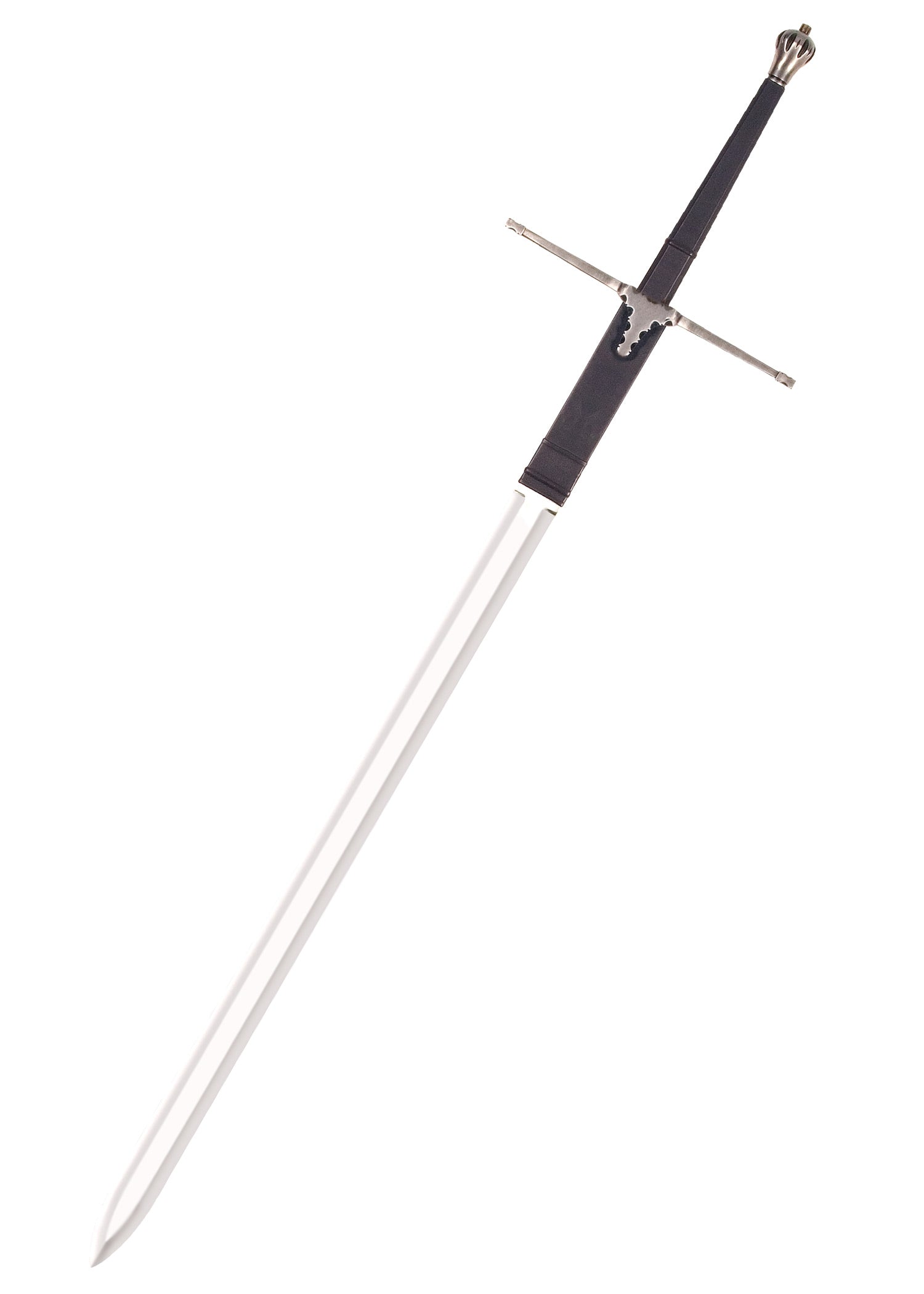
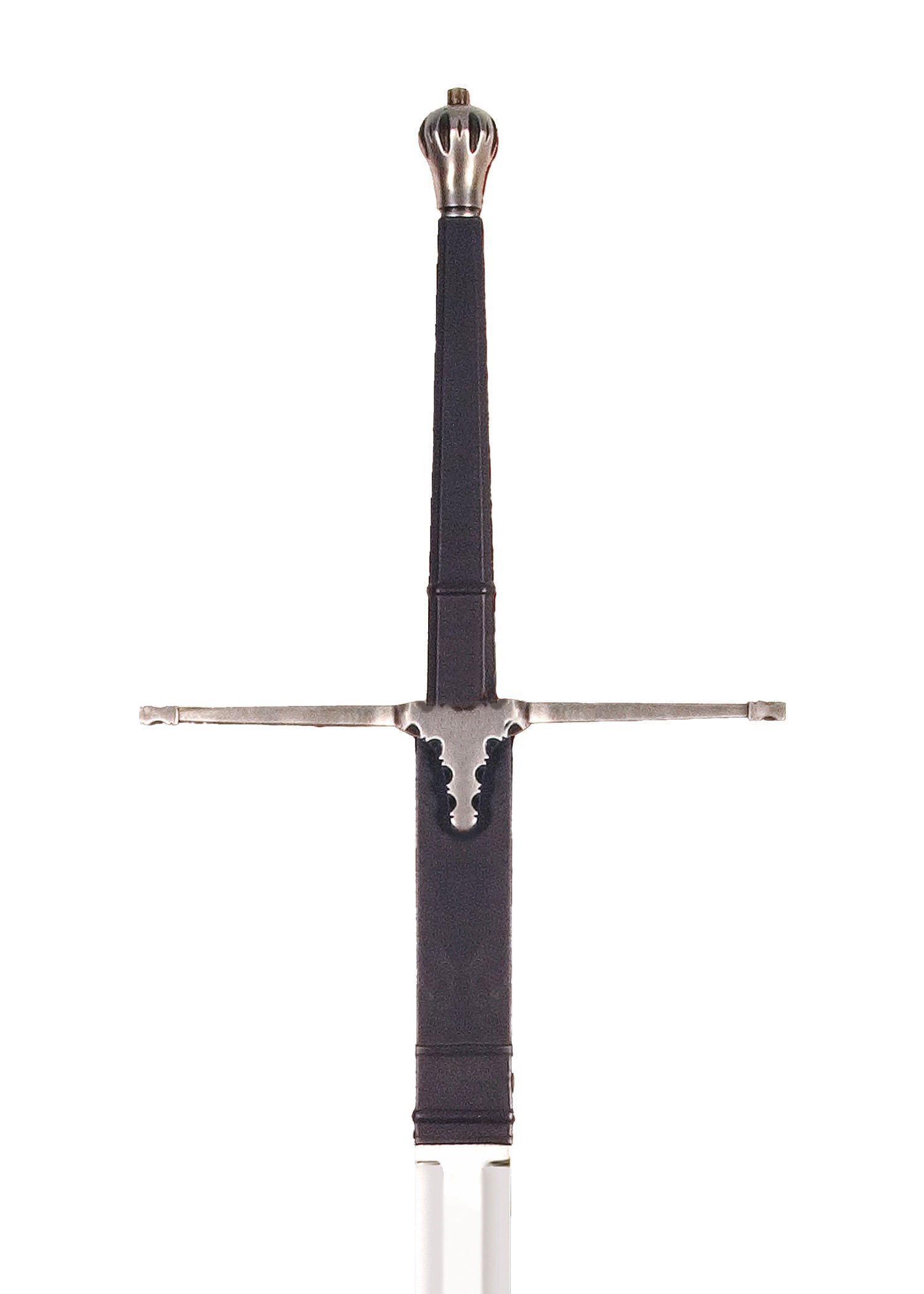
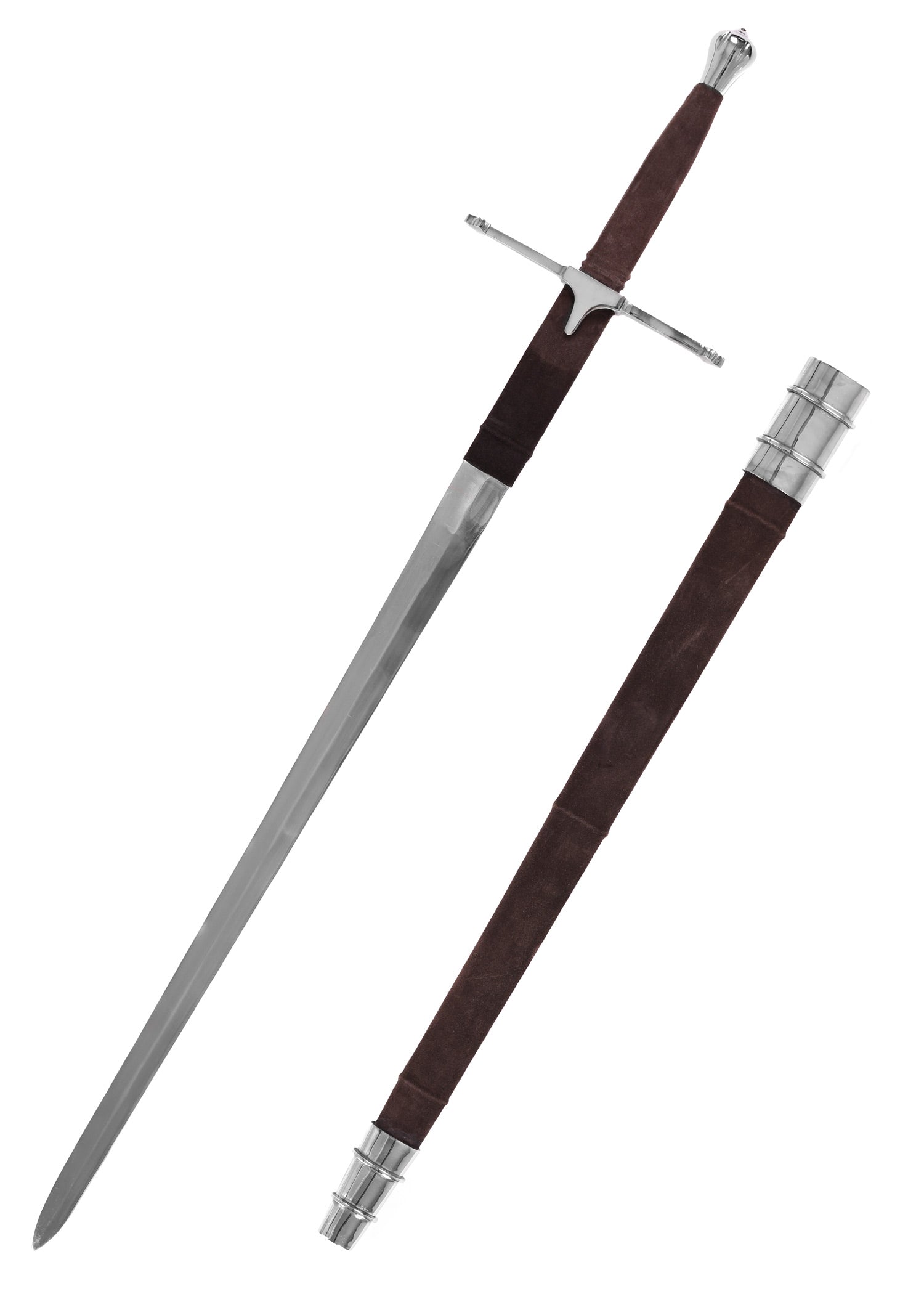
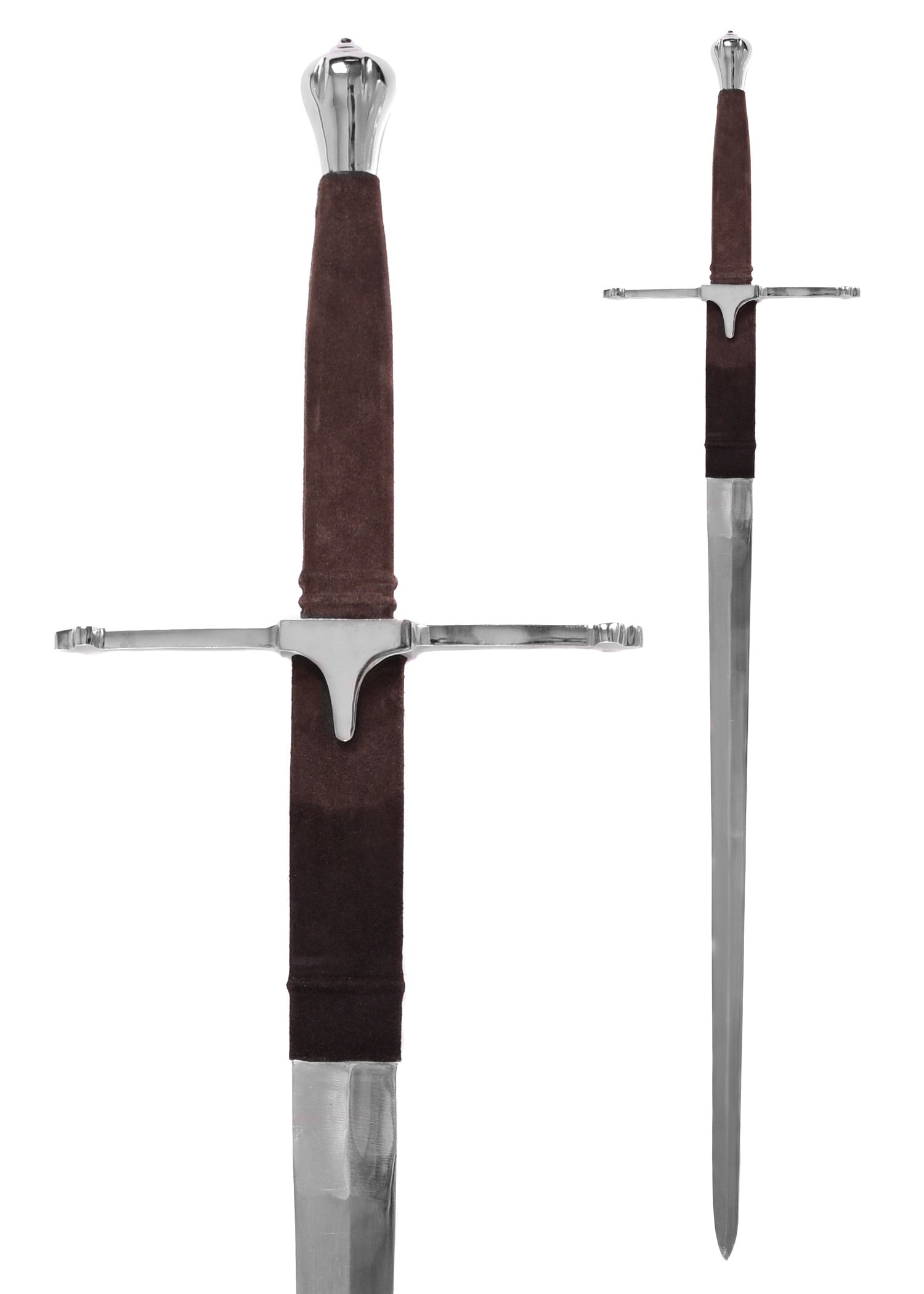
9. William Wallace's Sword

A sword that deserved its own article (which you can find as William Wallace's Sword ), belonging to a Scottish Knight considered a national hero for leading the resistance against English rule during the First War of Scottish Independence.
It represents courage and resilience; it is a symbol of Scottish national pride.
10. Sword of King Alfonso X, the Wise

Alfonso X was more of a legislator and scholar than a warrior, but his sword is preserved as an emblem of the cultured and reforming monarchy of the 13th century.
Linked to the strengthening of Castilian law and literature, it represents intellectual power at the service of the kingdom.
11. Otegine (Spear)

Even though it is not a sword as such, it is no less relevant a bladed weapon.
Used by the Honda clan, it was key in various campaigns under Tokugawa Ieyasu.
It is a symbol of loyalty and strategy.
It is on display at the Sano Municipal Museum , Tochigi Prefecture.
12. Sword of Stefan Cel Mare (Stephen the Great)

The sword of the Prince of Moldavia, defender of Christianity against the Ottoman Empire, is a national symbol of Romania.
Preserved in the National Military Museum in Bucharest, it represents resistance and religious fervor.
13. Sword of Gustav II of Sweden (Northern Lion)

Gustav II revolutionized modern warfare in Europe; his sword, a cavalry rapier, is on display in Stockholm.
It represents the Protestant militarization during the Thirty Years' War.
14. Sword of Jorge Castriota Skanderbeg

A national hero of Albania, Skanderbeg fought against the Ottoman Empire in the 15th century.
His broad-bladed sword with a decorated pommel is in the Vienna Museum. It represents Christian resistance in the Balkans.
15. Ayakashi Onimaru Kunitsuna

Associated with the extermination of demons, it was used by Hōjō Tokimune, who led the defense of Japan against the Mongol invasion.
It is one of the “Five Heavenly Swords”. It is located at the Tsurugaoka Hachimangū Shrine .
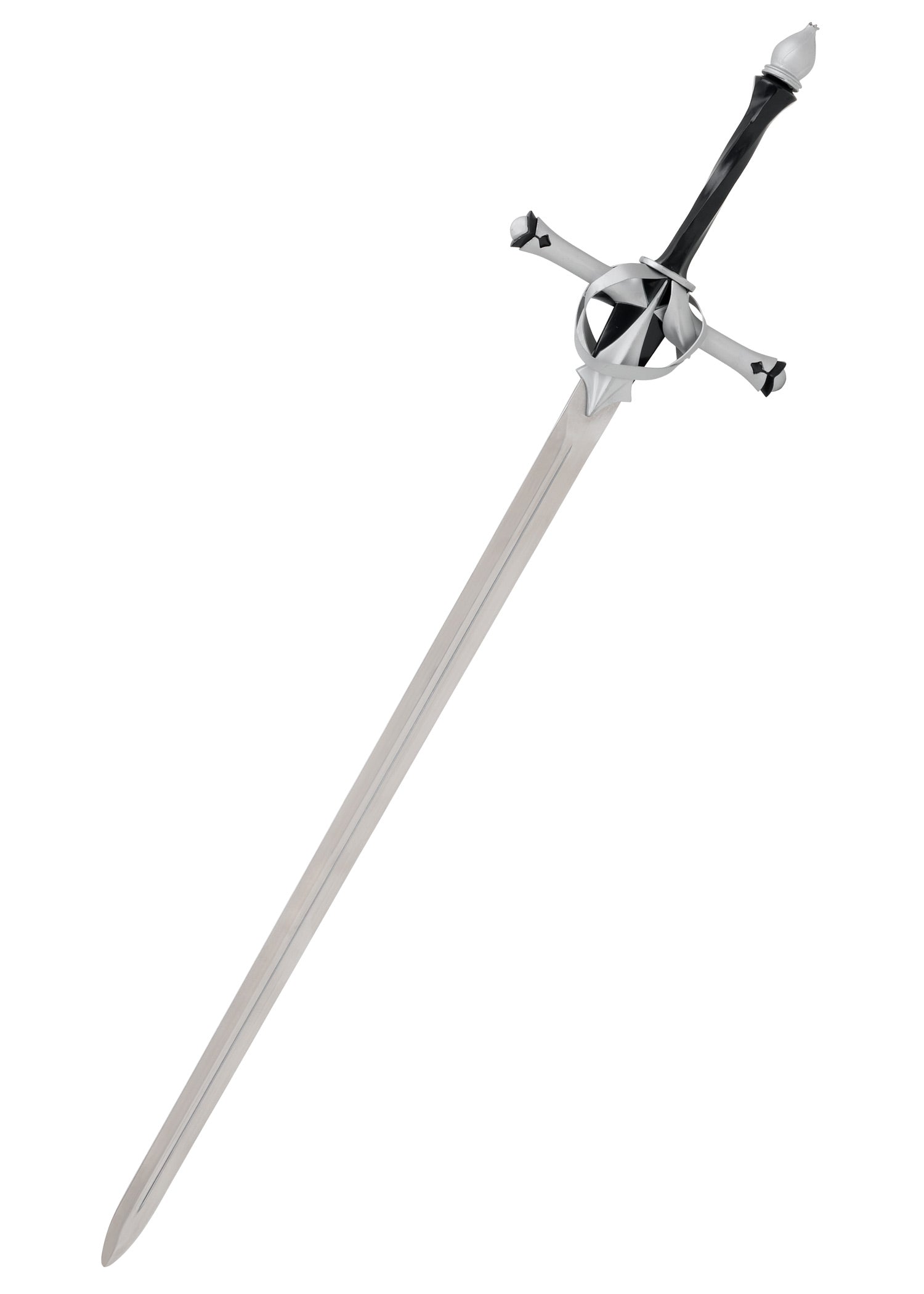
16. Sword of Joan of Arc

According to chronicles, it was discovered after a divine vision in the church of Sainte-Catherine-de-Fierbois. With a straight blade and a Templar cross, it accompanied Joan on her mission to liberate France.
It symbolizes mysticism and patriotic fervor.
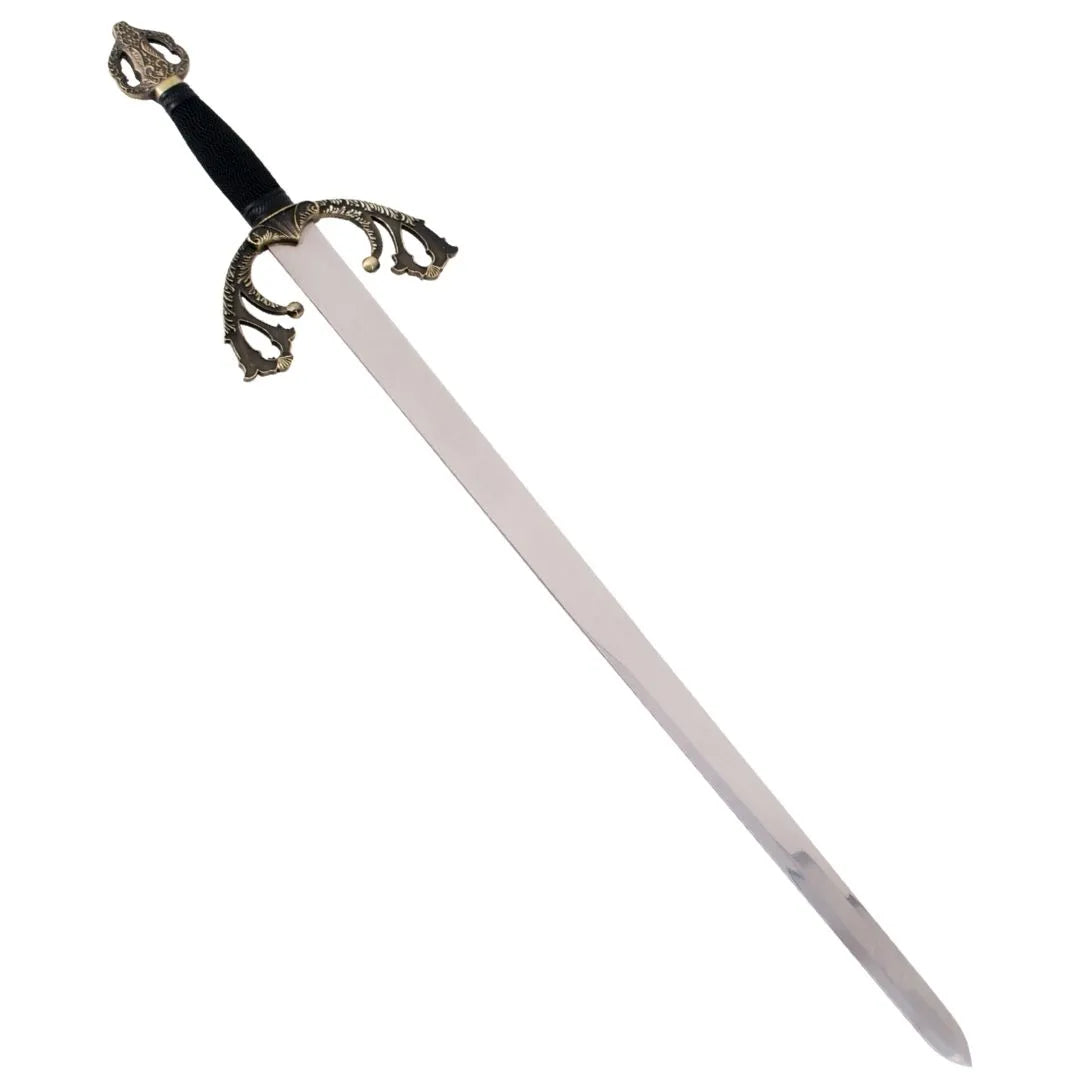
17. Tizona . Sword of Rodrigo Díaz de Vivar (El Cid Campeador)

Carried by a Castilian Knight of the 11th century, it is one of the most famous swords in Spanish history.
Forged from Damascus steel, it is said to instill fear in enemies.
It symbolizes honor, war and chivalric tradition.
18. Sword of Charles I of Spain , V of the Holy Roman Empire

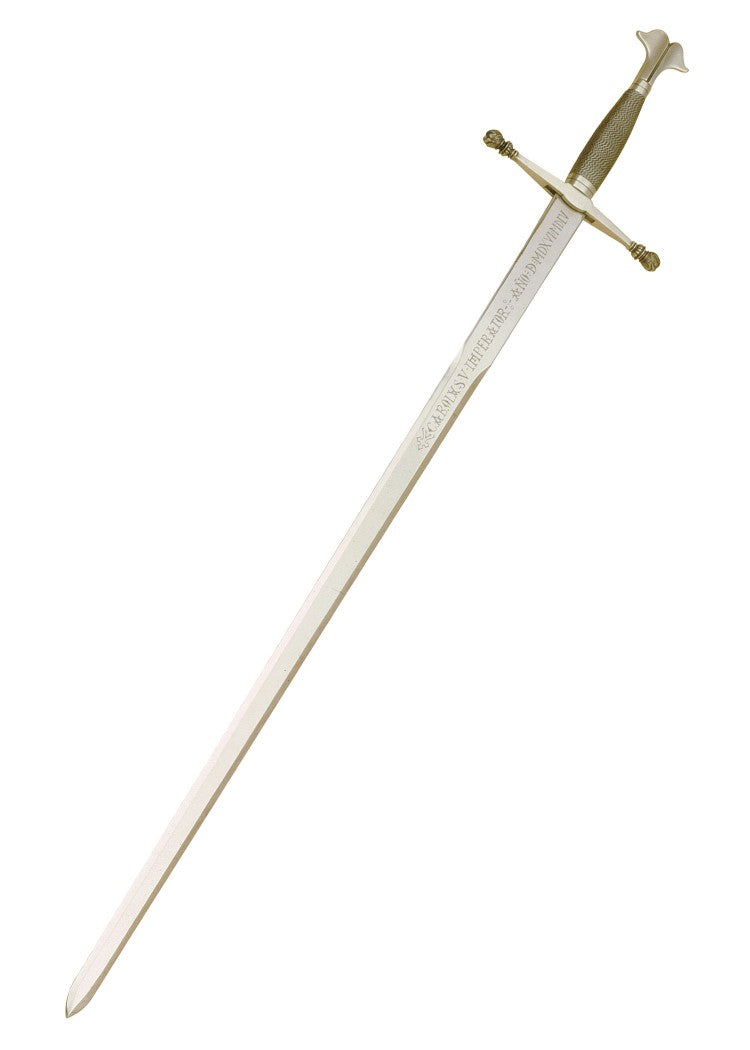
A ceremonial sword used in his coronations and imperial portraits. It symbolized the union of the European and American worlds under his rule.
Its straight blade and decorated hilt reflect the universal power of the 16th century Spanish monarchy.
19. Sword of Christopher Columbus

A ceremonial sword, carried by Columbus as admiral and viceroy of the New World. Short, with an ornate hilt, it was more political than military.
It symbolized his authority in the discovered territories.
20. Sword of Hernán Cortés

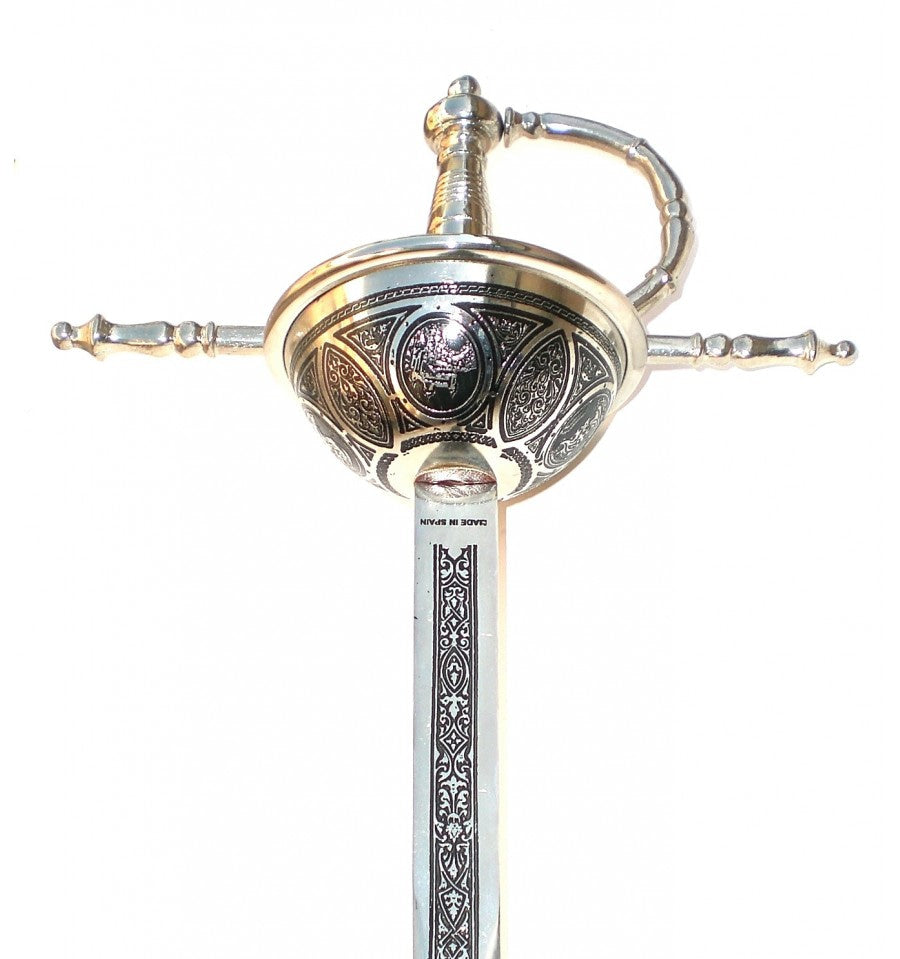
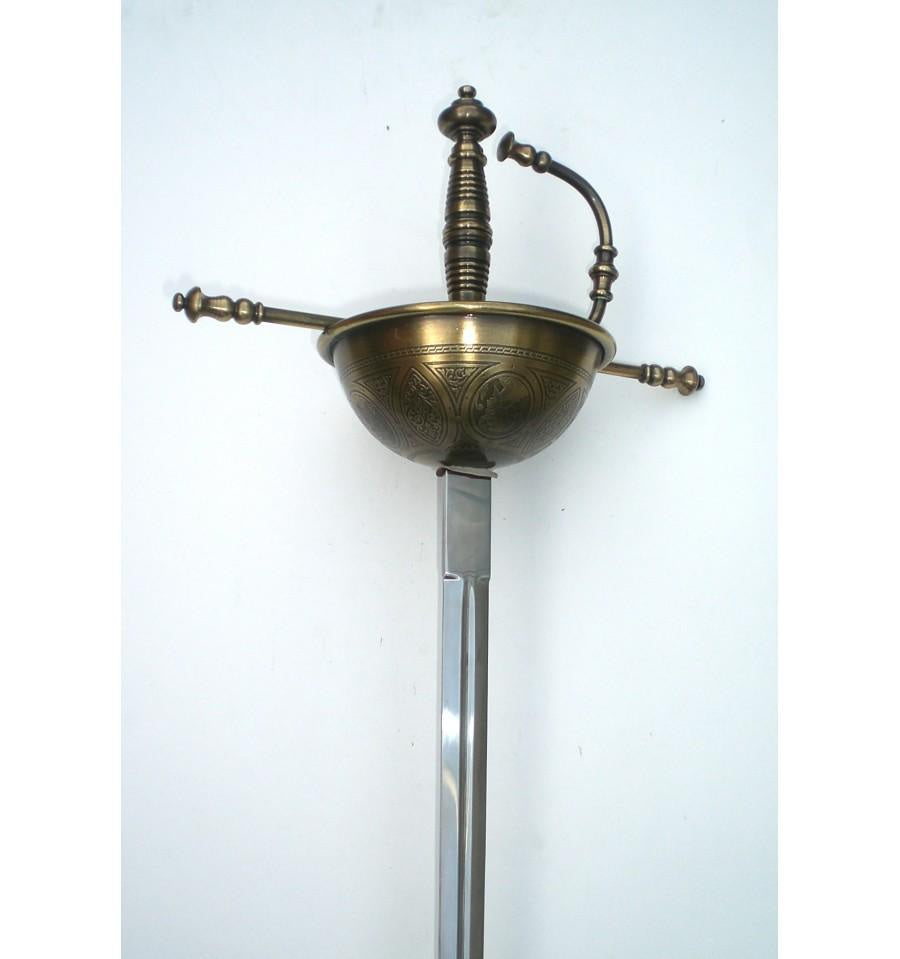
A light and agile rapier-style sword, suitable for urban combat. It was an essential tool in their entry into Tenochtitlán and their confrontation with the Aztec Empire.
It represents the military and diplomatic power of the conquerors.
Exhibited at the La Milarca museum (Mexico).
21. Tachi Oodenta Mitsuyo

Wielded by Maeda Toshiie, daimyō of the Sengoku period, it is known for its supposed healing properties.
It is on display at the Maeda Shrine in Kanazawa.
22. Juzumaru Tsunetsugu

Worn by the monk Nichiren, it is considered a symbol of the defense of Buddhism. Its name refers to prayer beads ( juzu ).
It is located in the Honkō-ji Temple , in Kyoto.
23. Sword of Pedro de Mendoza

Cavalry sword adorned with imperial symbols, wielded by the founder of Buenos Aires. It participated in the first expeditions to the Río de la Plata.
It represents the colonial beginnings of South America.
24. Sword of Hernando Arias de Saavedra (Hernandarias)

It belonged to the first Governor of the Río de la Plata not born in Spain, who carried it as a symbol of authority.
It symbolizes the transition from peninsular power to Creole power.
25. Honjo Masamune

Forged by Master Masamune, it was the emblem of the Tokugawa shogunate for more than two centuries.
It represents the Japanese ideal of balance between strength and harmony.
Missing since World War II.
26. Nuke-maru . Kogarasu Maru

It combines elements of a tachi and a katana. It is attributed to the legendary swordsmith Amakuni and was used by the early imperial samurai of the 8th century.
It represents the evolution of Japanese swords.
Preserved at the Iwashimizu Hachimangū Shrine , in Kyoto.
27. Katana by Oda Nobunaga

It had a long, unadorned blade, representing military efficiency and ruthless strategy. It was used to lead the Sengoku's most radical offensive and defeat rival clans.
It symbolized modernity and a break from tradition.
28. Sword of King Goujian of Yue

Cover by King Goujian of the State of Yue, who defeated the powerful Kingdom of Wu in the 5th century BC
This bronze sword is still astonishingly well preserved. It's famous for its unusual sharpness, intricate design, and resistance to tarnishing, something uncommon in artifacts of similar age.
It represents the technical refinement of the Spring and Autumn period.
29. Liu Bang's Sword

Founder of the Han Dynasty, Liu Bang unified China after defeating Xiang Yu. His simple, functional iron sword symbolizes the rise of a common man to imperial power and the effectiveness of government with care and honor.
30. Takeda Shingen's Katana

Daimyo of the Takeda clan, his sword symbolizes the martial tradition of the Kai and with it he resisted the forced unifications of Japan, maintaining his dominance against Nobunaga and Tokugawa.
Represents resistance and strategic leadership.
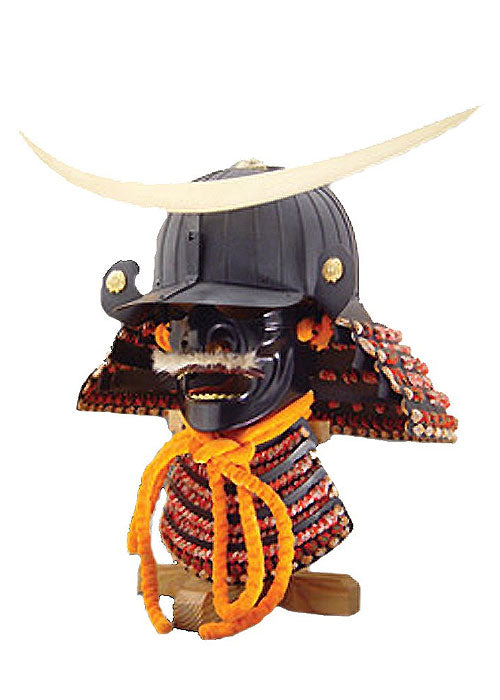
31. Sword of Date Masamune ("The One-Eyed Dragon")

Katana with a stylized tsuba. Used to unite northern Japan with the Tokugawa allies.
It reflects the combination of ferocity and refined aesthetics of the Azuchi-Momoyama period; a balance of military strength and cultural sophistication.
32. Katana “Ōkanehira”

Known as the most perfect katana in proportion and forging, it was wielded by members of the Ikeda clan.
It is considered a technical ideal of Japanese sword.
It is currently located at Toyokawa Inari Shrine in Aichi Prefecture.
33. Tachi “Mikazuki Munechika”

Used by nobles of the Heian period.
This elegant tachi represents the spirituality and aesthetics of the imperial court.
It is preserved in the Tokyo National Museum , as one of the “Five Great Swords of Japan”.
Note: Although I have tried to use real images or historical representations, some, such as the late Honjou Masamune, are merely illustrative.
Would you like us to talk more about any of these or other swords?
If you like swords, don't hesitate to visit our collection , with a wide variety of swords and replicas of all kinds.